

More news on this day
South Africa has issued an urgent evacuation advisory for its citizens in the Middle East, calling on those in conflict-affected areas to leave as soon as possible amid intensifying military action and growing uncertainty over flight and security conditions.
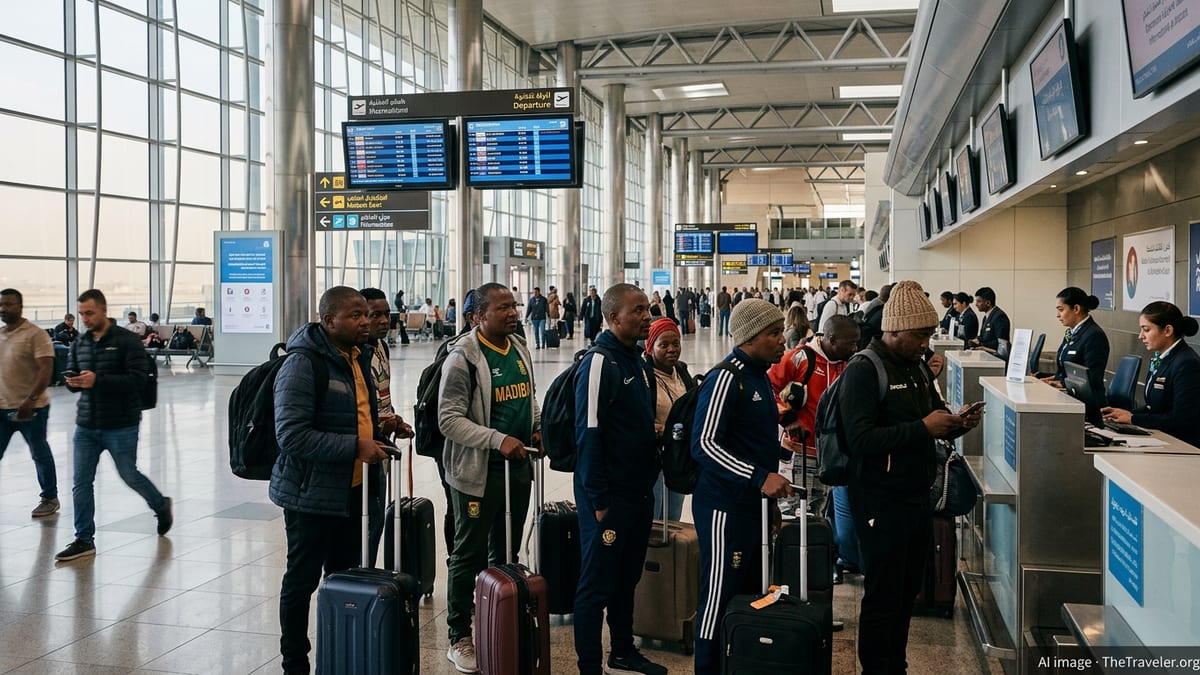
Government Raises Alarm as Conflict Intensifies
The Department of International Relations and Cooperation (DIRCO) confirmed this week that it has moved from routine travel warnings to active evacuation guidance for South Africans in parts of the Middle East, as interstate conflict widens and civilian infrastructure comes under increasing strain. The advisory, issued on 2 March, urges citizens in high-risk zones to make immediate plans to exit while commercial routes remain open.
Officials say the shift reflects a rapidly deteriorating security landscape, with reports of targeted strikes, airspace disruptions and the potential for further escalation involving regional and global powers. While South Africa has long cautioned against non-essential travel to certain hot spots, this latest advisory is framed as a time-sensitive appeal rather than a general warning.
DIRCO has stressed that although South Africa continues to support diplomatic efforts to secure a ceasefire, its most urgent priority is the safety of nationals who may be caught in the crossfire or stranded by sudden changes in flight schedules, border controls or local security measures.
The department has also reiterated that the situation remains fluid, with conditions and risk levels varying between countries, and that citizens should closely monitor official guidance rather than relying on social media or informal updates.
Evacuation Guidance and Limited Flight Options
In its latest communication, DIRCO strongly advises South Africans currently in the Middle East for non-essential reasons to take advantage of what it describes as “limited” commercial flight options out of affected cities. Authorities warn that the window for safe, self-arranged departures could narrow quickly if air routes are closed, airports are damaged or carriers suspend services with little notice.
Rather than launching a full-scale state-run airlift at this stage, the government is pressing citizens to use available commercial capacity while it still exists, supported by consular teams on the ground. Officials say this approach allows more flexible, faster movement out of the region and reduces the risk of evacuation operations becoming targets or entangled in military activity.
South Africans who decide to leave are being urged to travel with essential documents, maintain contact with family and the nearest embassy, and allow extra time for transits and security checks. Travelers are warned that last-minute schedule changes, diversions and layovers in third countries should be expected as airlines adjust to conflict-related restrictions.
Those who cannot immediately depart, including residents with jobs, families or other obligations in the region, are being advised to prepare contingency plans that include alternative routes, safe shelter options and ready access to communication channels in case of further escalation.
Thousands Register as South Africa Maps Citizen Locations
DIRCO reports a surge in registrations on its Travel Smart platform since the advisory was issued, with more than 6,400 South Africans in the Middle East having logged their details in recent days. Officials say this data is crucial for mapping where citizens are concentrated, prioritising assistance and planning possible extraction scenarios should commercial departures become impossible.
The registration drive covers a broad swathe of countries across the region, from the Gulf states to the Levant, where South Africans live, work or travel as tourists, students and contract workers. While many are in relatively stable areas, the government emphasises that spillover risks, airspace closures or sudden political decisions can affect even those far from active frontlines.
By consolidating information on citizens’ locations, contact details and travel intentions, DIRCO aims to keep communication lines open and issue tailored alerts as the situation evolves. Registered travelers can expect to receive updates on flight availability, transit options and any new security measures implemented by local authorities.
Officials have warned that consular capacity in some hotspots may be constrained if host governments impose movement restrictions or if communication networks are disrupted. For this reason, they say, early registration and proactive planning are essential for anyone who may need help to leave.
Regional and Diplomatic Context Behind the Advisory
The evacuation guidance comes against the backdrop of a fast-escalating conflict involving Iran, Israel and the United States, with missile and air strikes reported in multiple locations and fears that proxy actors in countries such as Lebanon, Yemen and Iraq could deepen the crisis. The risk of miscalculation or wider regional war has prompted a growing list of countries to reassess the safety of their nationals in the Middle East.
South Africa, which has positioned itself as a vocal advocate for international humanitarian law in the region and has offered to support mediation efforts where possible, is now balancing its diplomatic posture with the immediate need to keep citizens out of harm’s way. Officials have reiterated calls for all parties to exercise maximum restraint and to protect civilians and critical infrastructure.
Pretoria’s advisory mirrors a wave of similar alerts from governments in Africa, Europe and Asia, many of which are either preparing contingency evacuation operations or urging their nationals to leave while commercial options remain available. The shared concern is that a rapid intensification of hostilities could shut down key transport hubs, complicating any later rescue missions.
For South Africa, the advisory also reflects lessons from previous crises in Sudan, Libya and other conflict zones, where delayed departures left some citizens trapped for weeks and made subsequent evacuations far more complex and costly. This time, officials are seeking to move earlier, with a strong emphasis on voluntary, pre-emptive departure.
What the Advisory Means for South African Travelers
For South Africans considering travel to the Middle East, the government’s message is unambiguous: postpone non-essential trips and avoid entering areas where tensions are high or conflict is active. Travel agents and airlines serving the South African market are already reporting an uptick in itinerary changes, with some carriers adjusting routes or offering waivers to passengers affected by the evolving security picture.
Tourism operators say the advisory is likely to reshape regional travel patterns at least in the short term, steering South African holidaymakers toward destinations seen as more stable. Business travelers and expatriates, meanwhile, are being urged to review corporate security policies, verify insurance coverage in conflict zones and maintain close contact with employers about evacuation or remote-working options.
For those who remain in the Middle East, DIRCO advises heightened situational awareness, adherence to local regulations and avoidance of protests, military facilities and other potential flashpoints. Citizens are reminded to carry identification documents, keep mobile phones charged and loaded with key emergency contacts, and to monitor official South African government channels for updates.
As the conflict continues to evolve by the day, South African authorities say they are closely tracking developments and stand ready to adjust their guidance, including moving to more direct evacuation measures, should the security situation or accessibility of commercial flights deteriorate further.