

More news on this day
Passenger arrivals at South African airports climbed 7.9 percent over the latest reporting period, signaling a firm rebound in travel demand and strengthening expectations that airlines will continue to add routes and capacity into the country.
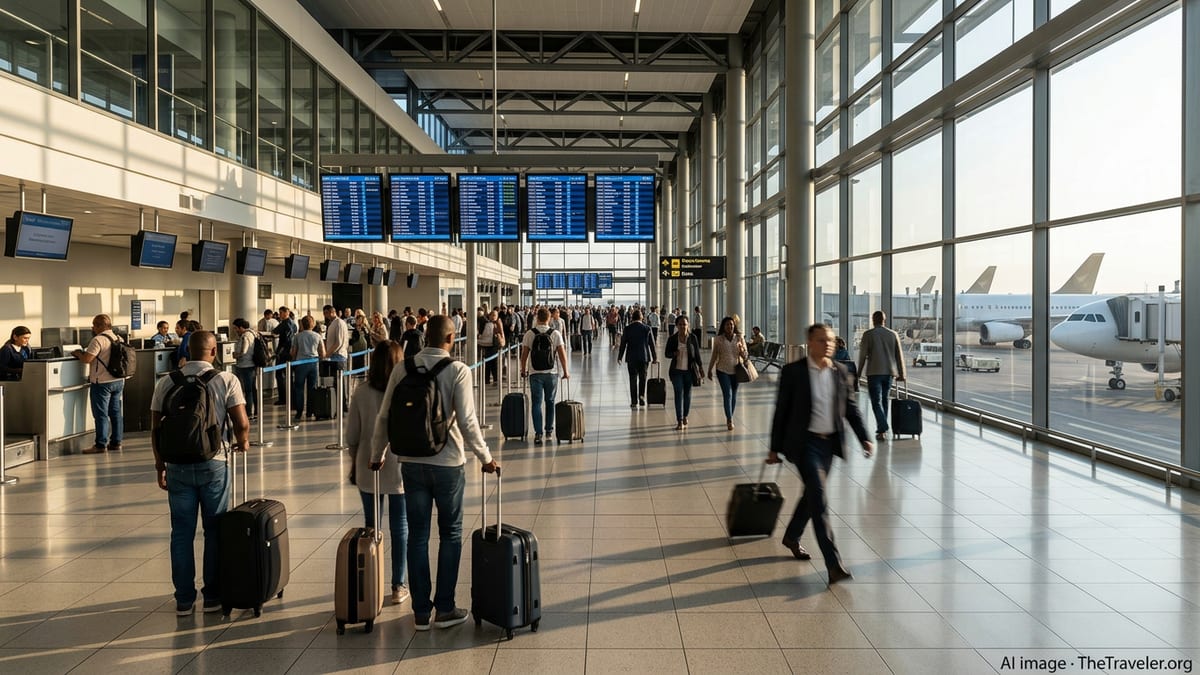
Stronger Passenger Flows Point to Sustained Recovery
The latest growth in air passenger arrivals comes as South Africa’s broader tourism recovery gathers pace, with overall arrivals rising and edging closer to, and in some cases surpassing, pre pandemic benchmarks. Government figures show that the country welcomed millions more visitors in 2024 and 2025 than the year before, supported by easier travel conditions, targeted marketing and improving global confidence in long haul trips to Africa.
Industry analysts say a 7.9 percent rise in arrivals at key airports is particularly notable given that much of the initial post pandemic rebound has already taken place. Instead of a one off surge, the new data suggests an ongoing structural recovery in which both leisure and business travel are steadily rebuilding.
Airport executives describe the current trend as a consolidation phase, where volumes are not just bouncing back but beginning to establish a higher, more stable base. That supports investment decisions, long term network planning and renewed hiring across aviation and tourism linked services.
Major Hubs Lead Growth as International Demand Strengthens
South Africa’s three principal gateways Johannesburg’s OR Tambo International, Cape Town International and Durban’s King Shaka International continue to handle the bulk of air passenger movements and are at the center of the latest uptick in arrivals. In Cape Town, for example, total two way passenger numbers have set new records, with more than 11 million travelers handled in 2025 and double digit gains in international volumes over the peak summer months.
Airports Company South Africa data for Cape Town shows that international arrivals in December alone rose at a high single digit to low double digit pace compared with a year earlier, while domestic traffic also expanded. Similar patterns are evident in Johannesburg, which remains the country’s primary intercontinental hub, and in Durban, where domestic volumes in particular have rebounded strongly.
Analysts note that the 7.9 percent increase in passenger arrivals across the airport system is being driven by a mix of markets. Strong regional flows from elsewhere on the African continent remain the backbone of inbound tourism, but there has also been meaningful growth from Europe, North America, the Middle East and key Asian source markets.
Airlines Respond With Added Capacity and New Connections
Rising demand is prompting airlines to add capacity into South Africa and to upgauge aircraft on high performing routes. At Cape Town International, Ethiopian Airlines recently introduced Africa’s first Airbus A350 1000 on an African route into the city and is moving to double daily services between Cape Town and Addis Ababa in response to sustained passenger growth.
Other international carriers have increased frequencies on links to major hubs in the Gulf, Europe and the rest of the continent, while regional and domestic airlines are reinstating or adding services that were trimmed during the pandemic period. Tourism bodies point out that improved air access is both a driver and a beneficiary of the 7.9 percent rise in airport arrivals, creating a positive feedback loop between connectivity and demand.
The increased seat supply has helped moderate airfares on some routes, making South Africa more competitive as a long haul destination. In turn, that affordability encourages longer stays and greater dispersal of visitors beyond the main urban gateways to secondary cities and nature based destinations.
Infrastructure Investment Targets Capacity and Resilience
The growth in passenger arrivals is also underpinning a new phase of infrastructure investment across the Airports Company South Africa network. The operator has outlined a multibillion rand capital expenditure program over the coming years, with the bulk of spending earmarked for refurbishing terminals, upgrading airside infrastructure and improving capacity at the busiest airports.
Projects include terminal enhancements to ease congestion at security and immigration, expanded aircraft parking stands and improvements in baggage handling systems designed to support higher volumes while maintaining on time performance. For airports such as Cape Town and Johannesburg, which are handling record or near record traffic, these investments are seen as critical to ensuring that growth remains sustainable.
Industry observers say the new data on a 7.9 percent increase in arrivals will reinforce the case for accelerating some of these upgrades, particularly where peak season demand is already pushing existing facilities close to capacity. Better infrastructure, they add, is essential to attracting more long haul carriers and securing additional direct connections to emerging and established source markets.
Tourism Stakeholders See Opportunity but Warn Against Complacency
Tourism leaders have welcomed the stronger performance at South African airports as evidence that sustained marketing campaigns and partnership initiatives are paying off. National and provincial tourism agencies have worked closely with airports and airlines to secure new services, support route development and promote South Africa’s cities, wildlife and cultural attractions in key overseas markets.
However, they also caution that continued growth is not guaranteed. Global competition for long haul travelers remains intense, and destinations across Africa and beyond are aggressively pursuing the same airlines and visitor segments. To maintain momentum, stakeholders argue that South Africa must keep improving the visitor experience, from visa processing and airport efficiency to safety, service standards and value for money.
Even so, the latest 7.9 percent increase in airport arrivals is widely viewed as a vote of confidence in South Africa’s tourism offer and aviation market. With passenger flows rising, airlines expanding networks and airports investing in future capacity, the sector enters the next travel seasons with a renewed sense of optimism about its growth trajectory.