

More news on this day
South African Tourism has extended heartfelt condolences to the Rovos Rail family following a fatal train derailment in southern Namibia, using the tragedy to underline its commitment to visitor safety and the long-term growth of Southern Africa’s premium rail tourism sector.
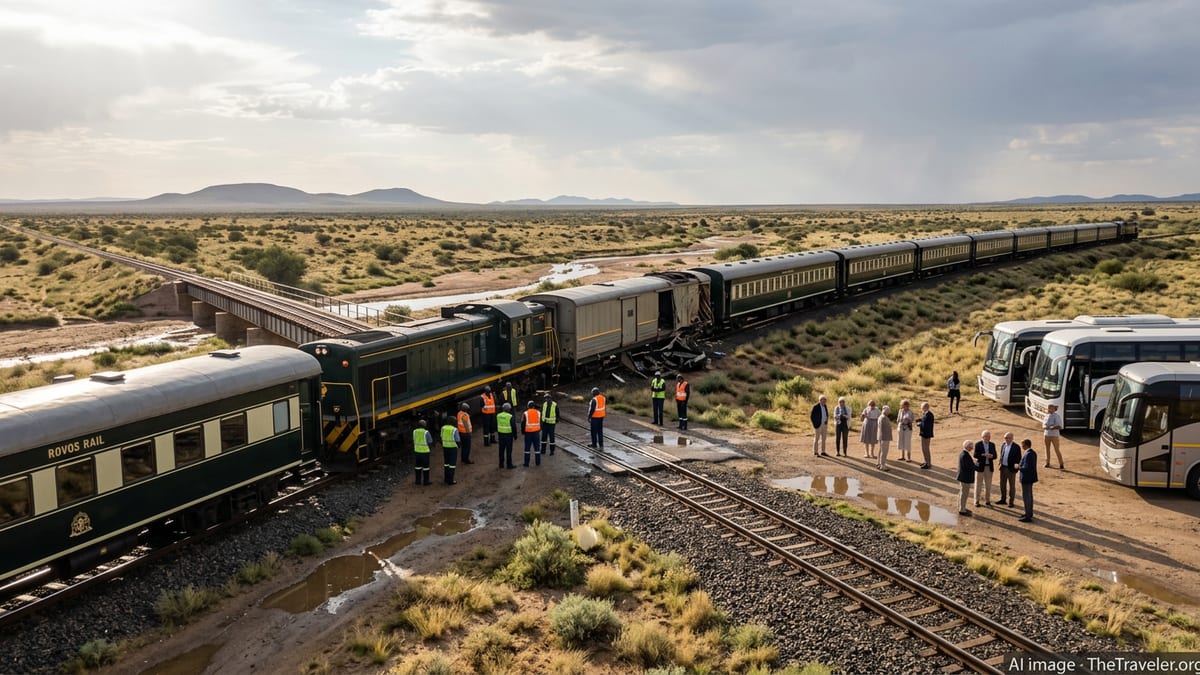
Condolences After Deadly Rovos Rail Derailment in Namibia
In a statement issued on 2 March 2026, South African Tourism expressed deep sympathy to Rovos Rail staff and the families of two railway workers killed when a luxury passenger service derailed near Naute in southern Namibia on 1 March. The accident, which involved a southbound Rovos Rail train traveling from Windhoek towards South Africa, claimed the lives of the Rovos train driver and a TransNamib pilot who were on duty at the time of the incident.
Investigators in Namibia have confirmed that the derailment occurred after heavy rains caused a washaway that collapsed the final span of a bridge along the route. The train’s automatic braking systems activated as the consist ran into the damaged section, preventing coaches from plunging further into the gap. Two locomotives and two utility coaches were destroyed, but passenger carriages remained upright and secure.
Rovos Rail reported that no passengers or other onboard staff sustained injuries, and its emergency response plan was immediately triggered. Emergency teams, medical personnel and security services were dispatched to the remote crash site, and the broader area was secured while railway and safety regulators opened a formal investigation into the cause and contributing factors.
South African Tourism said it stood in solidarity with Rovos Rail’s leadership, employees and partners during what it described as a period of mourning and recovery. The agency praised the professionalism of crew members and first responders, noting that the work of rail staff is critical to maintaining Southern Africa’s reputation as a world-class tourism destination.
Swift Emergency Response Underscores Focus on Passenger Safety
According to Rovos Rail, contingency plans swung into action within hours of the crash. The luxury train operator arranged buses to transport guests from the Naute area across the border to Upington in South Africa, where charter flights were organized to move passengers onward to Cape Town. Company officials said the priority remained the physical safety and emotional wellbeing of affected guests and staff.
South African Tourism highlighted the coordinated response as an example of the region’s capacity to manage crises in remote tourism corridors. Officials commended Rovos Rail, TransNamib, Namibian emergency services and law enforcement agencies for working together to stabilize the situation, care for survivors and communicate with families and travel partners across multiple countries.
Tourism authorities have also emphasized the importance of transparent communication with international visitors in the wake of such incidents. Tour operators and travel agents were briefed on the derailment, the status of passengers and the steps being taken to support them, helping to reassure markets where luxury rail journeys are positioned as once in a lifetime experiences.
While the loss of life has cast a shadow over the sector, safety experts note that derailments of this nature remain rare on premium tourism routes. South African Tourism reiterated that the safety and wellbeing of visitors and tourism professionals remains a top priority for destination management organizations and private operators alike.
Luxury Rail as a Pillar of Southern Africa’s Tourism Offering
Rovos Rail, often referred to as one of the world’s most luxurious train experiences, has become a signature component of Southern Africa’s tourism landscape. Operating out of Pretoria, the company runs multi day itineraries that link South Africa with Namibia, Zimbabwe, Zambia and Tanzania, combining slow travel with fine dining, vintage rolling stock and curated off train excursions.
Industry stakeholders point out that trains such as Rovos Rail play a strategic role in attracting high yielding visitors who typically combine rail journeys with extended stays in cities, wine regions and safari destinations. These guests often book through international tour operators, contributing foreign currency earnings and supporting employment across hospitality, guiding, transport and conservation-related sectors.
South African Tourism’s statement described Rovos Rail as an important partner in showcasing the region’s world-class tourism offering. The agency noted that behind each journey lies a large ecosystem of skilled professionals, from locomotive engineers and track maintenance teams to chefs, butlers and guest relations staff. The Namibia derailment, it said, has brought renewed attention to the dedication of these workers, whose efforts are usually invisible to travelers enjoying the scenery from their compartments.
Despite the shock of the incident, tourism analysts expect demand for rail-based itineraries in Southern Africa to remain resilient. Luxury train travel is seen as a niche but growing segment, aligned with trends toward immersive, slow and experience-rich journeys that differ from conventional fly-in, fly-out holidays.
Infrastructure, Climate Risks and the Future of Rail Safety
The tragedy in Namibia has reignited discussions about the vulnerability of regional rail infrastructure to extreme weather, particularly in arid and semi-arid areas where seasonal cloudbursts can cause sudden washaways. The collapsed bridge span near Naute followed heavy rains, underscoring the need for real-time monitoring of track conditions, drainage systems and bridge integrity along long-distance tourism routes.
Rail and tourism experts argue that sustained investment in inspection regimes, early warning technologies and cross-border collaboration will be essential as climate variability increases across Southern Africa. Enhanced communication between meteorological services, rail operators and transport authorities could help ensure that potential hazards, such as flooding or subsidence, are identified early and that trains can be slowed, rerouted or temporarily suspended when risks escalate.
South African Tourism has framed the incident as a reminder that the growth of the region’s visitor economy must go hand in hand with rigorous safety standards and infrastructure maintenance. Officials have stressed that international visitors judge destinations not only on landscapes and lodges, but also on how effectively they manage transport systems in challenging environments.
Regional initiatives aimed at upgrading key rail corridors, improving signaling and supporting staff training are expected to remain a priority. Tourism bodies say that these investments will help protect jobs, preserve valuable market share for African rail products and reinforce traveler confidence following high-profile accidents.
Balancing Mourning With Confidence in Tourism Growth
As the Rovos Rail and TransNamib families mourn the loss of their colleagues, South African Tourism has called for compassion alongside a clear-eyed focus on the long-term health of the tourism sector. The agency believes that honest engagement with safety questions, coupled with visible support for those affected, can help ensure that the derailment does not overshadow the broader successes of Southern African travel.
Travel trade representatives report that, in the immediate aftermath, some international partners have sought additional assurances on operational protocols and contingency planning. South African Tourism and its Namibian counterparts are working to provide accurate information and context, emphasizing both the rarity of such events and the robust systems in place to protect guests.
Industry leaders argue that continued investment, responsible marketing and close collaboration between public authorities and private operators will be vital to sustaining momentum in the tourism recovery. Luxury rail journeys, they say, will remain a flagship product for Southern Africa, provided that safety remains central to every decision from engineering to customer care.
For now, the focus remains on supporting the families of the deceased crew members and the wider Rovos Rail community while ensuring that lessons from the tragedy are fully absorbed. In their statement, South African Tourism expressed confidence in the resilience and care that define the region’s tourism sector, signaling that even in moments of profound loss, the commitment to safe, memorable journeys across Southern Africa’s landscapes will endure.