

More news on this day
South Africa’s rapid pivot to fully digital visas and event-focused entry schemes is transforming how group travel operators package, sell, and manage trips into one of Africa’s busiest tourism hubs.
Get the latest news straight to your inbox!
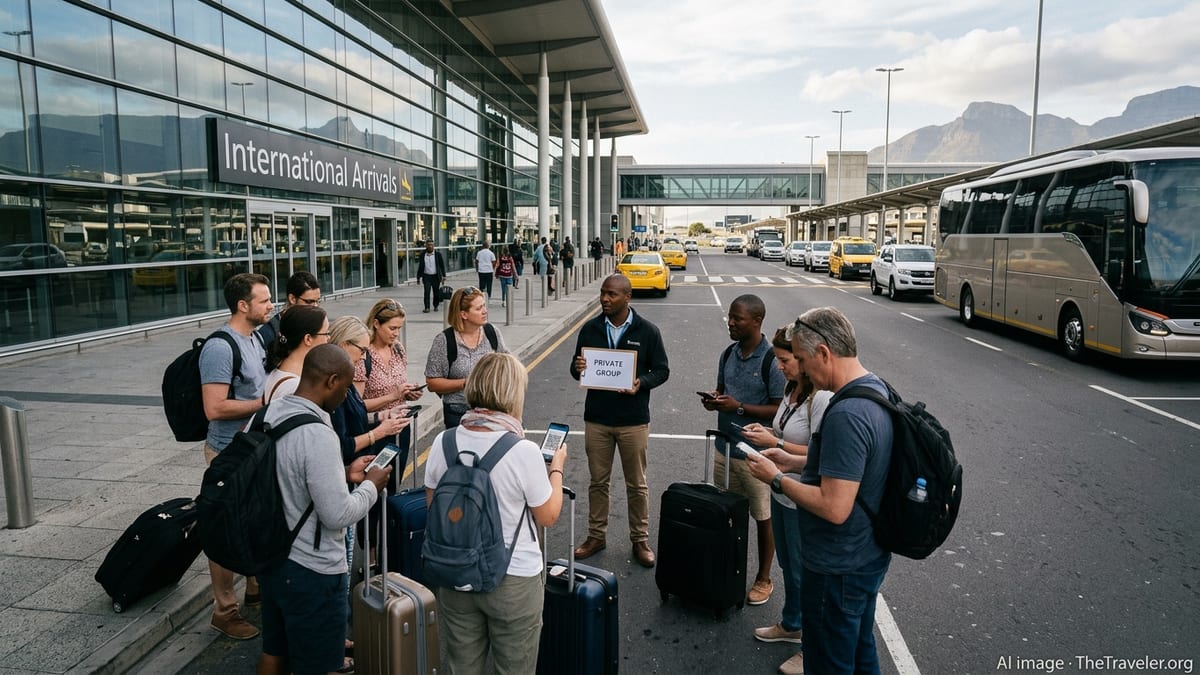
From Paper Stamps to AI Screening
South Africa’s Department of Home Affairs is rolling out a suite of digital entry systems intended to phase out paper-based visas in favor of online approvals stored on mobile devices. Publicly available government statements describe a Digital Visa System and an Electronic Travel Authorisation platform that together aim to make online applications the primary channel for most short-stay visitors. The new systems form part of a broader digital transformation agenda that also includes digital IDs and e-passports.
According to published coverage, a national digital visa platform entered full operation in September 2025, with travelers applying online, uploading documents and biometrics, and receiving QR-coded approvals for presentation at the border. Reports indicate that artificial intelligence tools are being embedded into the Electronic Travel Authorisation to screen applications, flag anomalies, and reduce manual handling at consulates and ports of entry.
For group travel operators, the transition changes the operational center of gravity from in-person consular appointments to remote, pre-travel digital workflows. Instead of managing paper applications or coordinating embassy visits, operators must now build capacity to support clients through online forms, biometric uploads, and real-time status checks, often across multiple source markets with different eligibility rules.
Industry analyses suggest that South Africa ultimately plans for all visa-required nationalities to pass through the digital system, including tourists, business visitors, and categories such as digital nomads. For companies running escorted tours, incentives travel, and student groups, this points to a near-future in which every traveler’s eligibility and documentation can be verified digitally before departure, but only if operators adapt their processes early.
Trusted Tour Operators and High-Volume Groups
Even before the full digital rollout, South Africa began testing a more targeted model designed specifically around group travel. The Trusted Tour Operator Scheme, launched in early 2025, created a digital-first channel for selected operators in key Asian markets to obtain tourist visas for clients without sending them to consulates. Government newsletters and tourism briefings report that thousands of visitors from China and India have already entered South Africa under this program.
Under the Trusted Tour Operator Scheme, eligible operators submit consolidated digital manifests and documentation through a dedicated portal, allowing visa decisions for entire tour groups to be processed within compressed timeframes. Public information indicates that outcomes are delivered electronically, reducing the risk of clients missing departures while waiting for paper passports to be returned.
This approach has immediate implications for global group specialists. Operators that qualify under similar trusted-scheme criteria in future expansions may gain competitive advantages through faster turnaround times, lower administrative overhead, and more predictable confirmation windows. Conversely, companies that fall outside these schemes could find it harder to compete on lead times and price in markets where digital group processing becomes the norm.
Published commentary from trade associations suggests that authorities view trusted digital channels as a way to prioritize bona fide tourism operators while filtering out fraudulent applications. That framing places a premium on compliance histories, data integrity, and the ability of operators to maintain transparent records of group movements and client identities.
MEETS: A New Visa Channel for Events and Congresses
In March 2026, South Africa added a further layer tailored specifically to high-volume events by introducing the Meetings, Exhibitions, Events and Tourism Scheme, known as MEETS. Official notices describe MEETS as a catalytic visa reform intended to streamline entry for large delegations attending conferences, exhibitions, sporting tournaments, and major cultural or entertainment events hosted in the country.
Publicly available information shows that MEETS is designed as a digital gateway for accredited domestic event organizers to submit bulk visa requests for participants and audiences. The scheme emphasizes online submissions, accelerated processing, and standardized requirements, with the goal of ensuring that visas are not a bottleneck when South Africa secures time-sensitive global events.
For group travel operators, MEETS represents both an opportunity and a strategic challenge. Event-focused destination management companies, professional conference organizers, and incentive specialists that partner with MEETS-accredited organizers could position themselves as end-to-end solutions providers, bundling visa facilitation with accommodation, transport, and on-the-ground logistics. At the same time, operators will need to align their internal systems with MEETS workflows, including data-sharing protocols and cut-off timelines for delegate registrations.
The scheme may also reshape how operators design event-related products. With a clearer pathway for processing high-volume applications tied to specific events, companies can plan more ambitious pre- and post-event touring itineraries, knowing that visa decisions for core groups are more likely to be synchronized with event schedules. However, this benefit depends on precise coordination between travel planners, event organizers, and the digital visa platform.
Operational Risks, Technical Glitches, and New Compliance Burdens
While the direction of travel is toward frictionless digital entry, the transition has not been without setbacks. Over recent years, forum discussions and traveler reports have highlighted issues with South Africa’s early e-visa iterations, including stalled applications, payment failures, and non-functioning confirmation emails on some channels. These experiences underline the importance for operators of not assuming that digital automatically means seamless.
For group travel providers, system instability can translate into significant commercial risk. If a portion of a tour group experiences delays or technical errors in the digital visa process, operators may face complex rebooking decisions, reputational impacts, and additional support costs. The new systems reduce reliance on physical paperwork but increase dependence on platform uptime, browser compatibility, and timely integration with airline check-in systems.
Digitalization also brings heightened data responsibilities. Group operators handling large volumes of passport scans, biometric data, and payment details must ensure that internal security protocols match the sensitivity of the information they process. As applications shift from consular counters to cloud-based platforms, clients are likely to ask more questions about where their data is stored, who can access it, and how long it is retained.
Compliance complexity is another factor. The coexistence of traditional visas, electronic travel authorisations, trusted operator schemes, event-specific programs such as MEETS, and emergent options like digital nomad visas means that eligibility rules can differ significantly between markets and traveler profiles. Operators will increasingly need specialized visa knowledge in-house or through partnerships to navigate overlapping frameworks and minimize last-minute surprises.
Strategic Playbook for Group Travel Operators
Against this rapidly evolving backdrop, group travel operators selling South Africa are beginning to recalibrate their strategies. Industry commentary points to a growing expectation that digital visa facilitation will become a core service offering rather than an optional add-on, particularly for complex itineraries and incentive groups that involve multiple nationalities.
One emerging priority is systems integration. Operators are exploring ways to connect customer relationship management tools and booking platforms with visa-tracking dashboards, enabling real-time visibility of application stages for every group member. This kind of integration can help sales teams avoid overpromising on departure dates, while operations teams can proactively intervene when approvals are delayed or additional documentation is requested.
Another focus is market selection. Because South Africa’s digital initiatives have, in some cases, launched first for specific nationalities or regions, operators may choose to prioritize source markets where digital processing is already mature and reliable. Doing so can reduce risk while the wider rollout continues and provides a testbed for refining internal digital workflows before scaling into more complex markets.
Training is becoming just as important as technology. Frontline sales staff, group coordinators, and destination managers need up-to-date briefings on which clients qualify for e-visas, Electronic Travel Authorisation, or schemes like MEETS or the Trusted Tour Operator platform, and what each pathway requires. Operators that invest early in this knowledge base are likely to be better placed to reassure nervous travelers, manage expectations, and convert interest into bookings.
Looking ahead, South Africa’s move to digital visas appears set to make the destination more accessible to well-organized groups while raising the bar for operational discipline. For group travel operators across leisure, MICE, and educational segments, the winners are likely to be those that treat digital visas not as a back-office chore, but as a strategic lever integrated into product design, risk management, and client service.