

More news on this day
South America is entering one of its strongest tourism cycles since before the pandemic, with recent booking patterns pointing to particularly robust demand for Patagonia’s far south and Peru’s Andean heartland.
Get the latest news straight to your inbox!
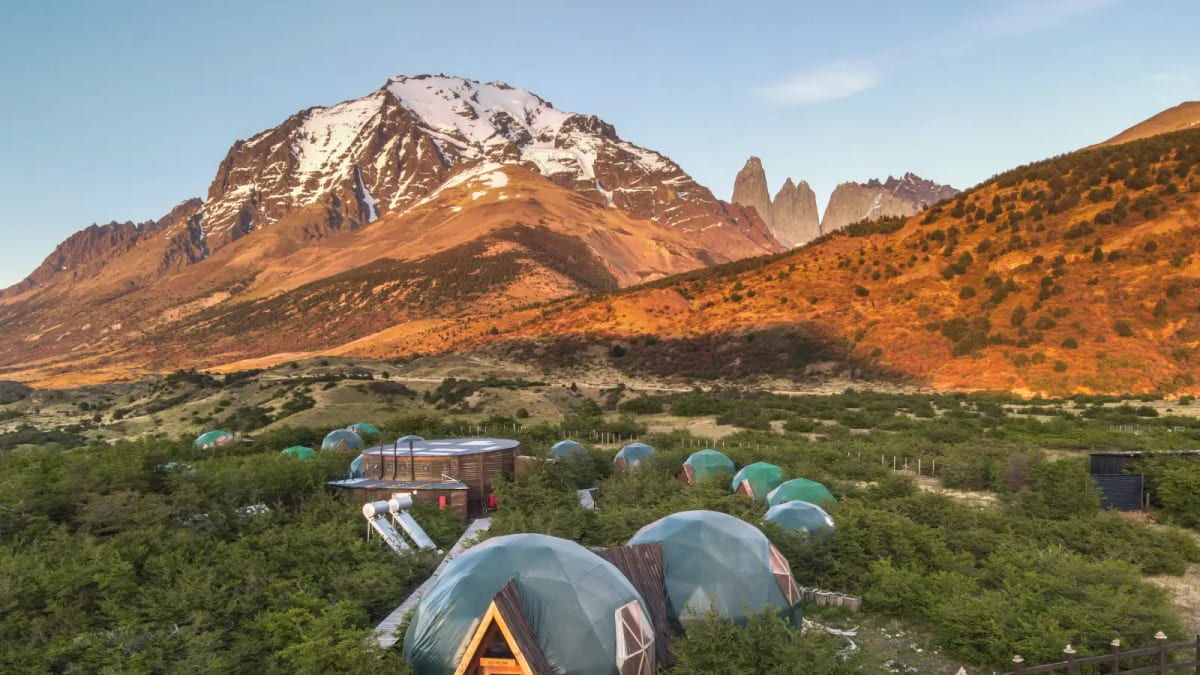
Image by Focus on Travel News
Fresh data points to renewed appetite for South America
Global tourism continued to recover in 2025, with international arrivals climbing toward record territory, and industry reports for early 2026 suggest that South America is benefiting from this momentum. Market analyses of air travel and hotel bookings show that long-haul leisure trips are holding up despite higher costs, with travelers increasingly willing to commit to complex itineraries that combine nature, culture, and adventure.
Within this broader picture, recent booking presentations from major travel companies and online agencies highlight Latin America as a bright spot, even as some regions face softer demand. These datasets point to solid year-on-year growth for itineraries that pair urban gateways such as Buenos Aires, Santiago, and Lima with wilderness and heritage destinations. According to publicly available information from industry trend bulletins, routes between North America and South America have maintained steady passenger growth, supported by resilient leisure demand.
Travel trend forecasts for 2026 further underscore this shift, noting that travelers are increasingly seeking what are described as “meaningful” and “experience-rich” trips. In these reports, South American destinations regularly appear in the context of multi-day treks, wildlife viewing, and cultural immersion, positioning the continent as a natural choice for travelers looking beyond standard beach or city breaks.
Patagonia’s summer 2025–26 season sees bookings fill up early
At the southern tip of the continent, Patagonia is emerging as one of the strongest performers. Tour operators specializing in the region report that fixed departures for the 2025–26 austral summer are filling well in advance, in some cases months before the season begins. Program brochures for expedition cruises through the fjords of Tierra del Fuego, as well as overland and trekking itineraries, show expanded schedules running from October 2025 through March 2026, reflecting confidence in sustained demand.
Adventure-focused companies with operations in Chilean and Argentine Patagonia have added departures after initially testing limited series trips in Northern Patagonia, according to published coverage in niche travel magazines. One operator described demand for Northern Patagonia journeys as among its fastest-growing offerings for 2025 and 2026, prompting additional departures to be added to the calendar.
Booking guidance from Patagonia specialists indicates that key trekking routes such as the “W” and “O” circuits in Chile’s Torres del Paine National Park, as well as popular glacier experiences around El Calafate and Los Glaciares National Park, are now commonly sold on a capacity-managed basis. Publicly available booking guides recommend securing peak 2026 summer slots for glacier navigation and ice trekking several months ahead, highlighting how quickly daily quotas and prime departure times are being reserved.
Despite periodic challenges, including wildfire seasons and inflationary pressure in parts of Argentina, travel commentary from recent seasons notes that visitor numbers to Patagonia’s flagship parks have returned to pre-pandemic rhythms. Local resort towns such as Puerto Natales and El Calafate are reporting full or near-full occupancy across the core summer months, reinforcing the picture of a region operating close to capacity during high season.
Peru’s Machu Picchu drives a powerful but constrained rebound
Further north, Peru continues to anchor Andean tourism, with Machu Picchu at the center of the country’s recovery. Official visitor statistics for 2024 and 2025 show that the Inca citadel has nearly regained or surpassed pre-pandemic totals, with annual counts approaching 1.5 million visitors. National tourism data indicates that international arrivals to Peru exceeded 4 million in 2025, still slightly below the 2019 peak but significantly higher than during the pandemic years.
To manage surging demand, Peru’s Ministry of Culture and related agencies have raised and restructured daily capacity at Machu Picchu, using timed circuits to spread visitors throughout the site. Government notices and travel-industry briefings for 2025 outline maximum daily capacities of around 4,500 visitors on regular days, increasing to roughly 5,600 on selected peak dates. Reports from ticketing platforms and local tourism offices in Cusco describe certain months, particularly in the dry season, as effectively sold out well in advance.
Recent coverage in Peruvian and international media highlights both the economic importance and the pressures generated by this boom. Analyses describe chronic ticket shortages at Machu Picchu as a potential brake on wider tourism growth, prompting authorities and industry stakeholders to promote alternative circuits across the Sacred Valley, the Andean south, and emerging destinations such as Kuelap and the northern beaches. At the same time, sustainability studies note that Machu Picchu has become a benchmark site for waste management and emissions-reduction initiatives, as Peru seeks to balance access with conservation.
Events such as the December 2025 collision on the rail line linking Cusco and Machu Picchu have drawn attention to infrastructure vulnerabilities along the main tourist corridor. Nonetheless, subsequent booking and visitation data for 2025 suggest that overall demand has remained strong, with the site continuing to function as a key draw not only for Peru but for South America’s image as a whole.
Year-round and “meaningful” travel trends favor both destinations
Broader travel trend research for 2025 and 2026 indicates that travelers are shifting away from strictly defined peak periods and are more willing to travel during shoulder seasons. A recent global hotel booking study based on more than 100 million reservations found that, in most markets, the single busiest month now accounts for a smaller share of annual arrivals than in previous years. Analysts interpret this as a sign that travelers are deliberately seeking quieter periods and different weather windows, spreading demand more evenly through the year.
This pattern appears to directly benefit destinations such as Patagonia and Peru. In Patagonia, milder conditions in October–November and March–April are increasingly marketed as ideal for trekking and road trips, with fewer crowds and more stable prices than during the high-summer holiday period. Operators’ calendars for the 2025–26 season confirm more trips scheduled at the edges of summer, reflecting stronger interest in these months.
In Peru, the growth of alternative experiences around Machu Picchu, including lesser-known treks and community-based tourism in the Sacred Valley and Andean highlands, aligns closely with what major travel platforms describe as the rise of “meaningful” travel. Trend reports from large review and booking sites point to increased interest in endurance events, hiking challenges, and immersive rural stays, citing examples that range from ultra-marathons in Patagonia to multi-day Andean treks terminating at Machu Picchu.
Industry analysts also note that South America’s relative affordability compared with parts of Europe and North America, combined with expanding air connectivity, is making complex itineraries more accessible. New or expanded routes into regional hubs such as Santiago, Buenos Aires, and Lima shorten total journey times to Patagonia and Peru, opening the door to combined trips that link glaciers and fjords with archaeological sites and gastronomic capitals.
Capacity, pricing and sustainability shape the next phase of growth
Even as demand rises, both Patagonia and Peru face structural constraints that are likely to shape how growth unfolds in the next few years. In Patagonia, capacity in key national parks is inherently limited by fragile ecosystems and by the small number of beds in refuges, campgrounds, and remote lodges. Travel advisories aimed at the 2025–26 season already emphasize the importance of early reservations for accommodations inside Torres del Paine and along popular trekking routes, signaling that supply cannot expand indefinitely.
In Peru, capacity caps and ticketing reforms at Machu Picchu are central to any further increase in visitor numbers. Environmental assessments and heritage-management plans suggest that daily visitor limits will remain tight even if overall annual arrivals to the country grow. This dynamic is encouraging tour operators to diversify Peru itineraries toward lesser-known archaeological sites, Amazon lodges, and coastal regions, broadening the geographic spread of tourism benefits.
Rising prices, particularly in remote parts of Patagonia, could also become a moderating force on demand. Travel forums and operator price sheets for 2025 highlight significant cost increases for lodging and logistics in certain Argentine destinations, partly due to inflation. However, analysts point out that long-haul travelers booking once-in-a-lifetime trips may still be prepared to absorb higher costs, particularly when weighed against currency movements and the perceived value of the experience.
Against this backdrop, South America’s broader tourism outlook for 2026 and beyond appears cautiously optimistic. Booking and visitation data suggest that Patagonia and Peru will remain at the forefront of the continent’s appeal, functioning as flagship destinations that draw travelers who often add on secondary stops in neighboring countries. The challenge for the region will be to manage this surge in a way that protects landscapes and heritage sites while maintaining the sense of remoteness and authenticity that underpins their current rise in popularity.