

More news on this day
Interstate 90 and Interstate 29 have reopened across South Dakota after a powerful late-winter storm, but statewide no-travel advisories remain in place as high winds, drifting snow and near-zero visibility continue to create hazardous conditions on Sunday.
Get the latest news straight to your inbox!
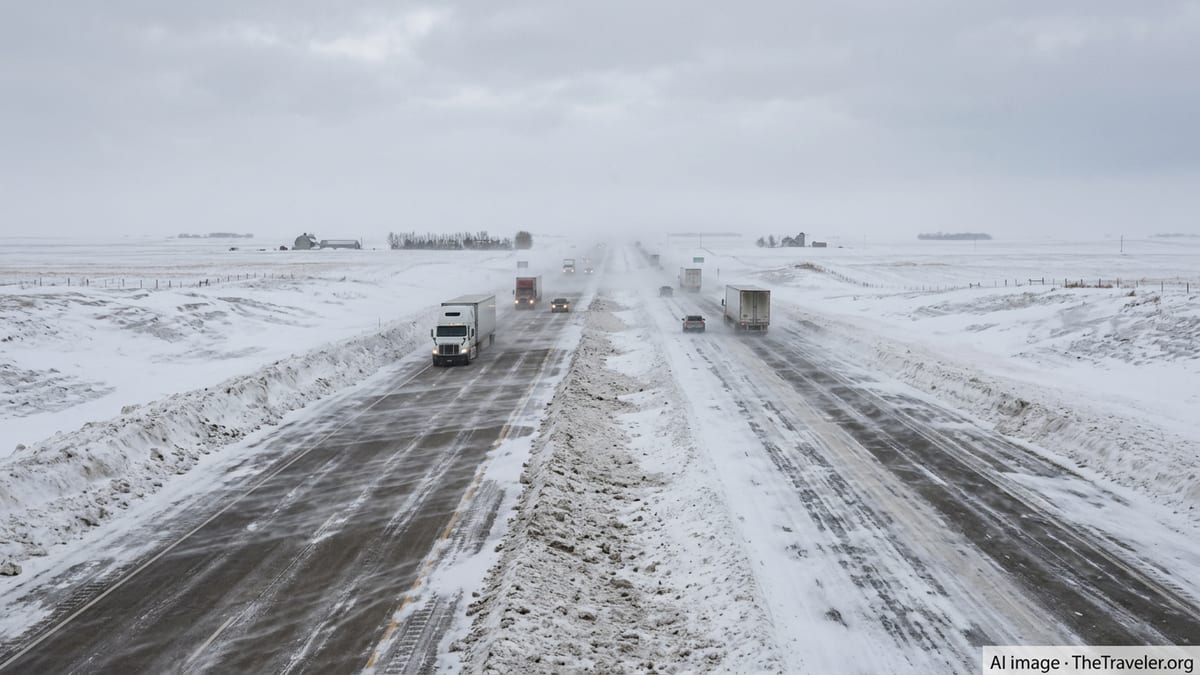
Major Corridors Reopen After Widespread Closures
Following hours of full closures during the height of the storm, transportation updates on Sunday indicate that traffic is once again moving on both Interstate 90, which cuts east to west across the state, and Interstate 29, the primary north–south route in eastern South Dakota. Plow crews spent much of the night clearing deep drifts and addressing stranded vehicles, allowing the key freight and travel corridors to gradually reopen in segments before being restored end to end.
State road condition maps and regional media coverage show that while the interstates are technically open, many stretches remain labeled as difficult or hazardous, with compacted snow, ice and drifting still reported. Travel speeds are reduced, and visibility can drop quickly in open country as winds lift loose snow from adjacent fields and blow it across the roadway.
The decision to reopen the interstates follows a period of intense snowfall and whiteout conditions that led to rolling closures on Saturday. In several areas, routes were shut before the heaviest bands arrived, part of a strategy that recent storm seasons have shown can reduce the risk of mass strandings when rapid deterioration is expected.
Commercial traffic has resumed through much of the corridor, but transport bulletins and trucking advisories continue to reference chain restrictions and caution for high-profile vehicles exposed to crosswinds. Many drivers are being urged to delay long-haul movements where possible until conditions further stabilize.
No-Travel Advisory Still Covers Much of the State
Despite the reopening of I-90 and I-29, an overarching message of “no travel advised” remains in place across large portions of South Dakota. Publicly available information from the state’s 511 system and local broadcasters continues to stress that open roads do not equate to safe driving, especially in rural counties where visibility can drop abruptly between sheltered towns and open prairie.
No-travel advisories are used in South Dakota as a strong caution when blowing snow, ice, or blocked lanes make journeys risky, even when formal closures are not in effect. Under this status, motorists who choose to drive are often warned that assistance may be delayed if they become stranded, as plows and emergency responders focus on primary routes and life-safety calls.
Reports from communities along both interstates describe vehicles sliding into ditches, snowplows encountering hard-packed drifts, and secondary highways that are technically passable but narrowed by windblown snow. In some open areas, drifts are said to extend across the full width of the roadway, creating sudden choke points and blind corners for unsuspecting drivers.
Local commentary and regional coverage also highlight frustration among some residents who see clear pavement in town but encounter near-whiteout conditions only a few miles outside city limits. The contrast underscores why transportation agencies continue to urge against discretionary travel until the wind eases and cleanup can progress.
Storm Impacts Stretch From Plains Towns to Rural Backroads
The weekend storm has disrupted daily life across much of South Dakota, from urban centers such as Sioux Falls and Rapid City to smaller communities along the interstate corridors and remote rural townships. Heavy snowfall and intense winds have affected school schedules, church services, and local events, many of which were postponed or canceled as forecasts signaled worsening conditions.
Rural backroads and gravel routes are among the hardest hit, with wind-carved drifts creating deep ruts and making some farm and ranch properties temporarily inaccessible. County-level updates indicate that crews are prioritizing main highways and critical access routes before turning to lower-volume roads, a process that can take multiple days in widespread blizzard conditions.
Utility disruptions have also been reported in pockets of the state, particularly where ice accumulation and strong gusts downed lines or damaged distribution infrastructure. While many outages have been short-lived, residents in sparsely populated areas are accustomed to preparing for extended interruptions during severe winter weather and often rely on backup heat sources and stocked pantries.
Travel-related businesses such as fuel stations, roadside motels, and truck stops along I-90 and I-29 have seen surges in demand as drivers seek safe places to pause their journeys. Some travelers have opted to remain parked even after roads reopened, choosing to wait for improved visibility rather than risk overnight drives on wind-swept pavement.
Officials Urge Caution as Winds and Drifting Persist
Forecast discussions from national weather outlets and regional meteorologists point to lingering wind as the primary concern through late Sunday and into Monday. Even as active snowfall tapers, strong gusts across open prairie are expected to continue lifting and redepositing snow, recreating drifts on previously cleared lanes and rapidly reducing visibility in exposed stretches.
Public bulletins emphasize that conditions can change quickly, particularly on the long, open segments of I-90 across central South Dakota and along I-29 near the state’s eastern border. Drivers who do choose to travel are being advised through broadcast and online channels to carry winter survival kits, maintain at least a half tank of fuel, and keep mobile devices charged in case of emergencies.
Weather models suggest that temperatures will remain below freezing for a period following the storm, limiting melting and keeping slick spots in play on shaded curves, bridge decks, and overpasses. Daytime sun may help improve traction on some surfaces, but refreezing after dark could restore icy patches and black ice hazards.
Reports also caution that snowbanks piled along shoulders can obscure animals entering the roadway and reduce space for evasive maneuvers. Drivers are being encouraged to reduce speed well below posted limits where visibility is limited or where plows and heavy equipment are operating.
What Travelers Should Know Before Hitting the Road
For those with essential trips into or across South Dakota, travel planners are recommending a conservative approach even as interstate closures lift. Checking the state’s real-time road condition maps, consulting updated weather forecasts, and contacting lodging options ahead of time can reduce the risk of becoming stranded between communities.
Motorists are being encouraged to avoid relying solely on GPS routing, which may steer vehicles onto minimally maintained rural roads that remain impassable or unplowed. Instead, emphasis is being placed on sticking to primary highways and well-traveled corridors where plow coverage is most frequent and where other drivers are more likely to be present in case help is needed.
Travel advisories also highlight the importance of basic winter preparedness: warm clothing for every occupant, extra blankets, water, nonperishable snacks, and a small shovel or traction aids. Keeping the vehicle’s exhaust pipe clear of snow when stopped and cracking a window slightly if running the engine for heat are standard safety tips that gain new urgency when winds drive snow against parked vehicles.
With I-90 and I-29 now open but a statewide no-travel message still in effect, the overarching guidance remains to postpone nonessential journeys until plows and calmer weather can fully restore South Dakota’s road network. For many travelers, waiting a day may prove safer and less stressful than testing the limits of late-season winter conditions.