

More news on this day
South Korea and Taiwan are sharpening their focus on bilateral tourism growth through a new direct air link between Incheon and Hualien, backed by generous charter-flight subsidies for travel agencies aiming to funnel more visitors to Taiwan’s less-traveled east coast.
Get the latest news straight to your inbox!
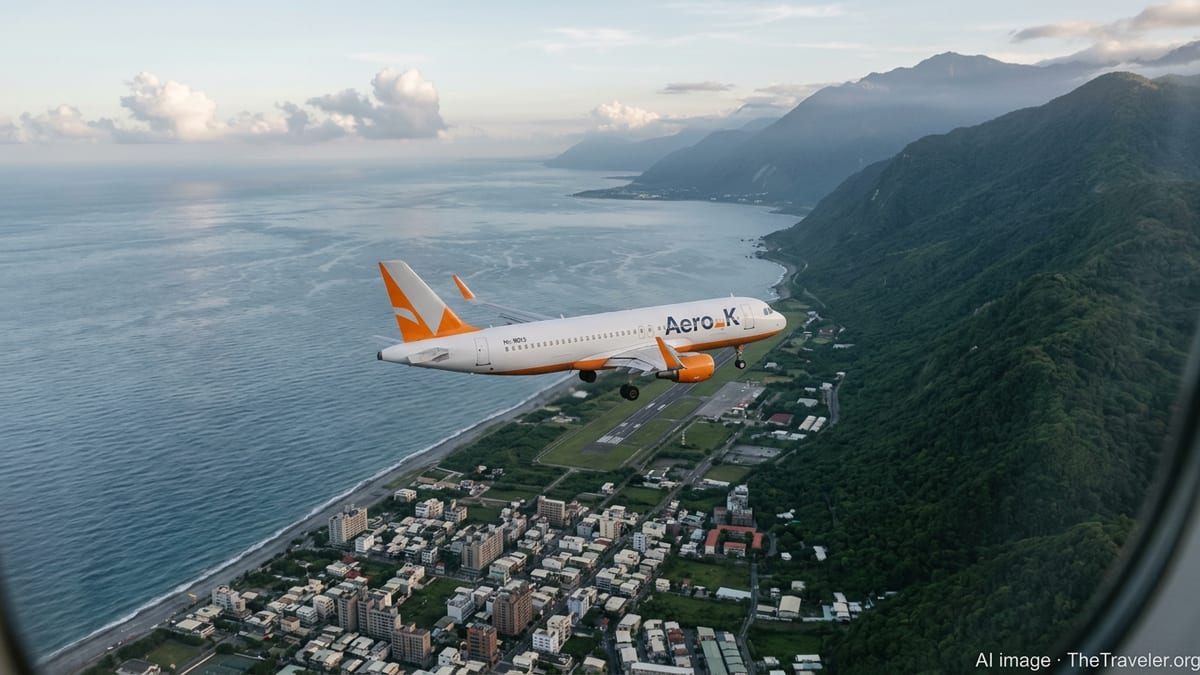
New Incheon–Hualien Route Puts Taiwan’s East Coast on the Map
The launch of regular direct flights between Incheon International Airport and Hualien has created the first non-stop air bridge in Northeast Asia to Taiwan’s rugged east coast, cutting travel time for Korean visitors to around two hours and forty minutes. Operated by South Korean low-cost carrier Aero K Airlines, the service connects one of Asia’s busiest hubs with a region that has historically relied on domestic links and indirect international connections.
Flights on the route began in mid-November and are currently operated twice weekly, typically on Thursdays and Sundays, offering new options for both short-break visitors and longer-stay travelers. Hualien County officials have framed the link as a strategic milestone, positioning the destination as a natural escape for Korean tourists seeking coastal scenery, national parks and slower-paced town life compared with Taipei and Kaohsiung.
For South Korean travelers, the new route slots into an already dense network of flights to Taiwan’s major cities but stands out by opening direct access to Taroko Gorge, Pacific beaches and indigenous cultural areas without the need for an additional domestic leg. Industry analysts say that convenience is expected to translate into higher repeat visitation and more diversified itineraries beyond the capital.
Subsidies Target Charter Flights and Regional Airports
The air link is being reinforced by a web of financial incentives from Taiwan’s Tourism Administration, which has been reviving and updating subsidy schemes designed to lure international charter flights into secondary airports such as Hualien and Taitung. Under current rules, travel agencies that organize overseas charter flights bringing at least 50 foreign tourists directly into these regional gateways can qualify for sizable per-flight awards, with higher amounts set for services originating in key Asian markets including South Korea.
Policy documents and program announcements outline tiered support based on origin and airport, with additional bonuses for routes that avoid the main Taoyuan and Songshan airports and instead use smaller facilities on Taiwan’s main island. In practice, this means that an operator working with Korean carriers to run charters from Incheon or regional Korean airports into Hualien can count on government support from the outset, reducing financial risk during the route-building phase.
Tourism officials have argued that such subsidies are less about short-term traffic spikes and more about seeding sustainable connectivity outside the Taipei corridor. By making it more attractive for agencies to test new routes and package products to the east coast, they hope to spread visitor spending, ease pressure on overcrowded hotspots and encourage airlines to upgrade successful charters into scheduled services, as has now occurred with the Incheon–Hualien operation.
Joint Tourism Targets and Strategic Market Positioning
The latest moves come as South Korea and Taiwan work toward shared visitor targets, with tourism bodies on both sides publicly floating the goal of reaching three million two-way trips annually in the coming years. Recent bilateral conferences hosted by organizations such as the Taiwan Visitors’ Association and the Korea Association of Travel Agents have highlighted the rapid rebound in air capacity between the two markets and a growing appetite for deeper regional cooperation.
There are now hundreds of weekly flights connecting South Korean cities with Taiwan, departing not only from Incheon and Gimpo in the Seoul area but also from Busan, Jeju, Daegu and Cheongju. Korean low-cost carriers including Aero K and T’way Air have been especially active in opening new routes and seasonal charters beyond Taipei, linking Taiwanese cities like Taichung, Kaohsiung and Penghu to secondary Korean hubs.
Within this broader network, Incheon–Hualien is being positioned as a high-impact niche route that showcases Taiwan’s east coast while complementing recent initiatives such as new links to Busan and expanded services to central Taiwan. Market research from Korean agencies indicates that destinations such as Hualien and neighboring Yilan have gained visibility among younger travelers seeking nature-focused itineraries, presenting an opportunity for differentiated marketing campaigns and themed tour products.
Travel Agencies at the Center of the New Tourism Pipeline
Travel agencies in both markets have emerged as key intermediaries in turning policy tools and new air links into tangible visitor flows. Korean wholesalers and online retailers have started bundling Incheon–Hualien flights into package tours that combine coastal stays with excursions to Taroko National Park, hot springs, night markets and farm stays, often with a focus on small-group experiences.
On the Taiwanese side, local operators are tailoring itineraries to Korean preferences highlighted in recent surveys, such as interest in café culture, scenic rail journeys and soft adventure like hiking and cycling. Hualien’s tourism authorities have rolled out additional support, including a multilingual smart tourism platform and training for guides and hospitality staff to better serve Korean visitors.
Subsidy programs are structured so that agencies share in the upside of early route development. Charter-flight incentives help cover initial seat blocks, marketing costs and risk on untested departures, while successful load factors can pave the way for more frequent flights or upgraded aircraft. Industry executives say this model, already used for charters to other Taiwanese regional airports, is now being replicated and fine-tuned for the Incheon–Hualien corridor.
Economic and Cultural Ripple Effects Across the Region
Beyond passenger numbers, officials in Hualien and Seoul are keen to emphasize the broader economic and cultural dividends expected from tighter air connectivity. For Hualien, increased Korean arrivals are projected to boost revenue for family-run guesthouses, local transport providers, restaurants, artisans and outdoor activity operators clustered around the county’s national parks and coastal attractions.
South Korean tourism stakeholders, meanwhile, see an opportunity to promote reciprocal travel by positioning Korean cities such as Incheon, Busan and Jeju as natural counterparts to Taiwan’s emerging regional destinations. Promotional campaigns have highlighted synergies between coastal landscapes, seafood-focused cuisines and shared interests in wellness, hiking and café culture, framing cross-visits as part of a wider Northeast Asian lifestyle circuit.
With the Incheon–Hualien route now operational and subsidy frameworks actively encouraging agencies to deepen their investment in east coast itineraries, both governments appear committed to using aviation as a lever for regional development and people-to-people exchange. Industry observers will be watching closely to see whether the partnership model built around this single route can be replicated with additional services connecting secondary cities across South Korea and Taiwan.