

More news on this day
Transpacific travel plans were thrown into disarray in recent days after three flights operated by Delta Air Lines and American Airlines across South Korea were cancelled, disrupting key routes from Seoul to Los Angeles and Dallas and leaving passengers scrambling for alternatives.
Get the latest news straight to your inbox!
What Happened on the Seoul–US Routes
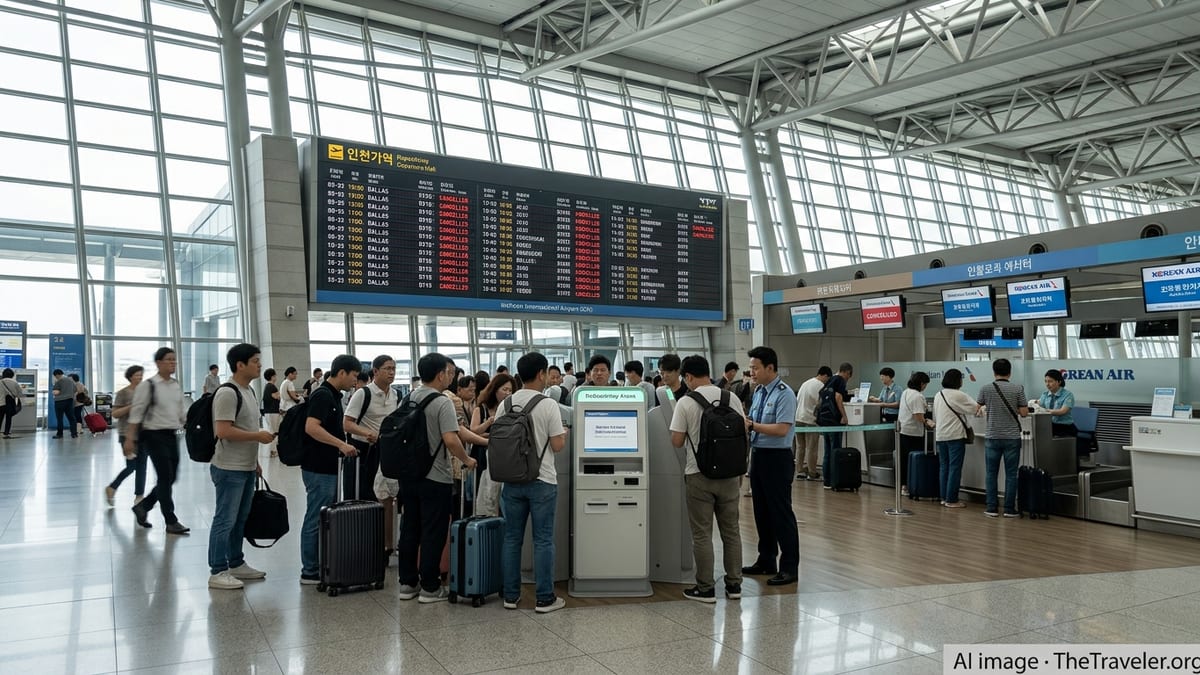
According to published coverage from travel industry outlets, the wave of disruption centered on services linking Seoul’s Incheon International Airport with major US gateways. Two affected services were tied to the busy Seoul to Los Angeles corridor, while another involved the Seoul to Dallas Fort Worth route, an important hub connection for American Airlines. Reports indicate that all three flights were cancelled within a relatively short time window, compounding pressure on already busy long haul schedules.
The cancellations followed a period of generally strong demand on transpacific routes out of South Korea, with carriers including Delta and American marketing Seoul as a key bridge between North America and Asia. When long haul services are withdrawn at short notice, options to rebook on the same day can be limited, especially during peak travel periods. As a result, the impact of just a handful of cancellations on routes like Seoul to Los Angeles or Dallas can ripple quickly through airline and airport operations.
Publicly available flight data and schedule information show that both Delta and American continue to maintain regular operations between Seoul and their US hubs, but the latest disruption has drawn attention to how vulnerable these high demand corridors can be to even short bursts of operational stress. Passengers caught in the middle have reported longer layovers, rerouting over other US cities and overnight stays in Seoul while waiting for replacement flights.
Industry analysts note that isolated cancellations on long haul sectors can sometimes reflect aircraft rotation issues, crew availability challenges or local operational constraints, rather than broad schedule cuts. In this case, the three South Korea flights were removed from service without any immediate indication of a long term reduction, suggesting a short term operational issue that nonetheless had sharp consequences for those booked to travel.
Airline Responses and Passenger Rebooking Options
In the wake of the disruptions, publicly available information shows that both Delta and American have relied on standard rebooking tools, including same carrier alternatives, alliance partners and connections via other hubs. For some Seoul to Los Angeles passengers, this has meant being rebooked via intermediate US or Asian airports, while Seoul to Dallas travelers have in some cases been routed through other American or oneworld network hubs before continuing to Texas.
For affected travelers, rebooking on a long haul route typically hinges on seat availability and aircraft type. Widebody flights between Seoul and major US airports are often close to full, especially in economy cabins, leaving limited scope to absorb displaced customers. Travel trade coverage indicates that some passengers have been shifted to departures one or two days later, while others have opted for refunds and separate arrangements on different carriers.
Airlines operating between South Korea and the United States generally offer flexible options when flights are cancelled, including no fee changes, routing over partner hubs and, in some cases, hotel and meal support when overnight stays become unavoidable. However, the precise level of support can vary by fare type, frequent flyer status and the specific circumstances of the disruption. Passengers are frequently encouraged through public advisories to monitor their reservations in airline apps or online portals and to act quickly when alternative seats appear.
For those still due to travel on upcoming dates from Seoul to Los Angeles or Dallas, industry guidance emphasizes the importance of checking flight status repeatedly in the 24 hours before departure, confirming transit rules for any new connecting points and allowing additional time at the airport in case security or check in areas become congested by rebooked passengers.
Impact on Incheon and South Korea’s Wider Air Network
Incheon International Airport serves as South Korea’s primary international gateway, and disruptions on major long haul services can affect operations far beyond a single gate. Aviation monitoring platforms and schedule trackers show that Incheon handles a dense mix of domestic, regional and intercontinental services, meaning that even a small cluster of cancellations on US bound flights can alter gate assignments, crew rotations and baggage flows across the terminal.
Recent travel industry reporting also highlights that South Korea’s broader air traffic environment is evolving, with ongoing consolidation among domestic carriers and competition from both legacy and low cost airlines on regional routes. In that context, reliability on flagship long haul services to the United States is seen as a competitive differentiator. When global brands like Delta and American experience cancellations, it can open short term opportunities for other carriers selling Seoul to US itineraries via different hubs.
The timing of the three cancelled flights has also drawn attention because it coincides with a period of relatively high international demand from South Korea. Travel search platforms and fare trackers have pointed to strong interest in summer and shoulder season trips from Seoul to the West Coast of the United States, including Los Angeles and other California gateways. Disruptions at the start of this booking window can influence traveler perceptions and encourage some customers to diversify their choice of carriers and routings.
Nonetheless, analysts stress that isolated cancellations, while frustrating, do not necessarily signal a broader structural problem with air connectivity between South Korea and the United States. Both Incheon and the US hubs involved continue to see multiple daily departures on other carriers, meaning that the overall resilience of the network remains relatively strong, even as individual passengers face acute inconvenience.
What Travelers Need to Know Now
For travelers with upcoming itineraries between Seoul and Los Angeles or Dallas, the latest disruptions serve as a reminder to prepare for possible last minute changes. Industry advisories recommend several simple steps: verify contact details in airline profiles so schedule changes can be communicated promptly, download carrier mobile apps for push notifications, and monitor flight status frequently in the days leading up to departure.
Travel experts also emphasize the value of building buffer time into itineraries that rely on tight same day connections after a long haul arrival. Given the length of the Seoul to United States journey, a missed onward domestic flight can translate into long overnight waits or unscheduled hotel stays. Booking slightly longer connections in Los Angeles or Dallas, and avoiding the last flight of the day where possible, can reduce the risk of being stranded.
Another consideration is travel insurance that specifically covers trip interruption and cancellation. Policies differ widely, but some products may reimburse additional hotel nights, meals or replacement flights when disruptions such as these occur. Travelers are advised in consumer guidance to review policy language closely, paying particular attention to what is considered a covered reason for claims and what documentation is required.
Finally, passengers already impacted by the Delta and American cancellations in South Korea are being directed through public information channels to use digital self service tools whenever possible. Rebooking or seeking refunds online can be considerably faster than waiting in long queues at airport counters, especially during multi flight disruption events. While call centers and in person agents remain essential in complex cases, travelers who are flexible with dates, routes and even arrival airports often secure solutions more quickly by acting early and exploring all available online options.
Broader Lessons for Transpacific Flyers
The South Korea cancellations underscore a broader trend in long haul travel in which even well established routes remain vulnerable to sudden operational pressures. Industry data from recent seasons in North America and Asia show that weather disruptions, crew scheduling challenges and aircraft maintenance issues can all trigger localized waves of cancellations, particularly during busy travel periods.
For transpacific passengers, this means that route choice, connection strategy and flexibility are increasingly important. Selecting flights earlier in the day, avoiding especially congested travel dates when possible, and remaining open to routing through alternative hubs can all make a difference when disruptions occur. Travel commentary suggests that passengers who treat schedules as subject to change, rather than fixed, are often better prepared when unexpected events arise.
Despite the latest cancellations involving Delta and American in South Korea, the overall capacity between Seoul and major US cities such as Los Angeles and Dallas remains significant, supported by multiple carriers and alliances. As airlines continue to refine their schedules and deploy larger aircraft on high demand corridors, long haul travelers still have a wide range of options, even if individual flights are occasionally withdrawn at short notice.
The episode ultimately highlights the importance of transparency and timely information in modern air travel. As long as cancellations and delays remain a possibility on complex international routes, passengers will depend on clear public updates from airlines, airports and travel platforms so that last minute changes, while inconvenient, do not derail entire journeys.