

More news on this day
Vietnam is entering 2026 with unprecedented tourism momentum as travelers from South Korea join robust flows from China and Japan, prompting airlines to add new routes and global hotel groups to fast-track projects in emerging eco-tourism hubs such as Gia Lai in the country’s Central Highlands.
Get the latest news straight to your inbox!
Northeast Asia Powers Vietnam’s Record-Breaking Tourism Rebound
Publicly available data from Vietnam’s tourism authorities and recent industry analyses indicate that Vietnam closed 2025 with more than 21 million international arrivals, surpassing pre‑pandemic records and cementing its status as one of Asia’s fastest-growing destinations. China remained the largest source market, while South Korea ranked second and Japan consolidated its position in the top tier of inbound visitors.
Reports show that arrivals from China rebounded sharply through 2025 following the gradual easing of outbound travel restrictions, with Vietnam regaining a sizeable share of Chinese package and free‑independent travelers. South Korean arrivals continued to grow from an already high base, reflecting strong demand for short‑haul beach breaks, golf tourism and K‑culture themed itineraries that pair Vietnam with stopovers in Seoul or Busan.
Japanese travel to Vietnam also showed solid growth, supported by a weak yen that encourages cost‑conscious outbound travel within Asia. Industry statistics for 2025 highlight Japan among Vietnam’s top six visitor markets, with rising seat capacity on routes linking Tokyo, Osaka and Nagoya to Hanoi, Ho Chi Minh City and coastal gateways such as Da Nang and Nha Trang.
Against this backdrop, analysts expect 2026 to mark a new phase in Vietnam’s tourism expansion, driven not only by established coastal hotspots but also by inland provinces like Gia Lai that are repositioning themselves as eco‑adventure destinations for Asian travelers seeking cooler climates and nature‑based experiences.
Airlines Add Capacity as Korean, Chinese and Japanese Demand Rises
Air connectivity between Northeast Asia and Vietnam has expanded rapidly, with Korean, Chinese and Japanese carriers, along with Vietnamese and regional low‑cost airlines, increasing frequencies and launching new routes. Industry schedules for the first half of 2026 show Korean Air consolidating its presence on trunk routes connecting Seoul Incheon with Hanoi and Ho Chi Minh City, while also adding seasonal or secondary city services to destinations such as Da Nang and Nha Trang to capture leisure traffic.
Vietnamese low‑cost carrier VietJet Air has been particularly active in the Korea and Japan markets. Public timetable information indicates that VietJet has been rolling out additional flights linking Ho Chi Minh City, Hanoi and coastal resorts to Seoul, Busan and other Korean cities, as well as expanding its network to Japan with services to Tokyo, Osaka and Fukuoka. These routes are designed to serve both inbound visitors to Vietnam and Vietnamese travelers heading to Northeast Asia.
Chinese airlines, including China Eastern, have also stepped up operations as bilateral travel normalizes. Recent schedule filings and airline announcements point to increased capacity on routes from Shanghai, Kunming and other major Chinese hubs to Vietnam’s primary gateways, alongside charter and seasonal flights to emerging resort areas. The recovery of group travel from China, paired with a growing segment of younger independent travelers, is helping to fill both full‑service and low‑cost flights.
Japanese carriers and Vietnam-based airlines serving Japan have similarly boosted frequencies and adjusted schedules to align with leisure and business demand. The combined effect is a dense web of short‑haul connections that make multi‑country itineraries across Northeast and Southeast Asia more attractive, positioning Vietnam as a key stop on regional circuits that link China, South Korea and Japan.
Visa Policies and Pricing Trends Support 2026 Visitor Surge
Policy changes and relative price advantages are reinforcing the surge in arrivals from Northeast Asia. In 2025, Vietnam extended and expanded its visa exemption and e‑visa programs for several markets, including South Korea and Japan, simplifying entry procedures and enabling longer stays. Observers note that easier digital visa processes and flexible length of stay are particularly attractive for repeat visitors who combine business meetings with leisure extensions.
Currency dynamics are also influencing travel decisions. A weaker Japanese yen has encouraged Japanese travelers to seek destinations where their spending power remains comparatively strong, and Vietnam’s lower costs for accommodation, dining and excursions continue to appeal to value‑oriented visitors. For South Korean and Chinese tourists, Vietnam’s price positioning relative to domestic coastal resorts and other regional competitors remains favorable, especially in second‑tier cities and inland destinations.
Industry commentary highlights that Vietnam’s tourism strategy increasingly focuses on diversifying source markets while deepening ties with core partners in Northeast Asia. Promotional campaigns in Seoul, Beijing, Shanghai and Tokyo emphasize nature, culture and gastronomy, as well as newer themes such as wellness, golf and adventure travel. These efforts are expected to sustain double‑digit growth from South Korea, China and Japan through 2026, subject to broader economic conditions and airline capacity.
Analysts add that continued investment in airports, highways and tourism infrastructure will be essential to manage rising visitor numbers without overstretching capacity in major hubs. This, in turn, is driving attention toward lesser‑known provinces like Gia Lai, where authorities and investors see an opportunity to disperse tourist flows and showcase the country’s highland landscapes and indigenous cultures.
Gia Lai Emerges as Vietnam’s New Eco‑Tourism Frontier
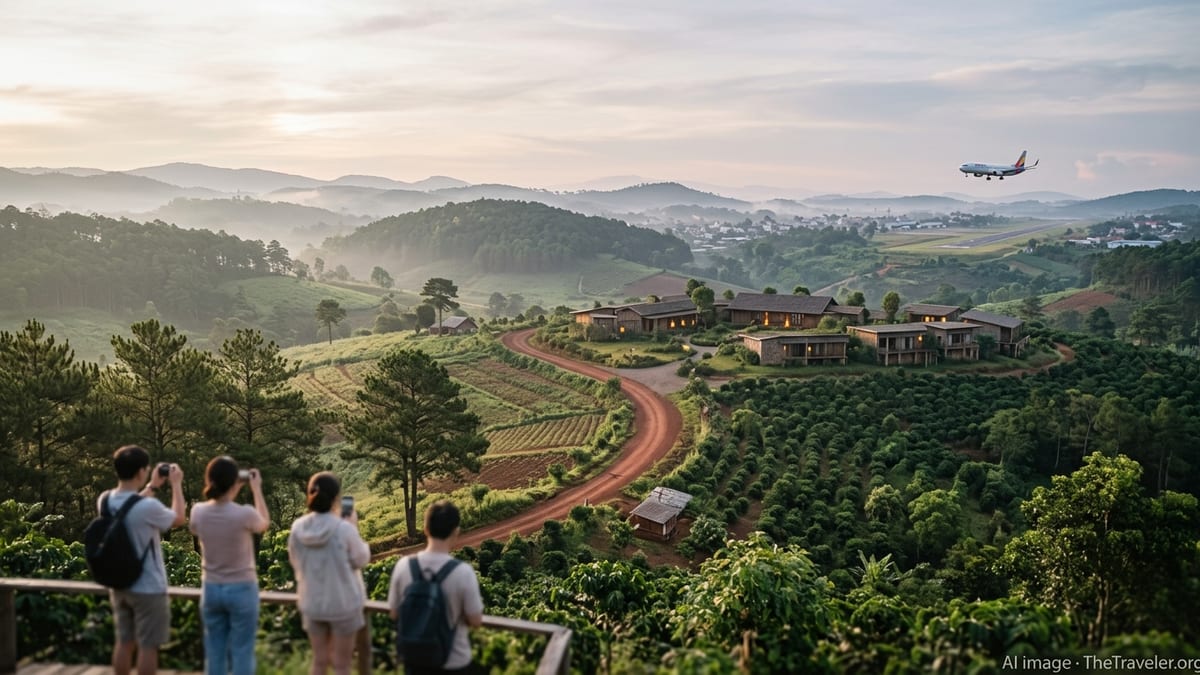
Gia Lai, a mountainous province in Vietnam’s Central Highlands, is increasingly cited in domestic and regional coverage as an emerging eco‑tourism destination. Known for its volcanic plateaus, pine forests, waterfalls and coffee plantations, the province has traditionally attracted mainly domestic travelers and niche adventure groups. Rising inbound interest from South Korea, China and Japan is encouraging local stakeholders to scale up accommodation and tour offerings while prioritizing environmental safeguards.
Development plans reported by Vietnamese media describe efforts to position Gia Lai as a hub for trekking, cycling, bird‑watching and community‑based tourism, with itineraries that include visits to ethnic minority villages and protected natural sites. Cooler temperatures compared with Vietnam’s coastal areas are being marketed as a key selling point to travelers from Northeast Asia seeking respite from summer heat, as well as to those interested in agritourism and coffee culture.
Proximity to major gateways via improving road networks and domestic air links allows Gia Lai to be packaged with more established destinations. Travel agencies are promoting multi‑day circuits that connect Ho Chi Minh City or Da Nang with highland provinces, enabling visitors from Seoul, Shanghai or Tokyo to experience both beaches and highland scenery within a single trip. As airlines add more regional capacity into Vietnam’s primary cities, such inland extensions become logistically easier to arrange.
Local authorities and environmental advocates continue to stress the importance of sustainable planning in Gia Lai. Discussions around carrying capacity, waste management and community benefit sharing are gaining prominence as international brands and domestic investors express interest in larger projects, especially around lakes, waterfalls and forested areas that are central to the province’s tourism appeal.
Global Hotel Groups Target Gia Lai’s Eco‑Luxury Segment
The growing visibility of Gia Lai on regional travel circuits is drawing the attention of international hotel and resort operators. While the province’s accommodation base has historically consisted of small family‑run hotels and guesthouses, publicly available investment reports and local planning documents indicate that major global hospitality groups, including Marriott and Accor, are evaluating or advancing projects in the Central Highlands, positioning themselves for an eco‑luxury segment that caters to affluent travelers from Northeast Asia and beyond.
Across Vietnam, Marriott and Accor have already expanded their portfolios significantly in coastal and urban locations, and industry observers view the Central Highlands as a natural next step in their geographic diversification. Proposed and under‑study projects in and around Gia Lai are expected to emphasize low‑rise architecture, integration with natural landscapes and experiences centered on hiking, wellness, coffee culture and cultural immersion.
Booking trends reported by regional travel agencies and online platforms suggest that higher‑end eco‑lodges and branded resorts in Vietnam’s inland provinces are experiencing faster growth than traditional city hotels, driven by demand from international visitors seeking quieter, nature‑focused stays. As awareness of Gia Lai increases among travelers from South Korea, China and Japan, global brands are positioning themselves to capture this demand with loyalty programs and bundled offers that link highland stays to beach resorts or city hotels elsewhere in Vietnam.
Hospitality analysts note that the entry of large hotel chains typically accelerates supporting investment in transport, dining, retail and guided experiences. For Gia Lai, this could translate into upgraded roads, improved domestic flight connectivity and a broader range of eco‑tourism products. The challenge, they caution, will be ensuring that rapid growth in arrivals from Northeast Asia and other markets is balanced with long‑term environmental stewardship and benefits for local communities who are central to the region’s appeal.