

More news on this day
South Korea’s leading airlines are moving to raise fuel surcharges on international routes as global oil prices spike amid the Iran war and the closure of the Strait of Hormuz, adding fresh uncertainty to the country’s fast-recovering tourism sector.
Get the latest news straight to your inbox!
Carriers Move in Lockstep as Jet Fuel Costs Spike
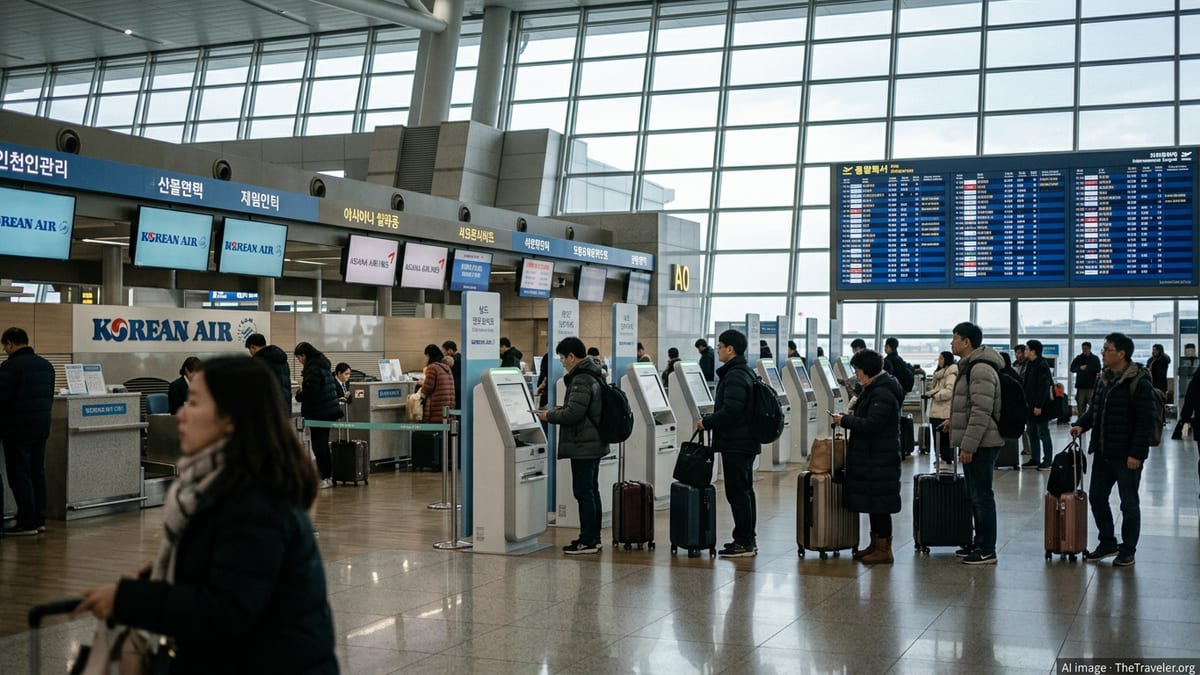
According to recent airline notices and industry coverage, South Korea’s major full-service and low-cost carriers, including Asiana Airlines, Korean Air, Jeju Air, T’way Air, Air Busan and Eastar Jet, are preparing to increase fuel surcharges on international tickets in response to a renewed jump in jet fuel prices. The adjustments, which are typically calculated using benchmark Singapore jet fuel prices and applied in tiered bands, follow several months of relative stability and, in some cases, earlier reductions in surcharges.
Fuel surcharges are generally updated on a monthly or bi-monthly cycle and are separated from base fares, giving airlines a tool to pass on fuel cost volatility more quickly than through fare increases alone. Industry data from early 2026 showed that when Singapore jet fuel prices eased, leading carriers such as Korean Air cut surcharges by moving to lower pricing tiers. The latest surge in energy prices linked to the conflict in the Gulf is now nudging those surcharges back up across multiple South Korean airlines.
For travelers, the impact is most visible on long-haul routes to North America and Europe, where surcharges can account for a sizable share of the total ticket cost. Short-haul routes around Northeast Asia typically see smaller absolute increases, but budget-conscious travelers who had grown used to cheaper international seats during recent months now face an abrupt shift in pricing conditions.
Middle East Tensions Push Oil and Jet Fuel Higher
The Iran war and the effective closure or severe disruption of the Strait of Hormuz have sharply intensified concerns about global energy security. Recent reporting on commodity markets indicates that Brent crude prices have climbed back to around or above the 100 dollar mark, with analysts linking the spike directly to supply risks in the Gulf and attacks on regional oil infrastructure. The crisis has been described by some observers as one of the most significant disruptions to global oil flows in decades.
Asia, and particularly large importing countries such as South Korea, is heavily exposed to these developments because so much of the region’s crude oil and liquefied natural gas typically moves through the Strait of Hormuz. Higher crude benchmarks flow through into jet fuel prices traded in Singapore, the reference market used by South Korean airlines to determine surcharge bands. When those benchmark prices cross specific thresholds, carriers are allowed under domestic regulations to lift surcharges to higher stages, which is the mechanism now being activated.
The timing is especially challenging given that airlines worldwide had only recently benefited from a period of softer oil prices and abundant supply. Earlier projections from international economic institutions suggested that global oil markets in 2025 and 2026 could be characterized by moderate oversupply, which would normally limit sharp price spikes. The escalation of conflict in the Gulf and direct attacks on energy infrastructure have undermined those expectations, reinforcing the link between geopolitical risk and airfare volatility.
Tourism Recovery Faces a New Cost Shock
South Korea’s tourism industry has spent the past two years rebuilding from the collapse in travel during the pandemic, and by 2024 inbound visitor numbers had recovered to roughly pre-2019 levels. Publicly available data from tourism authorities for 2024 and 2025 show strong growth in foreign arrivals and record overall visitor spending, prompting the government and the Korea Tourism Organization to set ambitious targets of more than 18 million foreign visitors annually.
Higher fuel surcharges now pose a test of how resilient that recovery will be. For many visitors, especially from key markets such as Southeast Asia, Europe and North America, airfare remains the single largest cost element of a trip to Korea. While a portion of travelers motivated by the Korean Wave, K-cuisine and major events may absorb moderate increases, others at the margin could postpone or shorten trips if ticket prices climb too far, too quickly.
Industry analysts note that the impact of rising surcharges may be uneven across market segments. Package travelers and group tours, which often secure block fares well in advance, could be partially shielded in the near term, while independent travelers booking closer to departure are more exposed to sudden jumps in surcharges. Low-cost carriers such as Jeju Air, T’way Air, Air Busan and Eastar Jet, which attract highly price-sensitive customers, may feel greater pressure on demand if final ticket prices climb noticeably.
Airlines, Tourism Authorities Look to Cushion the Blow
In the short term, South Korean airlines have limited room to maneuver on fuel surcharges, which are largely formula-based. However, network adjustments, promotional base fares and capacity management may help offset some of the sticker shock for consumers. Publicly available airline schedules show that carriers have steadily rebuilt international capacity, especially on routes to Japan and Southeast Asia where demand is robust and flight times are shorter, keeping overall trip costs somewhat more manageable.
Tourism organizations and local governments are meanwhile focusing on strategies to sustain demand despite higher airfares. Initiatives include expanded visa-waiver schemes for select markets, campaigns highlighting off-peak travel to spread demand throughout the year, and partnerships with airlines and travel agencies to bundle discounts on accommodation, attractions and transportation. These efforts are designed to make up for increased flight costs by lowering on-the-ground expenses and emphasizing the value of a trip to Korea.
Industry commentary also points out that exchange rate movements could partially offset higher fuel surcharges for some visitors. A relatively weaker Korean won against major currencies makes in-destination spending on shopping, dining and entertainment more affordable, which can help international travelers justify higher upfront ticket prices. Tour operators are watching closely to see whether this currency effect, combined with strong interest in Korean culture, will be enough to keep arrival numbers on track with national targets.
Outlook: Volatile Energy Markets Keep Travel Plans Uncertain
Looking ahead, much depends on the trajectory of the conflict in the Middle East and the ability of global energy markets to adapt to disruptions in the Strait of Hormuz. Some commodity analysts argue that increased production from outside the Gulf and drawdowns from strategic reserves could eventually ease pressure on prices if tensions stabilize. Others caution that repeated shocks to oil infrastructure or a prolonged closure of key shipping lanes would keep crude and jet fuel prices elevated for an extended period.
For South Korea’s airlines, this uncertainty means continued reliance on flexible pricing tools, including fuel surcharges, to manage risk. Passengers planning trips in the coming months may see significant month-to-month variation in total ticket prices as surcharge tiers are revised in line with benchmark jet fuel costs. Travel agents and online platforms are encouraging customers to monitor fare trends closely and to consider booking earlier than usual for peak travel seasons.
South Korea’s tourism industry has shown considerable resilience through previous rounds of geopolitical tension and public health crises. The latest round of surcharge hikes adds another layer of complexity, but strong underlying demand for Korean cultural, culinary and entertainment experiences provides some cushion. If energy markets stabilize and oil prices retreat from recent highs, the current increase in travel costs could prove to be a temporary setback rather than a lasting barrier to the country’s tourism ambitions.