

More news on this day
South Sea Cruises has been confirmed as a key sponsor of the 2026 South Pacific Tourism Exchange in Nadi, a partnership that aligns one of Fiji’s most established marine tourism operators with the region’s flagship marketplace for sustainable travel growth.
Get the latest news straight to your inbox!
SPTE 2026 Heads to Nadi With Sustainability in Focus
The 2026 South Pacific Tourism Exchange, scheduled for 25 to 26 March in Nadi, is being promoted as a hub where innovation, market access, and sustainable tourism growth converge for Pacific destinations and international buyers. Publicly available event information highlights sustainability as a central theme, reflecting mounting pressure on island economies to balance tourism expansion with environmental limits.
Hosting the exchange in Fiji places the spotlight on a country that has staked out a visible role in regional climate diplomacy while continuing to depend heavily on travel and tourism. Recent visitor data and industry commentary indicate that Fiji’s tourism recovery has moved into a growth phase, making the question of how that growth unfolds particularly urgent for policymakers, businesses, and communities.
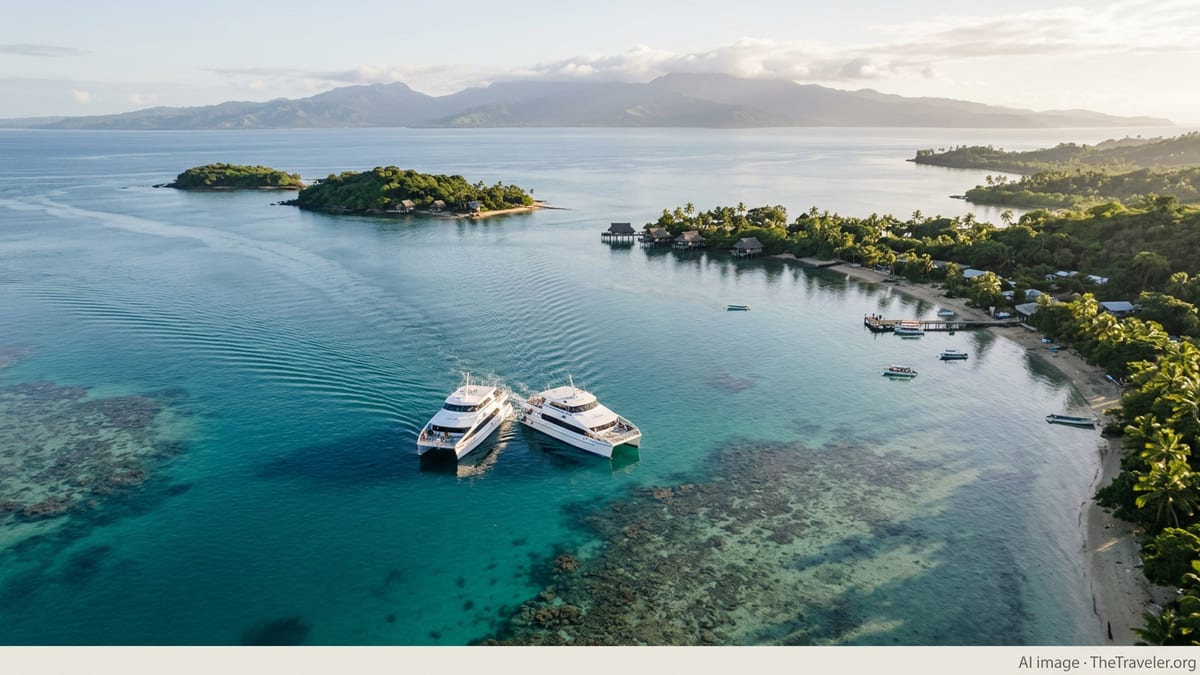
Against this backdrop, South Sea Cruises’ support for SPTE 2026 gives the event a high profile partner from the marine tourism sector. The company’s portfolio of ferries, day cruises, resort transfers, and island experiences across the Mamanuca and Yasawa islands makes it a significant player in how visitors move through some of Fiji’s most sensitive coastal environments.
Organisers and partners are positioning SPTE 2026 as a platform not only for closing deals between Pacific sellers and international buyers, but also for showcasing practical measures that can reduce tourism’s footprint in small island states. The sponsorship arrangement brings a transport and excursions operator directly into that sustainability conversation.
South Sea Cruises Brings Environmental Track Record to the Table
South Sea Cruises has spent the past decade publicising a range of sustainability commitments across its brands, including partnerships with local environmental organisations and community projects. Company sustainability statements describe close cooperation with the Mamanuca Environment Society on reef protection, waste management, and awareness initiatives focused on preserving marine ecosystems that underpin Fiji’s tourism appeal.
Through the Vinaka Fiji charitable organisation, founded by the group, the company supports projects in remote Yasawa communities related to education, infrastructure, and basic services. Public documentation frames these programmes as a way of returning value to villages that host visitors, while reinforcing the social foundations of tourism in outlying islands.
Operational changes have also been cited as part of the group’s sustainability narrative. South Sea Cruises has reported investments in fleet modernisation, fuel efficiency, and the reduction of single use plastics across its vessels and island facilities. Earlier industry coverage noted the company’s achievement of internationally recognised ISO standards for quality and occupational health and safety, a step that is often linked with more systematic management of environmental and safety risks.
As a sponsor of SPTE 2026, South Sea Cruises is likely to draw attention to these initiatives in discussions with trade partners. The association with a sustainability focused regional exchange provides an opportunity for the company to frame marine tourism not simply as a logistics service, but as a driver of better environmental practice and community outcomes.
Showcasing a Regional Shift Toward Low Impact Tourism
The South Pacific Tourism Exchange is designed as a marketplace for dozens of island destinations, from larger hubs such as Fiji to smaller states that are deeply vulnerable to climate impacts. Recent assessments of sustainable tourism across Pacific sites point to rising interest in experiences that limit pressure on fragile reefs, coastal ecosystems, and freshwater supplies while delivering direct benefits to local communities.
Within this regional context, South Sea Cruises’ sponsorship underscores the role that cruise and marine operators can play in shifting visitor flows and product design. By curating excursions, transferring guests to eco focused resorts, and integrating reef safe practices, transport providers influence both the physical footprint of tourism and the expectations of international buyers.
Other Pacific operators, from small ship cruise lines to eco lodges, have also been promoting lower impact itineraries, voluntary certifications, and conservation partnerships. SPTE 2026 offers a venue where such efforts can be presented side by side, allowing buyers to compare how different brands approach issues like waste management, energy use, and support for local suppliers.
The presence of a large Fijian marine operator in the sponsorship roster may encourage more detailed conversations about standards for marine tourism, including voluntary codes of conduct for reef visits, anchoring practices, and cultural protocols in coastal villages. These topics have gained prominence as demand grows for day trips and island hopping in the South Pacific.
Nadi’s Tourism Hub as a Living Laboratory
Nadi, anchored by Port Denarau, has developed into Fiji’s primary departure point for cruises, ferries, and resort transfers to the outer islands. Public information about South Sea Cruises shows the group headquartered there, operating a network of vessels and island destinations within a relatively compact but environmentally sensitive maritime area.
That concentration of activity turns the Denarau and Mamanuca region into a de facto laboratory for sustainable tourism practices. Measures such as reef monitoring programmes, coral planting projects, and local waste reduction campaigns are often piloted in these high traffic zones before being replicated elsewhere in the country.
By aligning SPTE 2026 with a sponsor deeply embedded in this maritime hub, organisers can highlight real world examples of both the challenges and solutions facing Pacific tourism. Delegates attending the exchange will be within easy reach of sites where coastal erosion, reef degradation, and climate related weather impacts intersect directly with tourism infrastructure.
At the same time, the proximity to operational projects supported by South Sea Cruises and partner organisations may allow visiting trade professionals to observe how community partnerships, environmental safeguards, and commercial imperatives are negotiated on the ground. This connection between conference discussions and nearby practice can lend weight to sustainability pledges made during the event.
Implications for Buyers, Communities, and Policy
For international travel buyers, the South Sea Cruises sponsorship signals that marine and cruise products are central to how the Pacific is repositioning its tourism offer. Product managers and tour wholesalers scouting SPTE 2026 are likely to encounter packages that foreground reef friendly activities, community visits, and longer stays that spread spending more evenly across local economies.
Pacific communities, particularly in outer islands, stand to benefit if sponsorship arrangements and trade deals translate into more stable employment, expanded sourcing from village enterprises, and investments in infrastructure that also serves residents. Publicly available project descriptions from the company and its charitable arm suggest that education facilities, water systems, and small scale construction have featured in past support to partner communities.
The policy implications are also significant. As governments across the region refine tourism strategies to align with climate goals and biodiversity commitments, partnerships that integrate private operators into sustainable development objectives are drawing increased interest. Visible corporate backing for a sustainability framed regional exchange strengthens the case for involving industry in discussions about emissions reduction, marine conservation, and resilience planning.
How effectively these ambitions translate into measurable change will depend on the standards, reporting, and community consultation frameworks that follow. With SPTE 2026 approaching and South Sea Cruises attached as a prominent sponsor, attention is likely to focus on whether the event can move beyond promotional messaging to catalyse practical steps toward a low impact, high value model of tourism in the Pacific.