

More news on this day
A multi-million-pound upgrade of the South Wales relief lines between Cardiff and Severn Tunnel Junction is moving forward, with plans to raise line speeds, unlock new stations and reshape tourism flows across one of the United Kingdom’s busiest cross-border rail corridors.
Get the latest news straight to your inbox!
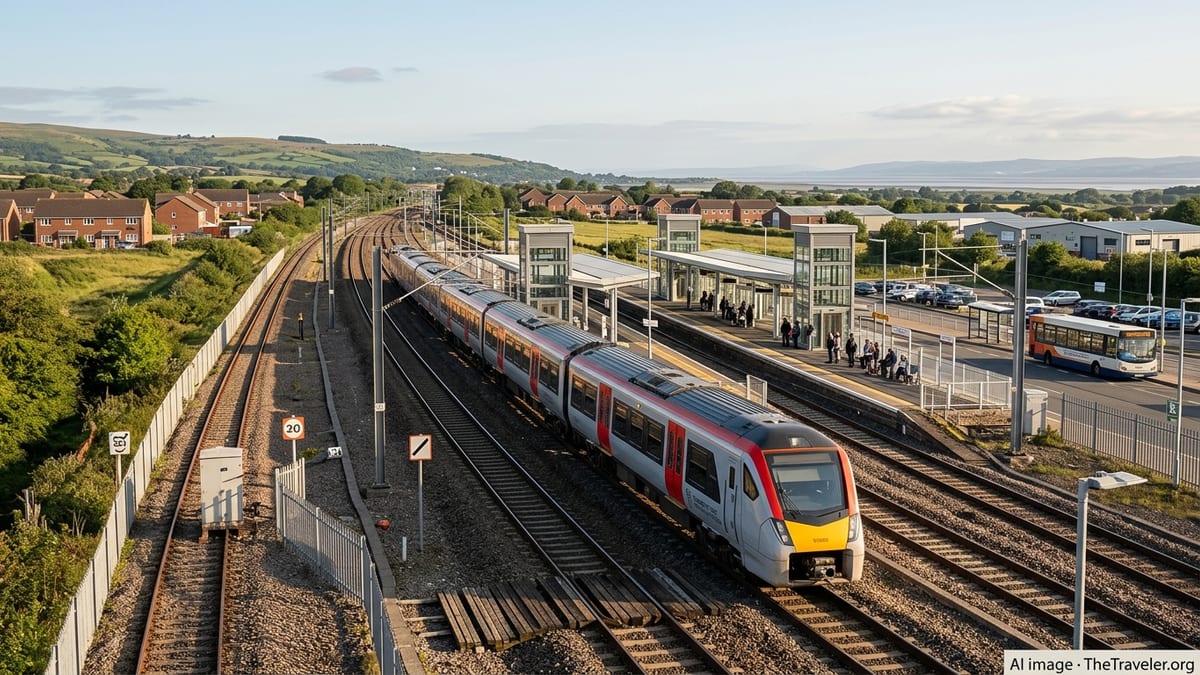
Strategic Upgrade Along a Crucial Cross-Border Corridor
Publicly available information from the UK and Welsh governments indicates that the South Wales relief lines, which run parallel to the main fast tracks between Cardiff and Severn Tunnel Junction, are being positioned for a significant increase in passenger use. The upgrade is designed to carry more stopping services without constraining intercity trains on the main lines, a long-standing bottleneck on the Cardiff to Bristol and London axis.
Recent UK government funding announcements describe at least £40 million allocated to increase line speed on the relief lines, alongside wider packages for route capacity and junction improvements in and around Cardiff. These commitments build on earlier recommendations from the South East Wales Transport Commission, which advocated turning the relief routes into a high-frequency commuter spine linking new suburban and park-and-ride stations along the M4 corridor.
Documents from the Office of Rail and Road and regional planning boards show that the relief line upgrade is being treated as a core element of a broader South Wales Main Line improvement programme, with indicative spending profiles running through the middle of this decade. The scheme is planned to align with new station projects and South Wales Metro developments so that track, signalling and service changes can be introduced as a coherent package rather than as isolated works.
Planning material suggests this approach is intended to future-proof the corridor for both local and long-distance traffic, supporting ambitions for faster Cardiff to Bristol journey times while also enabling metro-style stopping patterns between major employment and residential hubs.
New Stations to Reshape Travel Between Cardiff and Newport
According to published coverage of Welsh Government rail strategies and local transport plans, the relief line upgrade is closely linked to a new generation of stations between Cardiff Central, Newport and Severn Tunnel Junction. Prospectuses and prospectus-style documents produced for the South East Wales Metro vision identify potential new stops serving areas such as Cardiff’s eastern suburbs, developing business districts and growing communities on the outskirts of Newport.
Scheme outlines and consultancy assessments reference up to seven new or significantly enhanced stations in the wider South East Wales area, several of them positioned directly on or adjacent to the upgraded relief lines. Proposals in the public domain highlight locations intended to intercept road traffic from the M4, provide better rail access to new housing and employment sites, and relieve pressure on central Cardiff and Newport by distributing passenger flows more evenly.
The emerging station network is expected to dovetail with existing plans for Cardiff Parkway and other proposed stops on the South Wales Main Line. Technical papers and rail industry analyses indicate that, in many cases, new platforms would be built on the relief tracks, allowing fast trains to remain on the main lines while local services call at new intermediate stations.
This pattern mirrors successful commuter corridors elsewhere in Britain, where four-track layouts have been used to combine intercity services with frequent suburban stopping trains. If delivered as described in current planning documents, South East Wales would gain a similar level of flexibility, with the relief lines carrying a larger share of local movements.
Tourism and Visitor Economy Poised for a Boost
Tourism bodies and regional economic studies have long pointed to the importance of better rail links between Cardiff, Newport, the Wye Valley and coastal destinations for growing the visitor economy. The relief line upgrade, combined with new stations and more frequent services, is expected to make it easier for visitors to combine cities, heritage sites and landscapes in a single trip without relying on a car.
Policy papers setting out ambitions for the South Wales Main Line describe faster connections between Cardiff, Newport and key English gateways such as Bristol and London as a means to attract more weekend and short-break visitors. With improved stopping services on the relief lines, towns east of Cardiff could become more accessible bases for exploring both sides of the Severn, linking cultural venues, sporting events and coastal attractions by rail.
The upgrade is also aligned with efforts to reduce road congestion on the M4 corridor by offering a more attractive rail alternative. Analysis included in transport commission reports suggests that reliable, high-frequency trains serving new stations near motorway junctions could capture a significant proportion of commuter and leisure trips that currently use private cars, particularly for cross-border journeys that combine work and tourism.
Local authorities and business groups cited in media coverage have argued that better rail access can help spread visitor spending beyond established hotspots. With more stations and more capacity, smaller communities along the route could market themselves as convenient, rail-connected gateways to walking routes, historic town centres and coastal paths.
Integration with the South Wales Metro and Wider Network
The relief line scheme does not stand in isolation. It sits alongside the South Wales Metro programme, which is electrifying core Valley Lines, modernising stations and introducing new rolling stock to create a more integrated, turn-up-and-go regional network. Transport for Wales documentation describes Cardiff Central and Newport as major hubs in this emerging system, linking valley branches, long-distance services and local stopping trains.
Recent performance and investment plans from Network Rail’s Wales and Western region show that works at Cardiff West junction and other key nodes are intended to increase the number of trains that can enter and leave the capital, an essential precondition for more frequent services on the relief lines. The timing of these junction upgrades is being coordinated with signalling renewals and Metro-related projects to minimise disruption and maximise long-term capacity gains.
Forward-looking strategy papers released in early 2026 highlight the role of the South Wales Main Line as a national economic corridor, running from west Wales through Swansea, Port Talbot, Cardiff and Newport before connecting to Bristol, Gloucester and Cheltenham. Within this framework, the relief line improvements are presented as one of several measures that together will deliver more reliable, resilient and sustainable rail travel.
Industry commentary notes that electrification of nearby routes, deployment of modern trains and the introduction of smart ticketing across South Wales should amplify the benefits of the relief line upgrade. For tourism, this integration means visitors will find it easier to move between long-distance intercity services and local metro-style trains without complex planning or long waits.
Phasing, Funding and What Happens Next
Planning documents and funding summaries suggest that detailed development work on the South Wales relief line upgrade will continue through the middle of the decade, with a full business case expected in 2026. Reports indicate that construction and commissioning are likely to be phased to align with station projects, signalling changes and wider South Wales Main Line works.
Financial tables in regional transport prospectuses point to an indicative multi-year investment profile for the relief line element alone, with tens of millions of pounds expected to be spent between 2025 and 2027. Additional funding for stations, Metro integration and complementary highway and bus measures is being pursued through a mix of UK and Welsh government mechanisms.
Observers within the rail sector note that delivering the programme will require careful coordination between Network Rail, Transport for Wales and local planning authorities to manage possessions, maintain services and ensure that new infrastructure is ready to support revised timetables. Publicly available project timelines emphasise that work on the relief lines will be sequenced to keep disruption to passengers as low as reasonably practical, particularly on the busy Cardiff to Newport stretch.
As plans move from concept to delivery, attention is likely to focus on how quickly new services and stations can be introduced and how far journey times can be reduced between key cities. For travelers, the outcome promised by current documentation is a more frequent, more flexible and more tourism-friendly railway, turning the South Wales relief lines into a central artery of cross-border mobility.