

More news on this day
South Yorkshire is preparing for a major tourism and connectivity reset as a £1.5 billion transport funding package positions the region to become one of the UK’s most dynamic new travel hubs over the coming decade.
Get the latest news straight to your inbox!
A Record Transport Settlement With National Implications
Publicly available information shows that South Yorkshire has secured around £1.5 billion in long-term transport funding as part of a wider £15.6 billion package for English city regions. Regional documents and local coverage indicate that the settlement will run into the early 2030s, giving the Mayoral Combined Authority unprecedented certainty to plan large-scale changes to how residents and visitors move around the region.
According to published coverage of the funding allocations, the South Yorkshire share is expected to support a comprehensive overhaul of buses and trams across Sheffield, Rotherham, Doncaster and Barnsley. Reports indicate that the focus will be on modern, cleaner vehicles, better interchanges and more reliable, integrated services that make it significantly easier for visitors to navigate the region without a car.
Transport and economic analyses around similar UK city-region settlements suggest that such long-term deals can be closely linked to visitor growth, higher spending and stronger conference and events business. For South Yorkshire, the scale of the package is being framed locally as a once-in-a-generation opportunity to reposition the area from a largely under-the-radar city-region into a nationally recognised gateway for culture, sport and outdoor tourism.
Supertram Renewal and Seamless Urban Mobility
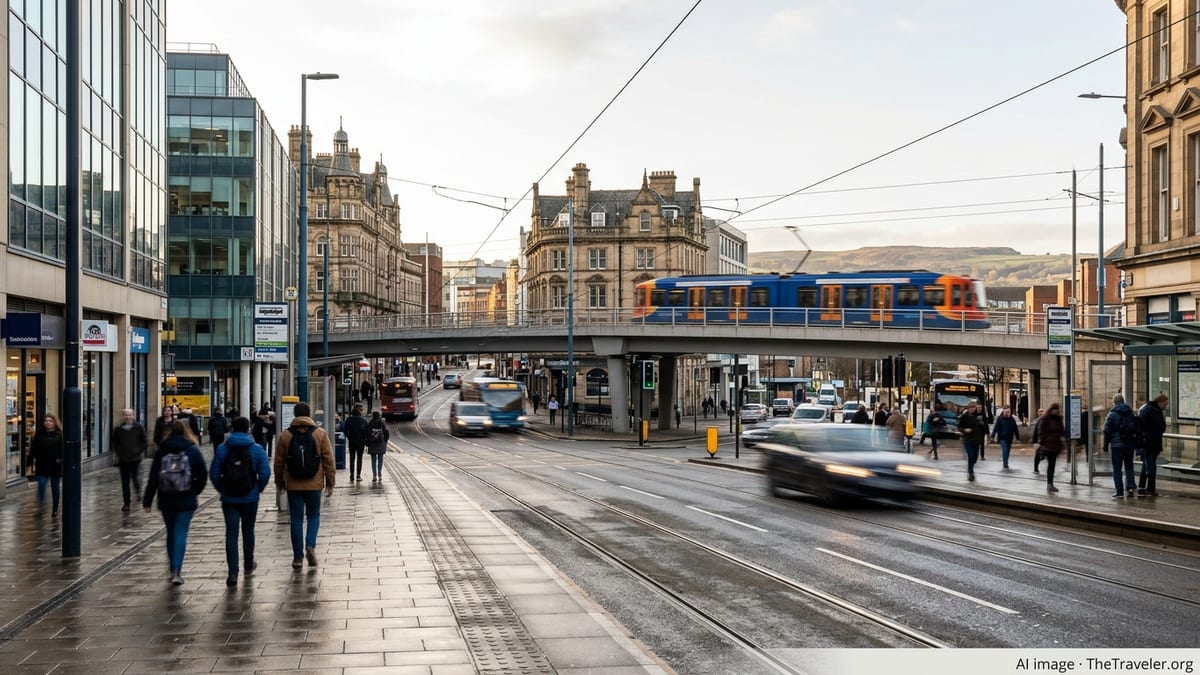
Local reports indicate that a substantial portion of the £1.5 billion has been earmarked for renewing and modernising the South Yorkshire Supertram network. This light rail system, which already links key parts of Sheffield and extends into Rotherham, is expected to benefit from new vehicles, upgraded stops and essential maintenance intended to improve reliability and accessibility.
Publicly available information from regional plans suggests that modernisation of the tram network is being designed with both residents and visitors in mind. Upgraded stops, clearer passenger information and step-free access at more locations could make it easier for tourists to move between city-centre hotels, cultural venues, major arenas and retail districts without needing taxis or private cars.
Alongside the tram investment, reports on the funding package suggest improvements to key interchanges and park-and-ride facilities across the region. For visitors driving in from other parts of the UK, more convenient parking linked directly to high-frequency tram or bus services could help cut congestion in historic centres while still giving easy access to attractions in Sheffield, Rotherham, Barnsley and Doncaster.
Bus Reform to Open Up Hidden Corners of the Region
Regional briefings and commentary on the funding detail indicate that hundreds of millions of pounds are being set aside for bus reform, including franchising and network improvements. Under a franchised system, the mayoral authority would have greater control over routes, fares and service levels, with the aim of creating a more joined-up and predictable bus network similar to models seen in London and parts of Greater Manchester.
For the visitor economy, a more coherent and clearly branded bus system could be crucial. Tourism data highlighted in local economic reporting shows that South Yorkshire already attracts tens of millions of visits each year, but overnight tourism is less developed than in some rival city-regions. Improved bus links to market towns, countryside gateways and smaller heritage sites could help spread visitors more evenly and encourage longer stays.
Publicly available information about the region’s ambitions points to better connections to places such as the Peak District fringes, former industrial sites turned cultural destinations, and emerging food and music districts around Sheffield and Barnsley. Reliable, easily understood bus timetables and ticketing across multiple operators are expected to play a significant role in how accessible these areas feel to first-time visitors.
Air, Rail and the Bid to Become a National Gateway
The transport overhaul comes as South Yorkshire also works to strengthen its position on the national map through rail connectivity and aviation. Department for Transport material shows that central government has signalled support for efforts to restore commercial operations at Doncaster Sheffield Airport, which closed to passenger flights in 2022 but remains strategically located close to major road and rail corridors.
While no final decision has been confirmed on the airport’s future, the combination of potential aviation revival and new investment in rail projects is being closely watched by tourism and business groups. Enhanced regional rail links to Sheffield and Doncaster, coupled with improved local buses and trams, could make South Yorkshire a competitive alternative base for visitors exploring northern England, from the Peak District and Yorkshire countryside to neighbouring city attractions in Leeds, Manchester and beyond.
Local government documents outlining current strategy also point to complementary investment in active travel, including new or improved cycleways and walking routes. Such schemes, funded through related national programmes, are expected to knit together railway stations, new park-and-ride hubs and town centres in ways that appeal to visitors looking for low-carbon city breaks or car-free outdoor adventures.
Tourism Strategy, Visitor Levy and Long-Term Prospects
Recent regional reporting notes that South Yorkshire is exploring the introduction of a visitor levy on overnight stays, with revenues ringfenced for projects that support local communities and enhance the tourism experience. Evidence presented locally suggests the region welcomed more than 36 million tourism visits in 2024, yet still lags some competitors in attracting multi-night city breaks and high-spend cultural tourism.
The combination of a visitor levy and the £1.5 billion transport settlement is being framed in policy discussions as a double engine for change. Better transport infrastructure can make it easier and more attractive to stay longer, while additional tourism revenues could help fund public realm improvements, signage, event programming and marketing that position South Yorkshire as a distinctive destination in its own right.
Analysts examining similar schemes elsewhere in Europe point to the importance of aligning transport upgrades with clear branding and storytelling. For South Yorkshire, that could mean promoting its industrial heritage, live music scene, sporting events and easy access to moorland and national park landscapes, all linked by a more legible and sustainable transport network.
With preparations under way for implementation of new bus models, tram upgrades and supporting infrastructure over the next five to ten years, South Yorkshire is entering a pivotal phase. If delivery matches the ambition set out in public plans and reports, the region could emerge not just as a beneficiary of transport investment, but as one of the UK’s most compelling new travel hubs for domestic and international visitors alike.