

More news on this day
Escalating conflict in the Middle East and sweeping airspace closures are rapidly reshaping global aviation, pushing airlines to reroute long-haul services via Southeast Asia and turning Singapore into one of the world’s most critical transit lifelines.
Get the latest news straight to your inbox!
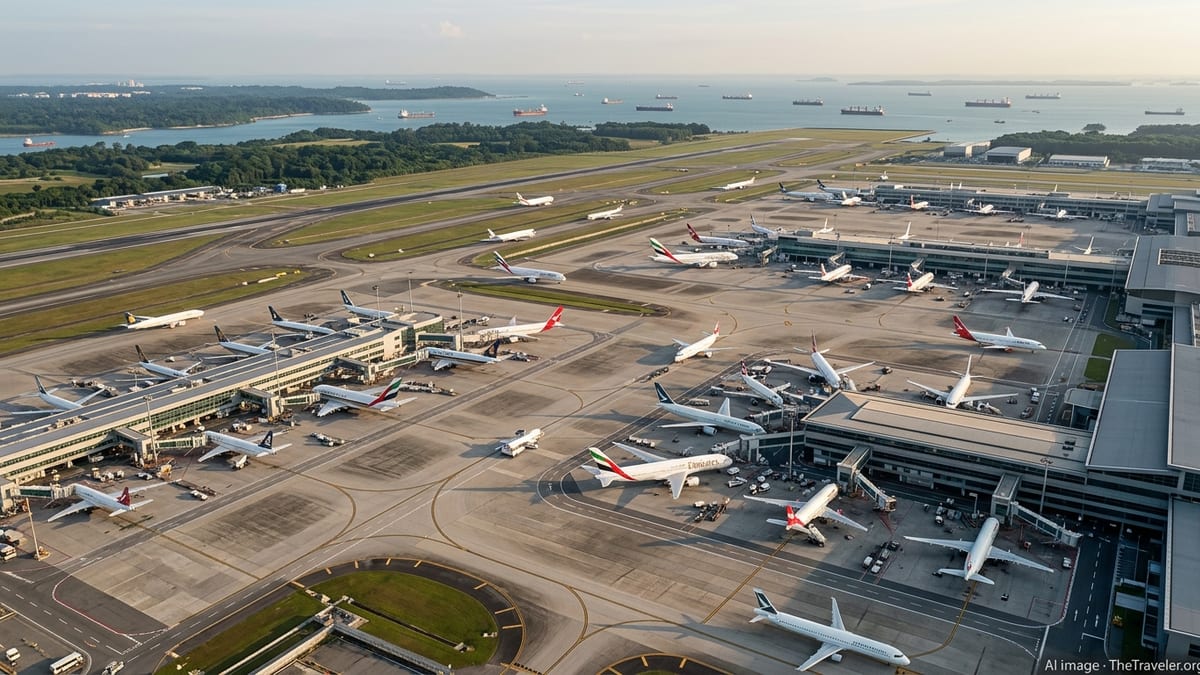
Middle East Conflict Triggers Historic Rerouting
The latest phase of the Iran war and associated regional tensions has shut or restricted swathes of airspace across Iran, Iraq, Israel, Jordan, Lebanon, and several Gulf states, according to multiple operational notices and media reports. These closures have disrupted some of the busiest corridors linking Europe with South Asia and Australia, severing traditional pathways that for decades funneled traffic through hubs in Dubai, Doha, and Abu Dhabi.
Recent coverage indicates that, on peak days in early March 2026, up to 19,000 flights were scheduled to transit the wider region, with thousands cancelled or forced to divert at short notice as airspace restrictions tightened. Aviation data cited in public reporting shows that the three largest Gulf carriers alone typically handle around 90,000 connecting passengers per day, underscoring how central their hubs had become to global mobility before the current shutdowns.
With those junctions compromised, airlines are pursuing complex detours that add two to five hours to many Europe–Asia journeys. Analysts note that these disruptions compound an already challenging environment following the loss of Russian overflight rights for many Western carriers since 2022, creating what industry observers describe as a cascading rerouting crisis stretching from Eastern Europe to the Indian Ocean.
Publicly available assessments from travel and aviation advisory firms suggest that the cumulative effect has been to redirect a significant share of long-haul flows away from the Middle East crossroads and toward alternative structures anchored in Europe, Central Asia, and particularly Southeast Asia.
Singapore Steps Forward as a Strategic Super-Hub
Singapore’s Changi Airport has rapidly emerged as one of the main beneficiaries of this upheaval. Already a leading global hub, it is now absorbing additional transfer traffic as airlines rebuild Europe–Asia and Australia–Europe networks that bypass the Gulf. Travel disruption trackers and airline schedule data show that carriers are favoring routings that connect through Southeast Asia’s stable airspace and well-developed infrastructure.
According to published advisories, Singapore Airlines has cancelled or altered a limited number of services directly exposed to Middle Eastern airspace, while preserving and in some cases bolstering capacity on Europe and Australia routes that can be operated via safer corridors. Low cost and regional partners such as Scoot are simultaneously expanding their Southeast Asian footprints, deepening Singapore’s role as a gateway between regional and intercontinental flights.
Industry analysis indicates that Changi’s position outside immediate conflict zones, coupled with strong safety oversight and ample long-haul connectivity, makes it a natural focal point for rerouted capacity. Public data from aviation analytics firms shows a rise in long-haul widebody operations through Singapore since late 2025 as airlines pivot away from Dubai, Doha, and Abu Dhabi and restructure their timetables for the Northern Hemisphere winter and into 2026.
Travel advisories aimed at consumers now routinely highlight Singapore as a comparatively resilient connection point for itineraries between Europe, South Asia, and Australia. Financial and corporate travel briefings also point to Singapore’s expanding role, noting that multinational companies are increasingly steering staff itineraries through Southeast Asia rather than the Gulf when policy, insurance, or risk frameworks call for avoiding conflict-adjacent hubs.
Regional Hubs Across Southeast Asia Absorb Diverted Traffic
While Singapore is at the forefront, other Southeast Asian gateways are also playing a vital role in keeping global air travel moving. Airports in Kuala Lumpur, Bangkok, Manila, and Jakarta are all seeing increased use as airlines stitch together new patterns of connectivity that route traffic around the Middle East and, where necessary, around pockets of restricted airspace over Pakistan and parts of Central Asia.
Reports from passenger rights organizations and flight disruption services describe Southeast Asian hubs collectively “absorbing” large volumes of rerouted flights as carriers cancel or reduce Gulf bound services but maintain schedules on Europe, Australia, and intra Asia sectors. Malaysia Airlines, Thai Airways, Philippine Airlines, and various low cost carriers are among those adjusting timetables and aircraft deployment to take advantage of demand for itineraries that remain clear of the most volatile zones.
Observers note that this is accelerating a pre existing shift in which European and Southeast Asian airlines have been expanding more direct routes between their regions. Business coverage from the past week highlights new or increased nonstop links connecting European capitals with Southeast Asian cities, reducing reliance on one stop connections through the Gulf and reinforcing the region’s growing status as an alternative bridge between continents.
However, the rapid redistribution of traffic also introduces strain. Publicly available commentary from passenger groups points to congestion at some Southeast Asian airports, with longer connection times and tighter availability on popular routes during peak travel periods. Airlines are under pressure to balance opportunity with operational resilience as they add capacity into already busy terminals and airspace sectors.
Longer Journeys, Higher Costs and New Routing Corridors
Detours around closed or high risk airspace are not only reshaping maps, they are also reshaping economics. Analyses by aviation consultancies and specialist media suggest that Europe–Asia flight times on certain routes have lengthened by two to five hours due to the combined effect of Middle East and Russian airspace restrictions, pushing some flights close to the maximum range of their assigned aircraft types.
These longer sectors translate directly into higher fuel burn and crew costs, at a time when fuel prices are already volatile because of wider energy market disruptions associated with the conflict. A recent technical briefing on airline cost structures warned that carriers may need to pass some of these expenses on to passengers in the form of higher fares, particularly in premium cabins and on routes with limited competition.
Airspace providers and industry organizations have also highlighted the emergence of new routing corridors. Northern options through the Caucasus and Central Asia are handling increased volumes where available, while southern tracks over Egypt, the Arabian Peninsula, and onward to India and Southeast Asia have become critical for flights departing southern Europe. In parallel, some long haul operators are experimenting with more direct Europe–Southeast Asia and Europe–Australia nonstops that entirely avoid traditional overflight regions.
Experts in business aviation note that private and corporate operators face similar choices, often favoring conservative routing even at the expense of additional fuel stops. Routing guides now routinely weigh the “risk versus reward” of passing near active conflict zones, with many planners opting for the longer but less complex paths that lead into or through Southeast Asia’s relatively predictable operating environment.
Implications for Travelers and the Future of Global Hubs
For travelers, the immediate impact is already visible in longer itineraries, tighter connections, and a higher likelihood of last minute changes. Consumer travel advisories recommend allowing more generous layovers, securing flexible tickets, and monitoring flight status closely, especially for trips that previously relied on Gulf connections or on airspace now classified as restricted or conflict adjacent.
At the same time, Southeast Asian hubs are positioning themselves as stable, high service alternatives. Tourism boards, airport operators, and airlines in Singapore and neighboring countries are emphasizing reliability, safety, and efficient transfers in their public messaging, hoping to convert temporary disruption into a durable shift in traveler habits. If passengers grow accustomed to transiting through Singapore, Kuala Lumpur, Bangkok, or Manila, some may continue to favor these routings even after Middle Eastern airspace stabilizes.
Strategic analysts argue that the current crisis could mark a turning point in the geography of global aviation. The closure of Russian skies to many Western airlines had already nudged traffic southward; the latest Middle East turmoil intensifies that trend and cements Southeast Asia’s role as a primary bridge between East and West. As airlines lock in schedules for upcoming seasons, their choices on fleet deployment and hub development may harden this new map for years to come.
Much remains uncertain, including the duration of the conflict and the timeline for reopening key airspace. For now, however, publicly available data on flight paths, airline schedules, and passenger flows all point to the same conclusion: Southeast Asia, with Singapore at the forefront, has become an indispensable lifeline for global air travel at a moment when the world’s traditional crossroads are severely constrained.