

A powerful tourism rebound is sweeping Southeast Asia, with Singapore, Malaysia, Vietnam, Indonesia, Thailand and the Philippines reporting packed flights, rising hotel occupancy and swelling visitor receipts, as Singapore Airlines and its Changi Airport hub set fresh passenger records and anchor a new phase of regional cooperation.
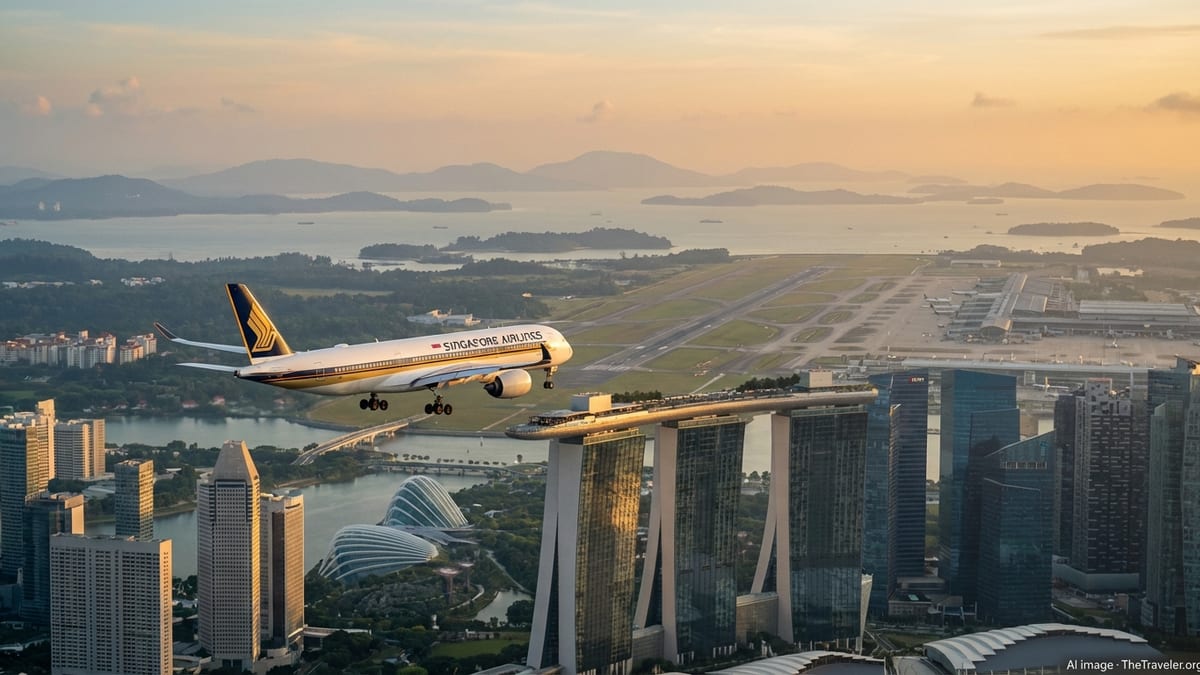
Singapore Airlines and Changi Airport Set New Highs
Singapore’s aviation hub has entered uncharted territory. Changi Airport handled about 70 million passengers in 2025, surpassing its pre-pandemic peak and cementing its position as one of the world’s busiest international gateways. The figure, highlighted in recent government and industry briefings, crowns a two-year surge that saw passenger movements jump nearly 15 percent in 2024 before pushing to a new all-time high last year.
Singapore Airlines, which uses Changi as its primary hub, has been a central beneficiary of the rebound. Industry data and company disclosures show the flag carrier and its low-cost arm Scoot operating at or above pre-Covid capacity on many trunk routes across Asia, Europe and North America. With load factors on key regional sectors consistently high and premium cabins booking out during peak periods, analysts say the group is capturing a disproportionate share of returning long-haul and high-yield traffic.
That momentum is reflected in Singapore’s broader tourism performance. The Singapore Tourism Board reported that the city-state welcomed 16.9 million visitors in 2025, up from 16.5 million a year earlier, while tourism receipts for the first three quarters of the year climbed to a record 23.9 billion Singapore dollars. Mainland China, Indonesia and Malaysia were among the top source markets, underscoring the tight link between air connectivity and regional travel demand.
Policy makers argue that the aviation surge validates decisions to resume construction of the massive Terminal 5 project at Changi and to invest in route development with partner airlines. With passenger volumes now above 2019 levels, Singapore Airlines is expected to keep adding capacity into neighboring markets, reinforcing its leadership at the center of Southeast Asia’s tourism boom.
Regional Neighbors Surf the Same Wave
The upswing is not confined to Singapore. Across Southeast Asia, tourism agencies in Malaysia, Thailand, Vietnam, Indonesia and the Philippines are reporting strong inflows driven by pent-up demand, expanded air links and a pivot toward higher-spending visitors. Many key destinations finished 2024 within striking distance of pre-pandemic numbers and continued to build on that performance in 2025.
In Thailand, official arrivals data through late 2025 showed foreign visitor numbers climbing back into the high tens of millions, powered by demand for Bangkok, Phuket, Chiang Mai and a growing roster of secondary cities. Malaysia reported a robust rebound in both short-haul and long-haul markets, with Kuala Lumpur’s role as a low-cost carrier hub drawing price-sensitive travelers from across Asia and the Middle East. Indonesia’s Bali and Jakarta gateways, meanwhile, have remained pillars of regional leisure and business travel, even as the country promotes emerging destinations from Labuan Bajo to Lombok.
Vietnam and the Philippines, although traditionally more reliant on a smaller set of long-haul markets, have also seen rapid growth off their post-pandemic lows. Vietnam’s gateways at Ho Chi Minh City, Hanoi and Da Nang benefited from the restoration of regional and transcontinental flights, while Philippine destinations such as Cebu, Boracay and Palawan have enjoyed renewed interest from Korean, Japanese and North American travelers. The common denominator across these markets is a sharp increase in seat capacity from regional airlines, anchored by Singapore Airlines and its competitors.
Tourism officials across the bloc say they are now less focused on chasing headline arrival numbers and more on boosting revenue per visitor, average length of stay and spending on experiences. For Singapore, which has limited capacity for mass tourism, that shift is already evident in record spending on food, entertainment and events. Regional neighbors are following suit by promoting culture, wellness and eco-tourism packages that can command higher margins while spreading benefits to local communities.
ASEAN Partners Move From Competition to Collaboration
The emerging boom is unfolding against a backdrop of closer cooperation among Southeast Asia’s tourism authorities. Ministers from Singapore, Malaysia, Thailand, Vietnam, Indonesia and the Philippines have used recent ASEAN meetings to push joint marketing under the “Visit Southeast Asia” banner and to simplify travel within the region. The goal is to position the bloc as a single, multi-stop playground where visitors can stitch together city breaks, beaches and cultural experiences in one itinerary.
Officials describe a gradual shift away from purely competitive destination branding toward more collaborative campaigns targeting distant markets such as Europe and North America, where long-haul travelers can be encouraged to visit two or three countries in a single trip. In practice, that means coordinated promotions at trade fairs, shared campaigns with major tour operators and digital advertising that sells Southeast Asia as a circuit rather than a set of isolated points.
Visa facilitation has also become a quiet but powerful tool. Several Southeast Asian governments have extended or introduced visa-free or visa-on-arrival schemes for key markets, while working to harmonize health and security protocols that once varied sharply across borders. Though details differ by country, the direction of travel is toward an easier, more predictable experience for visitors moving between Singapore, Malaysia, Indonesia, Thailand, Vietnam and the Philippines.
Industry representatives say Singapore Airlines and other regional carriers are directly aligned with those ambitions. Their dense networks, through-ticketing options and coordinated schedules effectively turn ASEAN into a single travel zone for visitors connecting through hub airports such as Changi, Kuala Lumpur, Bangkok and Jakarta. That integration, in turn, amplifies the impact of regional tourism campaigns and underpins the current wave of multi-country itineraries.
Airlines Race to Add Seats Across the Region
The aviation sector is at the heart of the story. In addition to Singapore Airlines’ expansion, full-service and low-cost carriers based in Malaysia, Thailand, Indonesia and the Philippines have accelerated aircraft deliveries and route resumptions. Timetables for 2024 and 2025 show dense frequencies on traditional leisure corridors such as Singapore to Phuket, Bangkok to Bali and Kuala Lumpur to Manila, as well as fresh capacity into secondary cities that were previously underserved.
Changi’s latest traffic data highlights how that strategy is playing out. The airport’s top markets in 2024 included China, Indonesia, Malaysia, Australia, Thailand and India, with strong growth from North America and Japan as well. Regional routes have been crucial in filling aircraft and feeding long-haul services, and they now form the backbone of Singapore Airlines’ connectivity strategy. With new aircraft types offering improved fuel efficiency and longer range, the carrier has been able to experiment with more non-stop services while maintaining dense regional frequencies.
Similar patterns are visible across the region. Thai carriers have rebuilt capacity to major Chinese cities and domestic resort hubs, while Malaysia-based airlines are leaning heavily on an extensive low-cost network to funnel travelers into Kuala Lumpur and out across Southeast Asia. Indonesian and Philippine airlines are restoring long-haul links to the Middle East and Europe that feed into local tourism hotspots. Industry analysts note that this web of connections largely depends on strong partnerships with regional hubs, and that Singapore’s early move to fully reopen and invest in growth has given its flag carrier a lasting advantage.
Forward booking data from online travel agencies and global distribution systems indicate that demand for flights in and out of Southeast Asia remains strong into the northern summer and year-end peak seasons of 2026. As airlines respond by adding still more seats, questions are shifting from whether passengers will return to whether airports, tourism infrastructure and workforces can keep pace.
Events, Cruises and New Attractions Power Demand
Beyond available seats, Southeast Asia’s tourism boom is being driven by a busy calendar of events and a pipeline of new attractions. Singapore continues to double down on marquee spectacles, with the Singapore Airlines-branded Formula 1 Grand Prix, major art fairs and a rotating cast of blockbuster concerts drawing hundreds of thousands of international visitors each year. Recent figures from the Singapore Tourism Board show that spending on sightseeing, entertainment and gaming grew at double-digit rates in 2025, outpacing the rise in headline arrivals.
The cruise sector is another bright spot. Singapore has welcomed new homeported ships from global cruise brands and luxury operators, using its modern terminals as launch pads for itineraries that loop through Malaysia, Thailand and Indonesia. Regional ports such as Penang, Langkawi, Phuket and Bali, in turn, benefit from regular inflows of high-spending shore excursion passengers. Cruise executives see Southeast Asia as one of the world’s most promising growth markets, particularly as fleets redeploy capacity from more saturated regions.
Elsewhere, governments and private developers are rolling out fresh attractions and tourism infrastructure to capture and sustain demand. In Singapore, recently added experiences range from immersive exhibitions at Gardens by the Bay to upgraded heritage centers and refreshed waterfront precincts. In Thailand and Vietnam, new cultural districts, theme parks and integrated resort projects are moving from blueprint to reality. The Philippines and Indonesia are investing in airports and roads to put lesser-known islands and inland regions on the map.
For travelers, the result is a more diversified set of options that go beyond traditional beach and city combinations. For the region’s airlines and tourism boards, the challenge is to knit these offerings together into coherent products that encourage longer stays and repeat visits, without overwhelming fragile environments or local communities.
Sustainability and Capacity Strains Come Into Focus
As visitor numbers surge, sustainability has become an unavoidable theme in Southeast Asia’s tourism conversation. Singapore recently announced that passengers departing Changi from October 2026 will pay a new levy to support the use of sustainable aviation fuel, part of a wider plan to cut the aviation sector’s carbon footprint. Several neighboring countries, including Malaysia, Thailand, Vietnam and Indonesia, are simultaneously moving to develop their own sustainable fuel industries, leveraging access to feedstocks such as agricultural and forestry byproducts.
Hotel groups and resort operators across the region are also under pressure to demonstrate greener practices, from energy-efficient building designs to reduced use of single-use plastics. In Indonesia and the Philippines, authorities have moved at times to cap visitor numbers at particularly fragile islands and dive sites, while Thailand has closed or rotated access to some beaches to allow ecosystems to recover. The trend is toward more active management of tourism flows, even as governments court higher-spending visitors.
Capacity constraints present a more immediate concern. Airport terminals from Bangkok to Manila are again seeing long queues at immigration and security during peak hours, and ground handling firms are racing to hire and train staff. In cities where public transport and road networks were already congested before the pandemic, renewed tourism has compounded strains on infrastructure and housing. Policy makers acknowledge that the boom brings trade-offs, but argue that it also creates the fiscal space needed to fund upgrades and reforms.
Singapore’s experience offers a glimpse of what a more controlled model might look like. Despite record passenger and tourism numbers, authorities have emphasized crowd management, public transport investment and digital services that can smooth bottlenecks. Neighboring countries are studying these approaches as they prepare their own long-term airport expansions, high-speed rail links and destination management plans.
Outlook: Multi-Country Journeys as the New Normal
Looking ahead to 2026 and beyond, industry executives across Southeast Asia are striking an optimistic tone. Booking patterns suggest that travelers are increasingly viewing the region as a single, multi-stop destination, combining a city break in Singapore or Kuala Lumpur with beach time in Thailand, a cultural tour in Vietnam or Indonesia, and perhaps a final stop in the Philippines. That shift is being reinforced by competitive airfares, flexible ticketing policies and growing familiarity with the region among repeat visitors.
Singapore Airlines is strategically positioned to shape this next phase. With record traffic through Changi, a modern fleet and strong partnerships with regional airlines, the carrier acts as both a gateway and a bridge between the six booming destinations. Its decisions on where to deploy capacity, launch new routes and invest in customer experience will ripple through tourism strategies from Bangkok to Manila.
At the same time, governments and tourism boards in Singapore, Malaysia, Vietnam, Indonesia, Thailand and the Philippines are under pressure to ensure that the current boom is not merely a short-lived rebound. That means continued investment in infrastructure, a sharper focus on sustainability and careful balancing of visitor volumes with local quality of life. If they succeed, the region’s latest tourism surge could mark the start of a more resilient, higher-value era, with Singapore Airlines and its Southeast Asian partners firmly at the helm.