

More news on this day
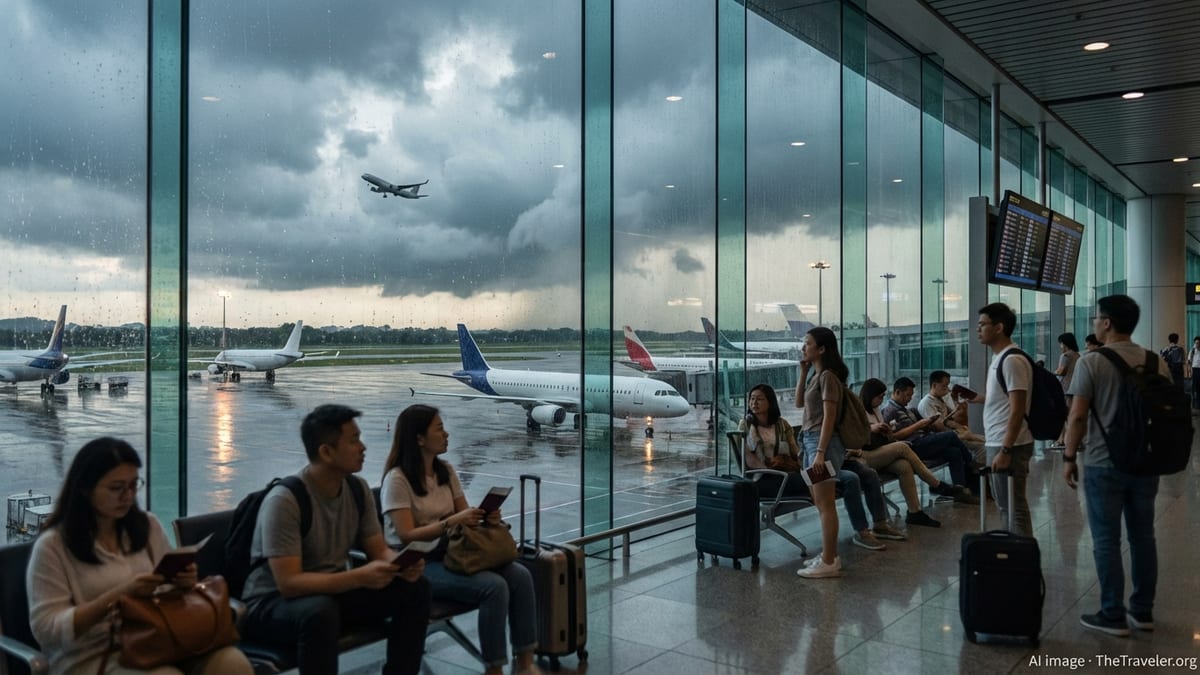
A spate of deadly crashes, violent turbulence incidents and high-profile emergency landings across Asia is turning 2026 into a year of anxiety for air travelers, shaking confidence in one of the world’s fastest-growing aviation markets and putting Southeast Asia’s tourism-dependent economies on edge.
From Tragedy to Turbulence: A Region on Alert
While commercial aviation remains statistically the safest way to travel, a cluster of recent accidents and near disasters across Asia has sharpened public fears. In late 2024, Jeju Air Flight 2216 crashed on arrival in South Korea after a bird strike and failed landing attempt on a flight originating from Bangkok, killing 179 of the 181 people on board, one of the deadliest regional air disasters in years. The shockwaves from that catastrophe have continued well into 2025 and 2026 as new incidents pile up and investigations probe systemic weaknesses.
In Southeast Asia itself, the mood has darkened as travelers recall earlier tragedies and now confront a drumbeat of unsettling headlines. A Royal Thai Police Twin Otter plunged into the sea near Cha-am in April 2025, killing all six people onboard during what was supposed to be a routine test flight. In the broader Asia Pacific region, violent turbulence episodes, including the 2024 Singapore Airlines flight over Myanmar that left one passenger dead and dozens injured, have become emblematic of a new and less predictable threat in the skies.
The result is a creeping unease that extends well beyond the passengers directly affected. Travel agents report more nervous first-time flyers, airlines are fielding fresh questions about safety records, and tourism boards are scrambling to reassure would-be visitors that Southeast Asia is still a safe, welcoming destination despite this difficult run of aviation news.
For a region that has spent years marketing itself as open, connected and easily accessible by air, the perception of an aviation safety crisis could hardly come at a worse time, just as long-haul tourism from Europe and North America was finally rebounding from the pandemic.
Deadly Crashes Expose Old and New Vulnerabilities
Investigators and safety analysts point out that the recent accidents in and around Southeast Asia stem from a mix of familiar and emerging risks. Mechanical failures, pilot decision-making, weather and infrastructure limitations have all played a role, often in combination.
The Royal Thai Police DHC-6 crash off Cha-am in April 2025 underscored the risks associated with smaller, workhorse aircraft operating low-altitude missions along busy coastlines. The Twin Otter lost both engines shortly after takeoff from Hua Hin and slammed into the sea, killing all six occupants. That accident raised tough questions about maintenance practices, test-flight procedures and the oversight of state-operated fleets, which are often less visible to the traveling public than commercial airlines but share the same airspace and safety ecosystem.
Further north, South Korea’s Jeju Air Flight 2216, which departed Bangkok’s Suvarnabhumi Airport in December 2024, highlighted the chain-reaction dangers that can follow relatively commonplace events such as bird strikes. After ingesting birds on approach to Muan, the Boeing 737 suffered engine problems, belly-landed beyond the touchdown zone, overran the runway and tore into airport structures, with almost everyone on board killed. For Thai and regional tourism officials, the tragedy was a painful reminder that outbound flights from Southeast Asia can become part of another country’s accident statistics, yet still weigh heavily on travelers’ perceptions of safety in the region of departure.
Even where fatalities have been avoided, a series of emergency returns and diversions, including a recent AirAsia X flight that turned back to Brisbane en route to Kuala Lumpur after a pressurization problem, have fed a narrative of instability. Experts insist that such precautionary landings demonstrate safety systems working as intended, but the optics for nervous passengers are far from reassuring.
Climate, Clear-Air Turbulence and a New Kind of Fear
The rise in severe turbulence incidents worldwide is reshaping how regulators, airlines and passengers think about risk, and Southeast Asia finds itself on the front line of this shift. The region sits beneath heavily traveled transcontinental routes and increasingly volatile weather systems fueled by a warming climate.
Scientific studies of the 2024 Singapore Airlines SQ321 turbulence event over Myanmar show the aircraft flying through deep convective clouds with powerful vertical air movements, conditions that can be extremely difficult to detect and predict with traditional tools. One passenger died and more than a hundred were injured after the widebody jet abruptly lost altitude, flinging unbuckled travelers and service carts across the cabin. It was the first turbulence-related fatality in commercial aviation in a quarter of a century, and it reverberated across the industry.
In 2025, another stark reminder came when an IndiGo flight from Delhi to Srinagar flew into a violent hailstorm, severely damaging the aircraft’s nose and terrifying passengers, though no one was hurt. Similar episodes elsewhere in the world, including a Delta flight over the United States that sent dozens to hospital, have convinced regulators that turbulence is no longer a marginal risk but a central safety challenge.
Singapore’s aviation regulator has formally designated severe turbulence as a major in-flight safety threat and rolled out dozens of new measures, including revised seat belt policies and changes to cabin service routines. Airlines across Northeast and Southeast Asia are following suit, investing in advanced forecasting tools and pilot training designed to help crews anticipate and avoid invisible air currents that can turn a routine flight into a nightmare within seconds.
Tourism Hotspots Grapple With a Confidence Crisis
The psychological impact of these incidents is now rippling through Southeast Asia’s tourism economy, a sector that relies heavily on the perception of smooth, hassle-free air connectivity. From Thailand’s resort islands to Indonesia’s Bali and Vietnam’s beach cities, tourism accounts for a sizeable share of GDP and employment. In many of these destinations, more than three-quarters of international visitors arrive by air.
Tour operators in Bangkok, Phuket and Bali say some long-haul travelers are quietly reconsidering their plans or shortening their trips, particularly older tourists and families with young children who are more sensitive to safety concerns. In key origin markets such as Europe and Australia, sensational headlines about crashes and turbulence are circulating alongside social-media videos of shaking cabins and screaming passengers, feeding a cycle of fear that can be hard to break.
Travel search data indicates that while overall interest in Southeast Asia remains strong, there have been short-term dips in bookings to certain markets following high-profile incidents. Industry analysts warn that each additional serious event, even if outside the region’s core tourist corridors, reinforces the perception of systemic risk in Asian skies.
Local businesses, from guesthouses to dive operators, feel the knock-on effects quickly when planes arrive less full or flights are consolidated. For economies still rebuilding their tourism sectors after the pandemic, even modest declines in visitor numbers can set back investment plans and delay hiring, with direct consequences for livelihoods in rural and coastal communities.
Inside the Cockpit: Training, Technology and Human Limits
Aviation experts stress that despite the unsettling headlines, every serious event is fuelling improvements behind the scenes. Pilots, dispatchers and air traffic controllers are adjusting to an era where weather and turbulence can change rapidly, demanding faster decisions and closer coordination.
Airlines across Asia are expanding simulator training scenarios to include more realistic turbulence encounters, complex go-arounds and high-workload approaches under degraded conditions. In the aftermath of crashes linked to weather and bird strikes, crews are being drilled on when to abandon an unstable approach earlier, how to handle conflicting data from sensors and when to declare an emergency without hesitation.
At the same time, the limits of human performance are under scrutiny. Fatigue remains a concern on long regional night sectors that connect hubs like Bangkok, Kuala Lumpur and Singapore with secondary cities. Pilots and cabin crew speak privately of increased workload as carriers ramp up schedules to meet post-pandemic demand, even as they must constantly monitor for invisible threats such as clear-air turbulence.
New technologies are helping but not yet decisive. Participation in global data-sharing initiatives allows aircraft to transmit real-time turbulence reports, giving following flights the chance to adjust altitude or routing. Artificial intelligence tools are being integrated into weather forecasting models to identify potential hotspots along popular routes, but the systems are still being refined, and crews emphasize that they are aids, not crystal balls.
Regulators Tighten the Screws While Carriers Reassure
Regulators in Southeast Asia are moving to shore up public confidence through visible action. Civil aviation authorities in Singapore, Thailand, Malaysia and Indonesia have announced stepped-up audits, more frequent spot checks on maintenance records and focused reviews of airlines that have experienced significant incidents.
In several jurisdictions, safety regulators are working more closely with meteorological agencies to upgrade turbulence and storm warning capabilities. Airports are being pushed to improve wildlife management and bird-control programs, a priority in light of fatal bird-strike-related accidents in the wider region. Runway safety, including the condition of overrun areas and the robustness of approach lighting structures, is also under renewed examination.
Airlines, for their part, are engaged in a delicate balancing act: they must acknowledge passengers’ fears without stoking them further. Many carriers in Southeast Asia are quietly revising safety briefings, emphasizing the importance of keeping seat belts fastened when seated and explaining that turbulence, while frightening, rarely threatens the integrity of the aircraft. Some are exploring more transparent safety communications, including plain-language summaries of incident investigations once official reports are published.
Executives privately admit that any perception of a “dangerous region” label could harm their brands for years. As a result, cooperation between rival airlines on safety initiatives has grown, with carriers sharing best practices on turbulence management, cabin procedures and crew training through regional industry groups.
Can the Skies Over Southeast Asia Regain Travelers’ Trust?
The central question for 2026 is not whether flying in and out of Southeast Asia is safe in absolute terms, but whether travelers are willing to believe that it is. Statistically, the answer remains yes: accident rates in commercial aviation are at historic lows, and the number of flights operating safely each day across the region is enormous compared with the handful that make headlines.
Yet perceptions are shaped by stories, not spreadsheets. Viral videos of cabins in chaos and charred wreckage at the end of a runway leave a deeper impression than charts showing steadily improving safety indicators. Tourism authorities therefore find themselves in the unfamiliar position of needing to talk publicly about turbulence, crew training and safety oversight alongside beaches, cuisine and culture.
Some are beginning to frame aviation safety as part of a broader narrative about resilience and modernization. By showcasing investments in new aircraft, upgraded airports and cutting-edge weather technology, they hope to convince visitors that the region is confronting its aviation challenges head-on rather than downplaying them. Industry watchers say coordinated communication between governments, regulators and airlines will be essential to prevent mixed messages that further confuse or alarm the public.
Ultimately, the extent of the damage to Southeast Asia’s tourism prospects may depend on what happens next. A sustained period without major incidents, coupled with visible reforms and clear communication, could allow confidence to slowly rebuild. Another high-casualty accident linked to turbulence or weather, however, would reinforce the narrative of a 2026 aviation nightmare and make that recovery far harder to achieve.