

More news on this day
Union Commonwealth University in Barbourville, Kentucky is tuning up for the return of the Southeastern Kentucky Piano Festival this spring, with organizers promising a larger, more ambitious second edition that showcases both regional talent and the cultural draw of the Appalachian mountains.
Get the latest news straight to your inbox!
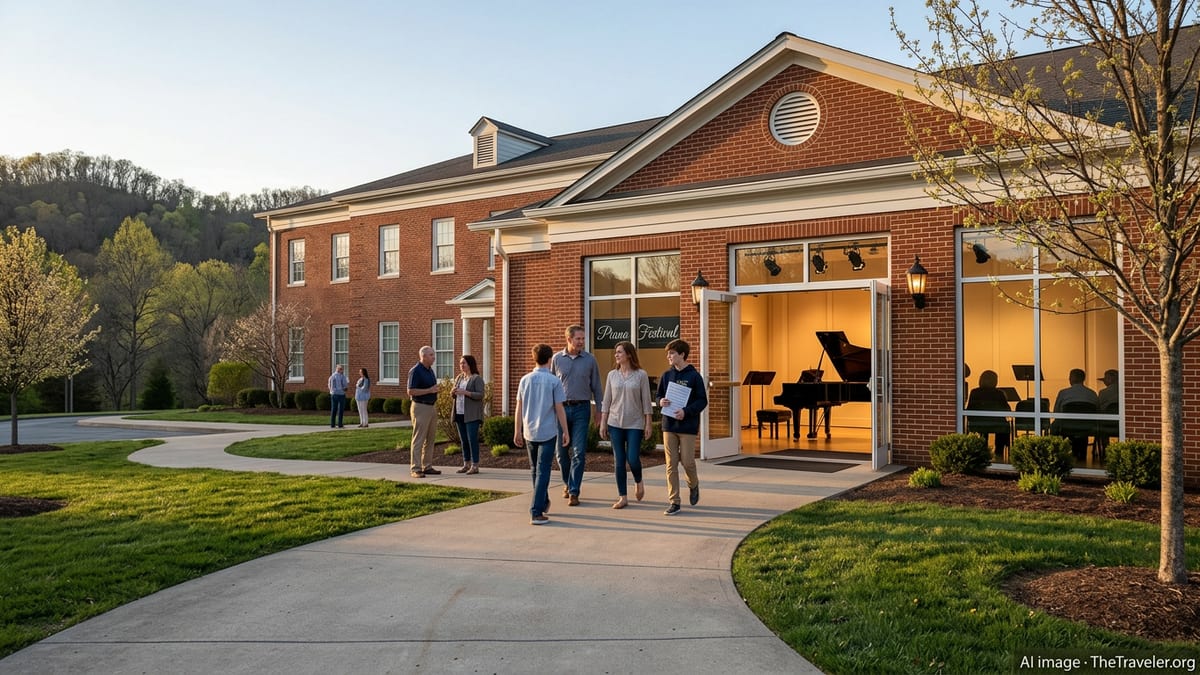
Second Edition Builds on Inaugural Festival’s Momentum
The Southeastern Kentucky Piano Festival will return to the Union Commonwealth University campus after a well-received inaugural edition in April 2025, when the institution opened its Conway Boatman Chapel and performance spaces to students, guest artists and local youth pianists over two days of recitals, master classes and an awards program.
While final dates for the second edition are expected to mirror last year’s late April weekend, university officials and festival organizers say the follow up will expand programming and capacity, responding to strong community interest that emerged during the debut event. The festival is one of the newest cultural offerings on a campus better known for its teacher education and health programs, underscoring a broader push to strengthen the arts in southeastern Kentucky.
Located in the small mountain town of Barbourville, Union Commonwealth University occupies more than 100 acres of gently rolling hills and historic brick buildings, giving visiting musicians and audience members a compact, walkable setting surrounded by forests, streams and nearby state parks. The campus setting proved to be a key part of the festival’s appeal in its first year and will again serve as the main stage for the 2026 edition.
Expanded Program of Recitals, Master Classes and Youth Competition
At the core of the returning festival is a schedule of recitals by Union Commonwealth University music students, invited guest artists and promising young pianists from southeastern Kentucky and neighboring Appalachian counties. Organizers indicate that the second edition will add more performance slots, allowing for additional solo and small ensemble piano repertoire across classical, contemporary and pedagogical literature.
The popular youth component, a judged recital and competition for local students, is expected to grow in scope as area teachers encourage more participation. Building on last year’s model, contestants will perform in front of a panel of university faculty and guest adjudicators, with written feedback, certificates and featured performances during the closing ceremony aimed at motivating continued study.
Master classes led by the festival’s artistic team will again be central to the educational mission. Young pianists and Union students will have the opportunity to perform on stage, receive live coaching on technique and interpretation, and ask questions about practice routines, performance preparation and pathways to college-level music study. Organizers are exploring the addition of informal workshops on topics such as injury prevention at the keyboard and strategies for teaching beginners in rural communities.
Artistic Leadership Highlights Access to High-Level Training
The festival’s artistic direction is rooted in the work of Union Commonwealth University’s music faculty, who launched the event to give local students access to experiences typically found in larger metropolitan areas. By bringing guest artists, adjudicators and advanced pedagogy to Barbourville, they aim to reduce the geographic and financial barriers that can limit arts training in Appalachia.
Faculty organizers emphasize that the festival is designed not only for aspiring professionals but also for recreational players, school ensemble members and adult learners who want structured feedback and community. Sessions are planned at a range of levels, from introductory demonstrations intended for younger children to advanced master classes for students preparing audition repertoire.
This layered approach reflects a broader institutional push at Union Commonwealth University to position the campus as a cultural anchor for Knox County and surrounding rural communities. Recent investment in the Fine Arts Center and the university’s selection for a Kentucky Arts Council operating grant have provided momentum and resources that directly support the festival’s continued growth.
Boost for Cultural Tourism in Kentucky’s Mountain Region
For Barbourville and the surrounding stretch of southeastern Kentucky, the piano festival is emerging as a small but meaningful contributor to cultural tourism. Visitors drawn by the weekend of music often combine campus events with day trips to nearby attractions, including mountain state parks, waterfalls and scenic drives along forested ridges that frame the upper Cumberland River valley.
Local hoteliers and small business owners report that university events bring an uptick in weekend traffic, especially during spring, when hiking trails re-open and outdoor recreation overlaps with the academic calendar. The festival’s timing in late April positions it between basketball season and the height of summer tourism, filling a shoulder period with arts-focused travel.
Tourism officials in the region have increasingly highlighted Union Commonwealth University’s arts programming alongside traditional outdoor offerings, casting Barbourville as both a college town and a base for exploring Kentucky’s mountain heritage. As the piano festival grows, it is expected to feature more prominently in regional calendars and promotional campaigns aimed at music lovers, families and cultural travelers seeking low-key experiences away from major urban centers.
Community Partnerships and Long-Term Vision
Organizers see the second edition of the Southeastern Kentucky Piano Festival as a step toward a longer-term vision that pairs music education with regional development. Outreach to public schools, private teachers and community arts organizations has been central to planning, with Union Commonwealth University positioning the event as a shared resource rather than a closed campus function.
Faculty and administrators point to the university’s history of serving first-generation college students and local families as a model for the festival’s inclusive approach. Scholarships or reduced fees for participants from Knox County and neighboring districts are under discussion, and organizers hope to build a sponsorship base among local businesses and donors to keep the event accessible.
Looking ahead, the festival could evolve to include collaborative projects with other Appalachian colleges, chamber music residencies, and opportunities for cross-disciplinary work in fields such as music therapy, education and community development. For now, the focus remains on delivering a bigger and better second edition that offers high-quality performances, meaningful instruction and a welcoming atmosphere that reflects the character of southeastern Kentucky.