

More news on this day
Southern Railway has announced a major boost to pilgrimage connectivity in south India, confirming that the Rameswaram–Tirupati Express will see its frequency doubled from early March, transforming the current limited service into a more flexible four-days-a-week option for passengers traveling between the two temple towns.
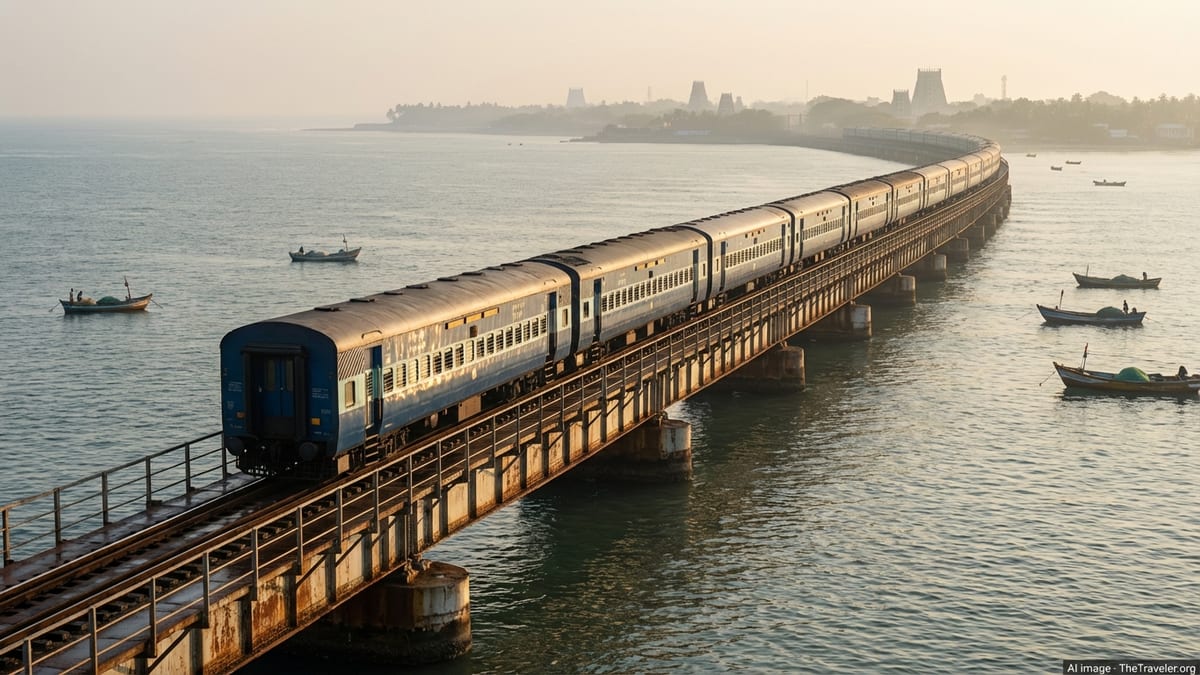
From Weekly Link to Higher-Frequency Corridor
The Rameswaram–Tirupati Express, operated as Train Nos. 16779 / 16780, has long served as an important pilgrimage corridor between the Ramanathaswamy Temple in Rameswaram and the hill shrine of Lord Venkateswara in Tirumala via Tirupati. Introduced initially as a Madurai–Tirupati service and later extended to Rameswaram in 2021, the train has steadily grown in popularity among devotees and general travelers alike.
Until now, the service pattern has been relatively restrictive, with only three trips a week in each direction. In the Tirupati–Rameswaram direction, the train currently operates on Mondays, Fridays and Saturdays. From Rameswaram back to Tirupati, services are offered on Sundays, Thursdays and Fridays. Limited availability has often meant crowded coaches during peak pilgrimage seasons and constrained options for passengers hoping to align their journeys with rituals or darshan timings.
The latest decision by Southern Railway and the Railway Board to enhance the service marks a shift in approach, treating the route as a core pilgrimage corridor rather than a peripheral express. Officials see the move as a way to respond to sustained passenger demand while also spreading traffic more evenly across the week, rather than concentrating pressure on a few departures.
Railway planners note that the Rameswaram–Tirupati line also functions as a bridge between southern Tamil Nadu districts and Andhra Pradesh, feeding not only temple travel but also family visits, student movements and small-business trips. Increasing its frequency is expected to unlock additional ridership in these segments.
New Timetable: Additional Days Without Timing Changes
The enhanced schedule is set to take effect from the first week of March, with officials indicating that the additional runs have been slotted without altering the existing timings. From March 3, the Rameswaram–Tirupati Express will gain an extra departure in the Rameswaram to Tirupati direction, operating on Tuesdays in addition to its current roster of days.
In practical terms, the northbound service towards Tirupati will shift to a four-days-a-week model, operating on Tuesdays, Thursdays, Fridays and Sundays. This expanded pattern is designed to provide more flexibility for passengers planning their arrival in Tirupati or Renigunta to coincide with pre-booked darshan slots in Tirumala, which often require carefully timed travel.
In the opposite direction, from Tirupati to Rameswaram, an additional Wednesday departure will be added from March 4. With this, the southbound service to Rameswaram will run on Mondays, Wednesdays, Fridays and Saturdays, again bringing the frequency to four days each week. The retention of existing timings is expected to ease the transition for regular passengers who have become accustomed to the current schedule.
Southern Railway officials emphasize that keeping the timetable unchanged avoids cascading changes for intermediate stations, where local commuters and regional travelers have synchronized their routines around the train’s arrival and departure slots. The unchanged timings also simplify online reservations and prevent confusion among passengers who may have already booked journeys for March and beyond.
Passenger Demand and Pilgrim Traffic Drive the Change
The frequency increase comes in response to sustained passenger representations and demands from rail users’ associations along the route. Pilgrim groups, local chambers of commerce and civil society organizations in southern districts have repeatedly highlighted the need for more frequent direct services between Rameswaram and Tirupati, citing long waiting lists, heavy crowding on existing days and the necessity of multiple changes for those forced to travel on non-service days.
Rameswaram, located on Pamban Island, is one of the most important Hindu pilgrimage centers in India, attracting devotees from across the country year-round. Tirupati and the Tirumala hills represent another major spiritual destination, creating a natural demand corridor for point-to-point travel between the two shrines. Families often undertake combined pilgrimages, planning multi-day itineraries that include both temple towns, coastal rituals and visits to ancestral locations along the route.
With the existing tri-weekly pattern, many travelers had to adjust by adding extra nights of accommodation or resorting to bus and mixed-mode travel to bridge calendar gaps. Travel planners in the region report that the new four-day frequency will allow more efficient scheduling, particularly for larger groups and package tours that need predictable, regular slots to offer competitive itineraries.
The decision also takes into account seasonal peaks such as festive periods, special temple events and school vacation months, when inbound demand to both destinations spikes sharply. Additional train days should help smooth these peaks and reduce the risk of last-minute surges overwhelming the current capacity.
Regional Connectivity Boost for Southern Districts
Beyond its pilgrimage significance, the Rameswaram–Tirupati Express serves as a lifeline for several districts in southern Tamil Nadu and parts of Andhra Pradesh. The route interlinks coastal communities, interior agricultural belts and urban centers, offering a through-connection that reduces the need for multiple changes at junctions such as Madurai, Tiruchirappalli or Chennai.
Southern Railway’s decision to double the weekly services is expected to strengthen this regional connectivity, giving residents of smaller towns more options for travel to education hubs, healthcare centers and employment markets. For students and workers commuting between these clusters, additional departures translate directly into greater flexibility and better odds of securing reservations in sleeper and air-conditioned classes.
Tourism stakeholders in Tamil Nadu point out that the route also functions as a corridor for beach, heritage and eco-tourism, given that Rameswaram lies near the Gulf of Mannar Marine National Park and is a gateway to coastal experiences such as the Pamban Bridge and Dhanushkodi. Similarly, the broader Tirupati region has been developing as a base for nature and heritage excursions beyond temple visits.
By tightening the frequency of the Rameswaram–Tirupati Express, Southern Railway is seen as consolidating a multi-purpose corridor rather than a purely religious route. Travel agents and hoteliers anticipate a gradual increase in short-stay tourism flows, particularly among domestic travelers from central and western India who route their south Indian tours through these rail hubs.
Timings, Halts and Coach Composition to Remain Unchanged
While the number of weekly trips is set to increase, officials have clarified that the fundamental operating pattern of the Rameswaram–Tirupati Express will remain the same. There will be no change in the scheduled arrival and departure times at originating and intermediate stations, nor in the number and distribution of halts along the way.
This continuity is critical for smaller stations that rely on the express as a stable daily or near-daily link. Locals in these areas use the train not only for long-distance pilgrimages, but also for regional travel spanning a few hours. Any shift in timings or skipped halts would have required widespread adjustments in local transport links, including connecting buses and shared vehicles.
The train’s coach composition is also expected to remain steady, with a mix that typically includes sleeper, three-tier air-conditioned and general second-class compartments. This blend caters to a wide socioeconomic spectrum of passengers, from budget-conscious pilgrims to families and senior citizens seeking more comfort on overnight journeys.
Railway sources note that minor operational fine-tuning, such as rake utilization and maintenance schedules, will be handled internally at the divisional level so that the enhanced frequency does not compromise punctuality or coach upkeep. The absence of changes to passenger-facing details is meant to ensure that the only visible difference for travelers is the addition of more travel days.
Part of a Wider Southern Railway Capacity Upgrade
The move to double the Rameswaram–Tirupati service ties into a broader pattern of capacity enhancement across Southern Railway. In recent months, the zone has announced the regularization of special trains, the introduction of new express services and the speeding up of existing routes as infrastructure upgrades like track renewals, signaling improvements and yard remodelling come online.
Several express services in Tamil Nadu have had their travel times cut thanks to these upgrades, with certain trains shaving between 20 and 85 minutes off their previous schedules. The tri-weekly Rameswaram–Tirupati Express itself has recently been slated for a modest reduction in end-to-end travel time, helping to make the longer overnight journey more competitive compared to road travel.
Officials have framed these changes as part of a strategic effort to make intercity rail more attractive at a time when highways and bus services have expanded considerably. By improving frequency and punctuality, Southern Railway aims to retain and grow its share of long-distance and pilgrimage traffic, which remains a core strength for the zone.
Infrastructure planners point out that higher-frequency services like the upgraded Rameswaram–Tirupati Express also create more predictable flows through key junctions, allowing better utilization of platform and yard capacity. In turn, this helps accommodate additional seasonal specials and future new services that may be introduced on overlapping routes.
Positive Response From Passengers and Local Stakeholders
Early reactions from passengers and local organizations in southern Tamil Nadu and around Tirupati have been broadly positive. Rail users’ associations that had campaigned for a daily or near-daily service have welcomed the move as an important first step, even as some continue to advocate for further increases in frequency over the medium term.
Devotee groups have emphasized that an additional travel day in each direction will be particularly useful for aged pilgrims, families with children and those traveling from distant states who are constrained by fixed vacation windows. For such travelers, having more weekday options reduces the need to undertake strenuous overnight bus rides or patch together multi-leg journeys.
Tour operators and hotel owners in Rameswaram, Madurai and Tirupati report that the announcement has already prompted a flurry of inquiries for March and April, especially around weekends and festival dates. They expect the more flexible rail calendar to encourage longer stays, as travelers can arrive and depart on days that better fit their personal and work commitments.
Local administrations along the route, including municipal bodies and tourism departments, are also expected to align their destination marketing and event calendars with the enhanced service. Better rail connectivity, stakeholders say, can help distribute visitor flows more evenly across the year, reducing congestion during peak periods while boosting business during traditionally lean months.
What Travelers Should Know Before Booking
For passengers planning journeys from March, the key takeaway is that the Rameswaram–Tirupati Express will now be available four days a week in each direction, subject to the final operational calendar published by Southern Railway. Travelers are advised to check the latest dates and availability when making reservations, particularly around the first weeks of implementation and during major religious events at either destination.
Because the train’s timings and halts remain unchanged, regular users can continue to plan around familiar arrival and departure windows. However, with the addition of new days, passengers who previously had to adjust plans or opt for alternative routes may now find direct seats available on more convenient dates, potentially easing pressure on connecting trains via Madurai or Chennai.
As always, travelers heading to Tirumala for darshan are encouraged to coordinate their rail bookings with temple appointment slots, taking into account the time required to transfer between Tirupati or Renigunta railway stations and the hill shrine. Similarly, those bound for Rameswaram should factor in local transport from the station to the temple and surrounding points of interest such as the Pamban Bridge and coastal pilgrimage spots.
With the expanded service set to begin in early March, the Rameswaram–Tirupati Express is poised to play an even more central role in south India’s pilgrimage and tourism map, offering a more frequent and reliable rail link between two of the country’s most revered temple towns.