

More news on this day
A new wave of promotional activity led by the Tourism Authority of Thailand is rapidly transforming Hat Yai, Songkhla, and Trang from regional favorites into Southern Thailand’s next headline tourism stars, with a large-scale familiarisation trip drawing intense interest from international tour operators and media.
Get the latest news straight to your inbox!
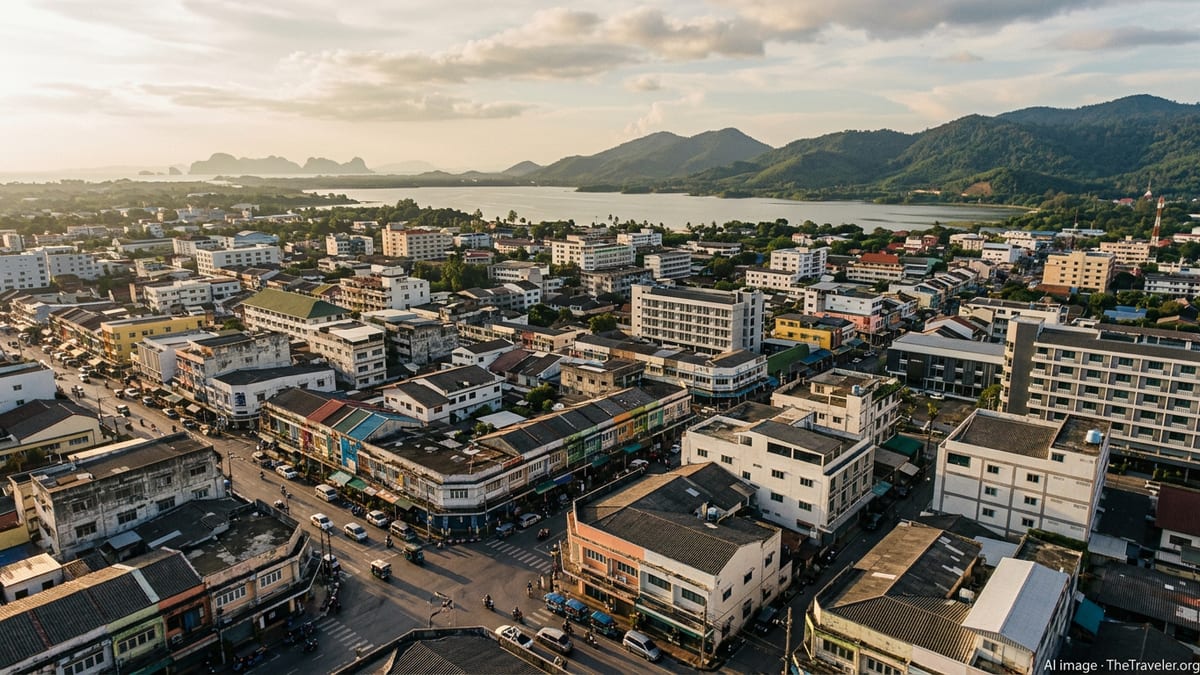
Mega FAM Trip Puts Secondary Cities in the Spotlight
Recent coverage of a Tourism Authority of Thailand mega familiarisation initiative indicates that Southern Thailand’s lesser-known destinations are being positioned for a major step up in international visibility. The curated trip brings together overseas travel agents, media, and content creators to experience Hat Yai, Songkhla, and Trang in a single regional circuit, designed to demonstrate how these locations can anchor new itineraries beyond the country’s classic Bangkok–Phuket routes.
Publicly available information on TAT’s current strategy shows a clear focus on dispersing visitors from saturated hubs to emerging cities with strong infrastructure but comparatively lighter international traffic. Hat Yai, already a powerhouse for cross-border land arrivals from Malaysia, is being reframed as a springboard into the wider lower South, while Songkhla’s historic quarters and Trang’s coastal scenery are positioned as complementary stops on multi-day journeys.
Industry commentary notes that such mega FAM trips typically aim to convert short-term exposure into contracted packages within a 6 to 18 month window. With Southern Thailand’s road and air links back to normal following late 2025 flooding, these programs are arriving at a moment when operators are actively searching for fresh, resilient destinations to promote for late 2026 and 2027 travel seasons.
Hat Yai’s Rebound Accelerates From Cross-Border Markets
Hat Yai, the commercial heart of Songkhla province, has long been a favorite for Malaysian and Singaporean visitors arriving by car, coach, and short-haul flights. Reports from economic and tourism analysts highlight that the city’s visitor numbers and spending dipped sharply during the November 2025 floods, which damaged hotels, restaurants, and retail areas just as the peak season was ramping up. Subsequent assessments projected lost revenue for the year-end period but also pointed to strong underlying demand once connectivity and safety perceptions improved.
By early 2026, updates from regional tourism campaigns such as Smile@South and new-year countdown and festival promotions indicate that Hat Yai’s recovery is moving faster than initially expected. Travel conditions across Southern Thailand have been reported as normalized, and hotel and restaurant reopening rates are climbing as small and medium-sized businesses repair or replace damaged assets. Mega FAM participants arriving now are therefore encountering a city in visible transition, where fresh investment overlaps with long-standing urban energy.
The familiarisation itinerary typically emphasizes Hat Yai’s role as both a destination and a gateway. Urban attractions, night markets, shopping streets, and hilltop viewpoints are combined with visits to nearby coastal areas and cross-provincial routes linking on to Satun, Trang, and Phatthalung. This integrated approach supports TAT’s wider push to increase average length of stay and encourage repeat visits from regional travelers who may previously have focused on short weekend shopping trips.
Songkhla’s Heritage and Lakeside Charm Gain Fresh Attention
While Hat Yai handles much of the lower South’s commercial traffic, the city of Songkhla itself offers a markedly different atmosphere, centred on a preserved old town and a vast lake landscape. Recent festival and design week programming has highlighted creative industries, street art, and cultural walks, which in turn are being woven into the mega FAM narrative as proof that Southern Thailand can deliver more than sun-and-sea tourism.
Coverage of regional recovery efforts notes that Songkhla’s tourism economy was also disrupted by the 2025 floods, although physical damage in the old town was more limited than in parts of Hat Yai. As water levels receded and access roads reopened, local authorities and national agencies moved quickly to restore public spaces, promote community events, and reassure visitors about safety and service levels. This backdrop gives FAM participants a firsthand look at how heritage districts can bounce back while preserving their historic character.
On the trade side, Songkhla is increasingly showcased as a high-value add-on for group tours and independent travelers alike. Sample programs being shared in trade media highlight half-day walking tours of Sino-Portuguese shophouses, visits to lakeside viewpoints, and food experiences built around southern Thai specialties. By pairing Songkhla with Hat Yai on the same itinerary, TAT’s mega FAM concept underscores how two closely linked cities can jointly appeal to culture-focused travelers, families, and regional short-break visitors.
Trang Emerges as Southern Thailand’s Next Coastal Darling
Further west along the Andaman side, Trang is benefiting from the same shift toward broader regional dispersal. Publicly available promotional material from TAT offices describes Trang as a quieter alternative to heavily trafficked islands, combining mangrove-fringed coasts, offshore marine parks, limestone cliffs, and a more relaxed urban core. Until recently, most international exposure came via niche diving and island-hopping communities, but mega FAM coverage suggests this is changing as the province is plugged into new overland and air-linked circuits.
Analyses of Southern Thailand’s tourism pattern show that travellers from neighbouring countries often extend their stay once they move beyond a single city base. By positioning Trang within a loop that begins in Hat Yai, sweeps through Songkhla, and continues toward the Andaman Sea, TAT is effectively turning what might have been a one-stop break into a multi-destination journey. This has the potential to spread spending more evenly and support smaller operators, including family-run guesthouses and local tour providers.
For participants on the mega FAM trip, Trang functions as the visual climax of the route, offering island vistas, coastal sunsets, and quieter beaches that help differentiate Southern Thailand from urban-heavy regional competitors. Travel trade reports indicate rising interest in combining Trang with lesser-known islands and with cultural events back on the Gulf of Thailand side, suggesting that the province may soon feature more prominently in regional brochures and online booking platforms.
Strategic Timing as Thailand Chases Higher-Value Tourism
The mega FAM push across Hat Yai, Songkhla, and Trang is unfolding as Thailand targets higher-value, longer-stay visitors following a strong rebound in overall arrivals. Official statistics for 2024 and 2025 have shown the country regaining much of its pre-pandemic volume, but with mounting competition from neighbouring destinations and periodic climate-related disruptions in key regions. This has prompted a shift toward diversified product offerings, stronger regional branding, and more intensive trade engagement.
According to regional tourism outlooks, dispersing visitor flows beyond a handful of famous beach resorts can reduce pressure on fragile ecosystems, stabilize local economies, and open new opportunities for small businesses. Southern Thailand, with its mix of border cities, heritage towns, and relatively underdeveloped coastal provinces, fits neatly into this strategy. The mega FAM trip effectively serves as a live demonstration of how new routing and packaging can unlock that potential.
For international travelers, the outcome may soon be visible in the form of fresh itineraries that treat Hat Yai as a lively entry point, Songkhla as a cultural anchor, and Trang as a scenic finale. For the region itself, the current surge in trade interest suggests that these once secondary destinations are on course to become central pillars of Southern Thailand’s tourism story over the coming seasons.