

More news on this day
Southwest Airlines is deepening its international push from Las Vegas with a new overnight service to San José, Costa Rica, a fall 2026 addition that will become the longest route in the carrier’s network and a fresh gateway to one of Central America’s signature eco-tourism destinations.
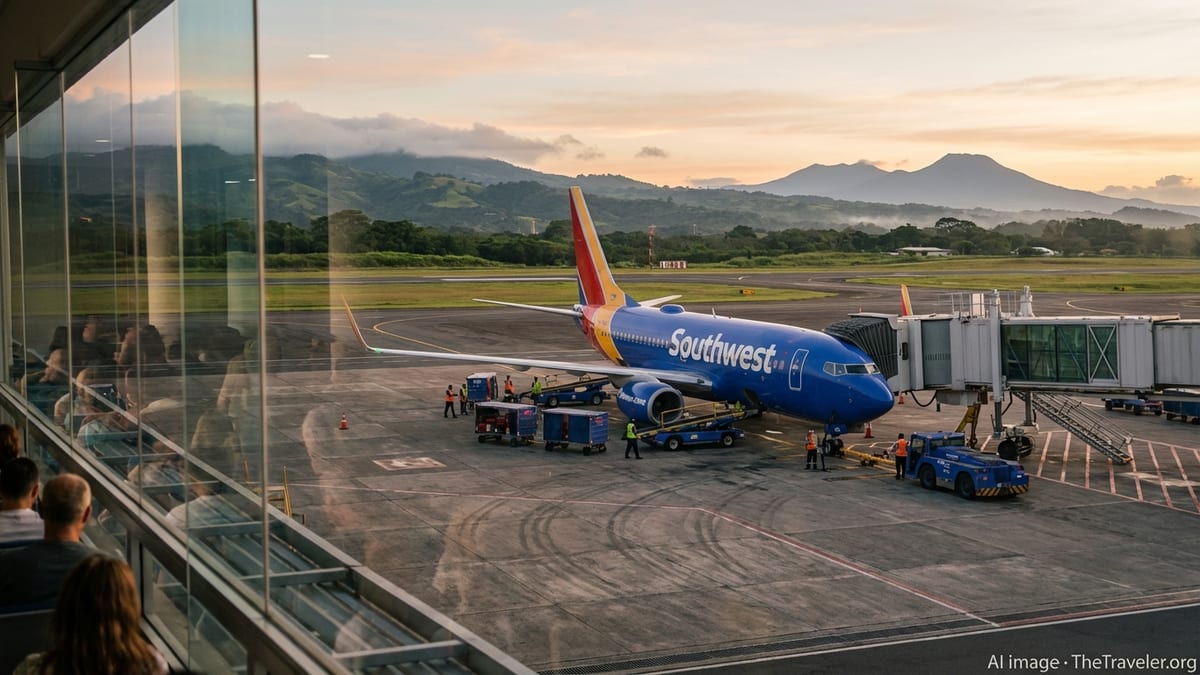
Details of Southwest’s Longest-Ever Route
The new nonstop flight will connect Harry Reid International Airport in Las Vegas with Juan Santamaría International Airport outside San José beginning October 1, 2026, according to schedule filings and tourism officials in Costa Rica. Operated by a Boeing 737-700, the route will cover roughly 2,640 miles, outpacing Southwest’s existing long-haul services and marking a new distance milestone for the carrier.
Current plans call for a daily red-eye departure from Las Vegas at approximately 11:20 p.m., arriving in San José around 6:00 a.m. the following morning. The return flight is scheduled as a daytime departure from Costa Rica with afternoon arrival back in Las Vegas, creating a schedule that maximizes aircraft utilization while giving travelers a full first day on the ground in Central America.
The airline has opened the new service for booking as part of its expanded fall 2026 schedule, which is already on sale through the end of October. Industry schedule data show the Las Vegas–San José flight blocked at just under six hours, positioning it among the longest single segments in the Southwest network and its most ambitious international hop.
Southwest will initially be the only carrier offering a nonstop connection between Las Vegas and San José, according to published route information. That exclusivity is expected to appeal both to vacationers from the western United States and to Costa Rican travelers looking for direct access to Nevada’s largest tourism and entertainment hub.
Strategic Expansion of Las Vegas as an International Gateway
The new Costa Rica route is part of a broader effort by Southwest to elevate Las Vegas as a cornerstone international gateway. Over the past year, the carrier has layered on new service from Las Vegas to beach destinations such as Cancún, Los Cabos and Puerto Vallarta, all designed to capture leisure traffic from the western and central United States.
With the addition of San José, Las Vegas further solidifies its role in Southwest’s network as a high-frequency connecting point, particularly for travelers heading from smaller or interior U.S. cities to Latin America. The airline has touted record peak-day departures from Las Vegas in 2026, with Sunday schedules surpassing 280 flights and a growing share of those now operating across borders.
The introduction of an international overnight flight also underscores a strategic shift for Southwest, which historically focused on domestic, daytime flying. By embracing red-eye operations from a stronghold like Las Vegas, the airline can unlock additional long-haul opportunities without dramatically expanding its fleet, effectively stretching each aircraft’s workday while creating new city pairs.
Industry analysts note that the carrier’s decision to make its first international red-eye a Costa Rica service highlights the enduring strength of Central American leisure demand. The route design leverages Las Vegas’s late-night airport operating environment and vast hotel inventory, allowing travelers to pair entertainment and gaming with rainforest or beach escapes on a single itinerary.
What the New Route Means for Costa Rica Travelers
For U.S. travelers, the Las Vegas–San José nonstop opens a new one-stop gateway to Costa Rica from dozens of Southwest cities that already feed into Harry Reid International. Passengers from markets such as Denver, Phoenix, Chicago, Nashville and Indianapolis will be able to connect in Las Vegas late in the evening and arrive in Costa Rica early the next morning without backtracking through traditional hubs in Texas or Florida.
The timing of the arrival, shortly after sunrise, is particularly appealing for eco-tourism and adventure travelers. Early-morning landings give visitors the entire day to reach coastal regions like Jacó or Manuel Antonio, inland volcano circuits around Arenal, or cloud forest areas such as Monteverde without requiring an extra hotel night near the airport.
Onboard, travelers can expect Southwest’s evolving product, including assigned seating and expanded in-seat power on select aircraft as those upgrades roll deeper into the fleet by 2026. While the airline has not framed the new Costa Rica flight as a premium product, the overnight schedule is likely to draw demand from travelers willing to pay a bit more to avoid connections and maximize vacation time.
For Costa Rican residents, the direct link to Las Vegas introduces a convenient option for tourism, conferences and shopping trips in the United States. The afternoon return schedule from San José allows same-day connections onward from Las Vegas to key domestic destinations across the West and Midwest, adding value beyond point-to-point demand.
Costa Rica Tourism Poised for an Additional Boost
Costa Rica’s tourism officials have welcomed the Las Vegas route as a fresh opportunity to attract travelers from western U.S. states, where awareness of the destination is high but nonstop options have historically been limited. The new flight complements existing services from cities such as Houston, Dallas and Los Angeles by opening an additional corridor into the country’s main international gateway.
The arrival time of around 6:00 a.m. at Juan Santamaría International dovetails with the peak morning period for domestic and regional connections, offering smoother onward links to secondary airports like Liberia, Quepos or Tamarindo for travelers heading straight to the beach. It also supports early departures by motor coach or rental car for visitors bound for national parks and adventure hubs.
Tour operators focused on sustainable travel expect the new service to feed demand for small-group and nature-focused itineraries. Costa Rica’s established reputation for conservation, wildlife viewing and active pursuits such as zip-lining and whitewater rafting aligns well with Las Vegas’s role as a jumping-off point for outdoor travel in the American West, creating marketing synergies around adventure-focused twin-center trips.
In the longer term, the Las Vegas link could also encourage more repeat visitation as travelers discover it is possible to combine favorite U.S. leisure destinations with immersive nature experiences abroad on a single vacation. Industry observers say that if the route performs strongly, it may encourage airlines to test additional long-haul pairings out of Las Vegas into Central and South America.
How This Fits Into Southwest’s 2026 Network Plans
The Las Vegas–San José flight slots neatly into a 2026 strategy that sees Southwest diversifying beyond its traditional short-haul and domestic bread-and-butter routes. Alongside new links to Anchorage, Caribbean islands such as St. Thomas and St. Maarten, and expanded Mexico flying, the Costa Rica route represents the carrier’s continued push into high-yield leisure markets.
Southwest opened bookings for its summer 2026 schedule late last year, emphasizing growth in leisure-heavy cities including Las Vegas, Orlando and San Diego. The fall extension, which adds the October launch of Las Vegas–San José, signals that the airline intends to carry that momentum into shoulder seasons, not just peak holiday and summer travel periods.
By tying its longest-ever route to a proven, year-round destination like Costa Rica, Southwest is betting that demand for nature, wellness and adventure trips will remain resilient even if broader economic conditions become choppy. The decision to operate the flight with a workhorse Boeing 737-700 also keeps operating complexity low while the airline gauges performance.
For travelers, the message is clear: 2026 will bring more ways to combine the bright lights of Las Vegas with the biodiversity and volcano-studded landscapes of Costa Rica, all within a single overnight hop that marks a new distance record for Southwest’s evolving international network.