

More news on this day
Southwest Airlines is accelerating a major transformation of its route network and onboard experience in 2026, debuting new flights to Alaska, St. Thomas, Costa Rica and additional leisure hot spots while overhauling how passengers book, sit and pay to fly.
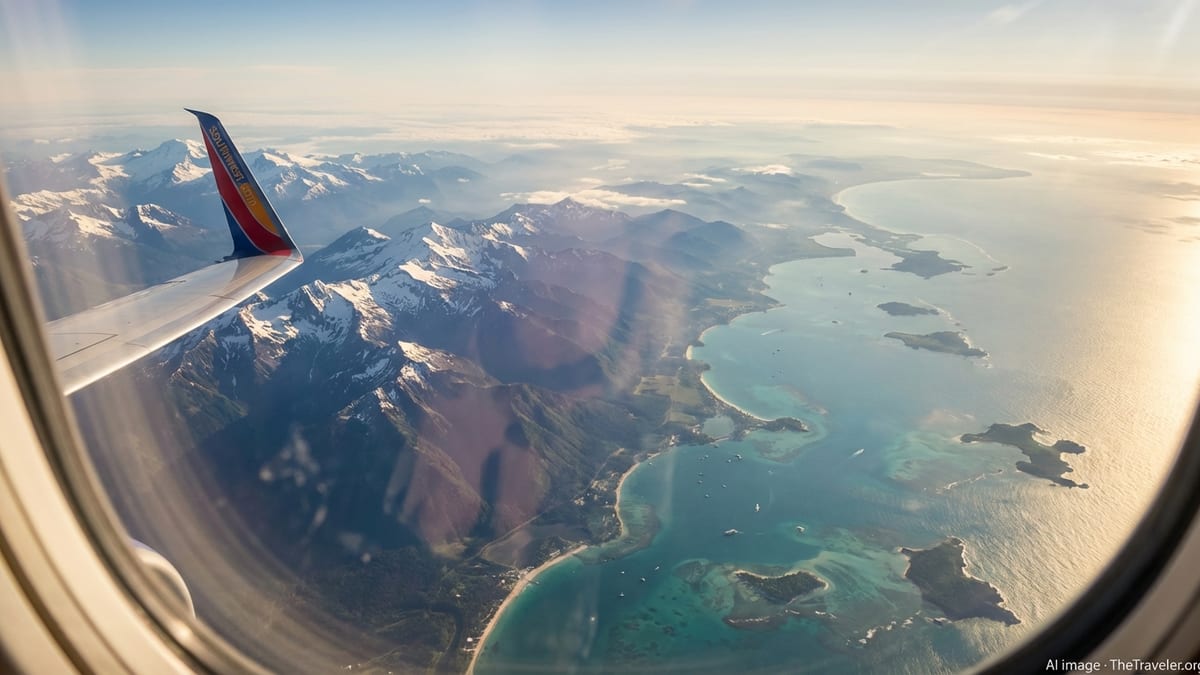
New Year, New Southwest: A Network in Motion for 2026
After several years of relatively cautious growth, Southwest Airlines is entering 2026 with one of its most ambitious expansion pushes in more than a decade. The Dallas-based carrier is adding new destinations, restoring seasonal favorites and deepening its presence in sun-and-fun markets from the Caribbean to the Pacific Northwest. At the same time, it is rolling out fundamental changes to its product, including assigned seating, premium cabins and new fare bundles that are reshaping how travelers experience the airline.
Southwest executives have framed 2026 as a pivotal year: the point at which the airline aims to balance its historic low-cost, leisure-friendly DNA with a more premium offering designed to compete head-on with the largest U.S. carriers. As new destinations come online and schedule details filter out, the result is a route map that looks both more far-reaching and more strategically focused than in years past.
For travelers, the biggest headline is simple. In 2026, it will become easier to reach more corners of North America, Central America and the Caribbean on Southwest, particularly for customers in key connecting cities such as Denver, Las Vegas, Orlando and Baltimore. From Alaska’s midnight sun to the beaches of St. Thomas and Costa Rica, the carrier is positioning itself as a one-stop shop for some of the most sought-after vacation destinations in the western hemisphere.
Anchorage Joins the Map: Southwest Heads to Alaska
One of the most closely watched additions to Southwest’s 2026 network is Alaska. Beginning May 15, 2026, the airline will launch inaugural service to Anchorage’s Ted Stevens Anchorage International Airport, bringing the 49th state into its system for the first time. Daily nonstop flights are slated between Anchorage and two of Southwest’s strongest western gateways, Denver and Las Vegas, creating new options for both Alaskans and visitors heading north.
The flights are planned as overnight “red-eye” services southbound, timed to connect into Southwest’s extensive domestic network in the lower 48. From Denver, travelers will be able to connect onward to dozens of cities across the Midwest and East Coast. From Las Vegas, Anchorage passengers will tap into one of Southwest’s most important leisure hubs, with one-stop connections to Southern California, Texas and Florida.
For Alaska’s tourism sector, the move is significant. Industry analysts say that even a modest amount of new capacity from a low-fare competitor can pressure prices and broaden access during the critical summer season. Local experts in Anchorage have already suggested that Southwest’s presence could spur lower fares and more promotional activity from incumbent airlines, a trend that typically benefits consumers looking to plan bucket-list trips to Denali, Prince William Sound and beyond.
While Southwest has not yet detailed whether Anchorage will see additional routes beyond Denver and Las Vegas, executives have emphasized that the airline intends to “grow where it plants its flag.” If demand holds up, Anchorage could eventually become a seasonal focus point for connecting traffic from the contiguous United States into Alaska’s cruise ports and adventure gateways.
Tropical Push: St. Thomas Becomes Southwest’s New Caribbean Star
In the Caribbean, Southwest is turning up the heat on island service with new flights to St. Thomas in the U.S. Virgin Islands. After announcing in mid-2025 that it would add St. Thomas as its first new destination since 2021, the airline has now finalized the launch dates and city pairs that will connect the island to the mainland United States.
Daily nonstop service between Orlando and St. Thomas is set to begin February 5, 2026, creating a powerful new Florida gateway to the U.S. Virgin Islands. Two days later, on February 7, Southwest will open a second route between Baltimore/Washington and St. Thomas, initially scheduled less than daily but concentrated on peak travel days. Schedules published by local tourism officials indicate daylight operations designed to maximize convenience for vacationers heading to resorts or onward ferries to neighboring islands.
For the U.S. Virgin Islands, the arrival of Southwest is being hailed by tourism leaders as a milestone that widens access from key mainland markets. St. Thomas will become the airline’s ninth island destination in the Atlantic basin, joining Aruba, The Bahamas, Cayman Islands, Cuba, the Dominican Republic, Jamaica, Puerto Rico and Turks and Caicos. Combined with Southwest’s existing international routes to Belize, Mexico and Costa Rica, the new services reinforce the carrier’s role as a major player in the Caribbean leisure market.
Competition will be particularly intense on the Orlando to St. Thomas route, where Southwest will go head-to-head with an ultra-low-cost rival. But Baltimore to St. Thomas will be a unique nonstop in the market, giving Mid-Atlantic travelers a rare direct link to the U.S. Virgin Islands on a major domestic carrier and likely spurring package deals and loyalty redemptions anchored around the new flights.
Costa Rica and Central America: New Gateways for Adventure Travel
Southwest is also deepening its presence in Central America, especially Costa Rica, which has become one of the airline’s signature international markets. The carrier already serves San Jose and Liberia from several U.S. cities, but in 2026 it will open a highly anticipated new route from Nashville to San Jose, broadening access from the southeastern United States and the music-centric capital of Tennessee.
The Nashville to San Jose route is scheduled to launch March 7, 2026, initially as a weekly Saturday service. The flight is timed to enable long-weekend escapes as well as weeklong vacations, departing Nashville in the morning and arriving in Costa Rica around early afternoon before returning to Tennessee later the same day. With introductory one-way fares marketed at budget-friendly levels, the route is expected to appeal to families, digital nomads and adventure travelers drawn to Costa Rica’s mix of beaches, rainforests and volcanoes.
For Costa Rica, a direct link to Nashville builds on existing Southwest connectivity from major U.S. gateways such as Baltimore, Houston, Denver and Orlando to both San Jose and Liberia. Tourism officials have long sought to tap into the strong leisure demand from mid-sized U.S. cities that lack nonstop options to Central America. Southwest’s strategy of layering seasonal and weekly service on top of core daily routes appears designed to test those markets while preserving flexibility to scale up as demand grows.
Beyond Costa Rica, Southwest is maintaining a broad network of flights to Mexico, Belize and several Caribbean nations, with incremental additions in 2026. Among them is new Las Vegas to Cancun service, and added Las Vegas connections to Los Cabos and Puerto Vallarta. Together with the Central American flights, these routes underscore Southwest’s focus on beach-oriented destinations that align with its customer base and vacation-packaging partners.
Wine Country, Islands and Heartland: Five New Destinations for Spring
Southwest’s 2026 story is not only about Alaska and the Caribbean. The airline is also executing a multi-city expansion for spring that adds a mix of mainland and island destinations to its map, supported by a broader rebalancing of routes across the central United States.
In addition to St. Thomas and Anchorage, Southwest is slated to launch new service to St. Maarten in the Caribbean, Knoxville in eastern Tennessee and Santa Rosa in California’s Sonoma County. According to schedule information released this winter, the phased rollout begins in February with the St. Thomas routes, followed by Knoxville in March. Santa Rosa and St. Maarten are planned to join the network in April, while Anchorage comes online in May.
The Santa Rosa launch, targeted for April 7, 2026, will make Charles M. Schulz Sonoma County Airport Southwest’s 14th California station. Initial plans call for nonstop flights to San Diego, Las Vegas, Denver and Burbank, with daily service to San Diego and Las Vegas and a mix of five-day-a-week and peak-day flights to the other cities. For Wine Country, the arrival of a major low-cost carrier opens new possibilities for weekend tourism and conference traffic, particularly from Southern California and the Mountain West.
In Knoxville, Southwest is moving into a fast-growing region of the Southeast, adding competition to a market that serves as a gateway to the Great Smoky Mountains. Combined with its new Nashville to Costa Rica route and expanded Caribbean flying, the carrier is weaving a denser network across the Sun Belt and Southeast, giving travelers in smaller metros more one-stop options to beach and mountain vacation spots.
A New Southwest Onboard: Assigned Seats and Premium Space
Underlying the route expansion is a fundamental shift in how Southwest sells its product. As of January 27, 2026, the airline has fully transitioned away from its long-standing open seating system and now offers assigned seats on all flights. The move, previewed throughout 2025 with limited trials, marks the end of a core brand hallmark but aligns Southwest more closely with consumer expectations and industry norms.
Passengers now choose or receive specific seat assignments based on new fare tiers that determine how early they can select and how close they can get to the front of the cabin. At the top end, a new Choice Extra product offers early seat selection and access to extra-legroom seating, including the first several rows and exit-row seats. Standard fares provide assigned seats further back, with the most restrictive tiers assigning seats later in the booking process or closer to departure.
The cabin itself is being reconfigured starting in early 2026, reducing the total number of seats on many aircraft to make room for a higher proportion of extra-legroom positions. Southwest has said that roughly one-third of seats on a typical flight will qualify as premium space, giving the airline new revenue opportunities while also responding to growing customer demand for comfort on longer routes such as Las Vegas to Cancun or Denver to Anchorage.
Frequent flyers and industry watchers are closely tracking how the changes affect Southwest’s value proposition. While many customers had grown accustomed to the old boarding-number scrum, surveys conducted by the airline indicated that large majorities now prefer the predictability of an assigned seat. For travelers considering the new 2026 routes, the updated cabins and seating rules will be part of the calculus when choosing between Southwest and its rivals.
Fare Bundles, Fees and the Changing Cost of Flying Southwest
The introduction of assigned seating is only one piece of a broader overhaul of Southwest’s fare structure and ancillary fees that is unfolding alongside the 2026 network expansion. The airline has begun rolling out new branded fare bundles that package seat selection, flexibility, early boarding and in some cases checked baggage into tiered products aimed at different traveler segments, from budget-conscious vacationers to frequent business flyers.
In several markets, including the newly announced Anchorage routes, local reports indicate that Southwest’s initial published fares are at or even above those of incumbent competitors, a departure from its traditional role as the automatic low-price leader. On sample dates in May 2026, base fares on some Anchorage departures were listed more than fifty dollars higher one-way than comparable nonstops on a rival carrier, before factoring in seat-selection and baggage fees.
That shift reflects a strategic bet that travelers will pay for perceived reliability, extra space and loyalty perks on top of Southwest’s still-simple fare grid. However, it also underscores the importance of reading the fine print as Southwest’s product becomes more segmented. Customers heading to St. Thomas, Costa Rica or Alaska in 2026 will encounter a wider range of price points tied to seat location, refundability and add-ons than in the past, making comparison shopping increasingly complex.
Industry analysts say the airline is effectively trading some of its historic “no-frills” identity for a more flexible revenue model. As capacity grows in popular leisure markets and competition intensifies, particularly on routes to Mexico and the Caribbean, those extra revenue streams could be crucial to funding continued expansion while keeping headline fares competitive on key city pairs.
What Travelers Should Watch as 2026 Approaches
With new routes to Alaska, St. Thomas, Costa Rica and beyond, 2026 is shaping up as a year of both opportunity and adjustment for Southwest customers. The expanded map opens fresh options for one-stop vacation planning, especially for travelers based near Denver, Las Vegas, Orlando, Baltimore, Nashville and emerging focus cities like Knoxville and Santa Rosa. Yet the shifting fare and seating landscape means that long-time loyalists will need to adapt to a more conventional but nuanced booking experience.
For those eyeing Alaska or the Caribbean, timing will be essential. Anchorage flights are scheduled to begin in mid-May, aligning with the start of peak summer tourism, while the new St. Thomas routes come online in early February, just as winter-weary travelers seek warm-weather escapes. Costa Rica’s enhanced links, including the Nashville service, ramp up in March, offering an attractive shoulder-season window before the Easter and summer crowds arrive.
Experts recommend booking early on newly inaugurated routes, where introductory fares and limited seat inventories can disappear quickly. They also suggest paying close attention to schedule updates as Southwest fine-tunes frequencies based on early demand, particularly in markets like St. Thomas and Santa Rosa where operations will ramp up across the spring. With additional international partnerships, such as new interline options via San Francisco to Europe, Southwest’s 2026 network will likely continue to evolve as the year unfolds.
For now, the message from the airline is clear: the Southwest of 2026 will look and feel markedly different from the one many travelers grew up with. What remains to be seen is how customers will respond to a carrier that is simultaneously widening its reach to new destinations and reimagining the basics of how it flies them there.