

More news on this day
Knoxville’s McGhee Tyson Airport marked a milestone this week as Southwest Airlines operated its first flights at the East Tennessee gateway, inaugurating new nonstop routes that significantly expand the region’s air travel options.
Get the latest news straight to your inbox!
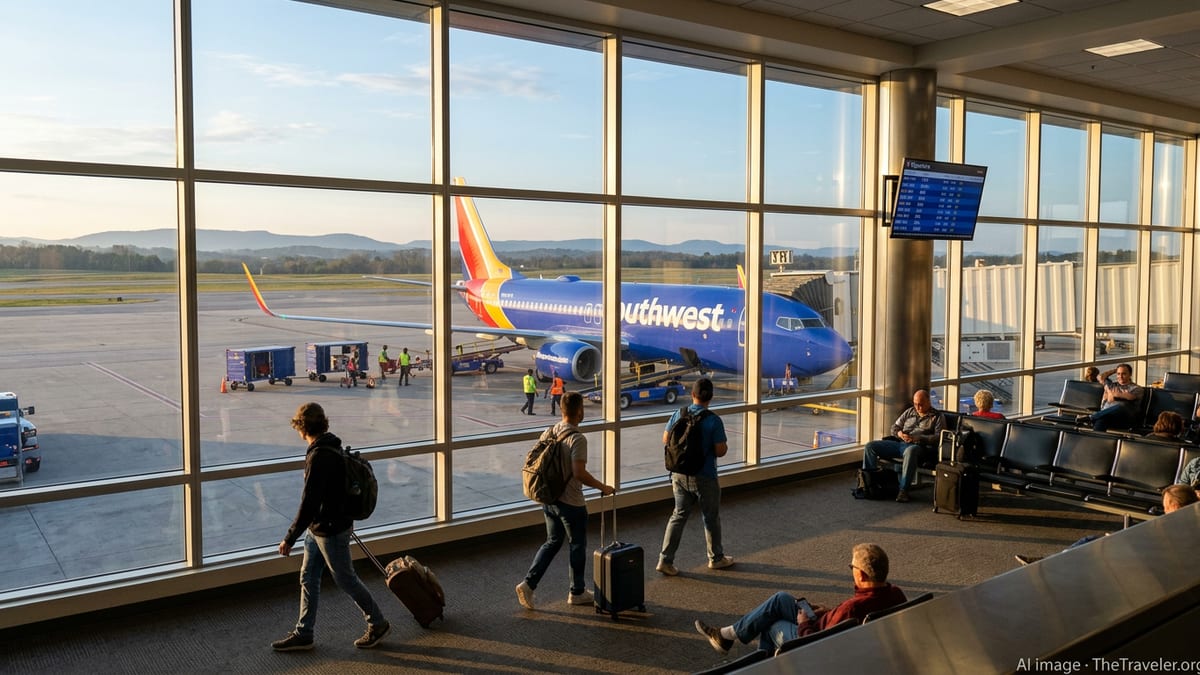
Southwest’s First Flights Touch Down in East Tennessee
Southwest Airlines officially joined the carrier lineup at McGhee Tyson Airport on March 5, 2026, with inaugural service that airport leaders and local officials have hailed as a transformative moment for Knoxville’s connectivity. The first aircraft arrived from Nashville to a traditional water cannon salute, signaling the low-cost giant’s formal entry into the East Tennessee market.
The debut caps more than a decade of air-service development work by the Metropolitan Knoxville Airport Authority, which has sought to attract a large national carrier with a vast domestic network. For Southwest, Knoxville becomes one of its newest cities in a broader 2026 expansion that also includes new destinations in the Caribbean and on the U.S. West Coast.
The launch means local travelers who previously had to drive to larger hubs such as Nashville or Atlanta to board Southwest flights can now start and end their journeys at McGhee Tyson. Early bookings, according to airport and industry data providers, point to strong demand on the new routes, particularly among price-sensitive leisure travelers and loyal Southwest customers.
Southwest’s arrival also carries symbolic weight for a region whose tourism profile has grown dramatically in recent years. With visitor numbers climbing for Knoxville, the Great Smoky Mountains, and nearby outdoor destinations, the airline’s decision to invest in the market is being read as a vote of confidence in East Tennessee’s long-term appeal.
New Nonstop Routes Link Knoxville to Major Hubs
At the heart of Southwest’s Knoxville service are new nonstop flights to Nashville, Baltimore/Washington, Dallas Love Field, and Orlando, creating a lattice of core connections that plug East Tennessee into the carrier’s national network. The schedule includes twice-daily flights between Knoxville and Nashville, plus daily round-trips to Baltimore, Dallas, and Orlando.
The Nashville route is especially significant. As a key Southwest focus city, Nashville offers dozens of easy same-day connections to destinations across the United States. For Knoxville-area travelers heading to the West Coast, the Midwest, or secondary cities not served nonstop from McGhee Tyson, a short hop to Nashville can now replace longer drives or multi-airline itineraries.
Baltimore/Washington adds a direct link into the broader Washington, D.C., region and the Northeast corridor, while Dallas Love Field gives Knoxville a one-stop path into Southwest’s western and central U.S. network. Orlando, long a top leisure destination for Tennessee families, anchors the schedule with a popular sun-and-theme-park gateway that is expected to draw sustained demand.
The new flights also enhance McGhee Tyson’s role as a regional airport serving not only Knoxville but a wide catchment area that stretches into the Smokies and neighboring states. For visitors inbound to East Tennessee, the expanded route map means more one-stop options from across the country without the need to connect through distant hubs.
Tourism and Economic Impact for Knoxville and the Smokies
Tourism and economic development leaders say Southwest’s entry is poised to deliver a measurable boost to visitor numbers, hotel stays, and local spending. With more nonstop options and competitive fares, Knoxville and the Great Smoky Mountains region become easier to reach for both first-time and repeat travelers.
Event organizers and festival planners, including those behind Knoxville’s growing slate of music, arts, and sports events, expect broader geographic draw as Southwest’s schedule matures. Improved access from Baltimore/Washington and Dallas, in particular, opens new markets for weekend getaways and short-break travel to East Tennessee’s outdoor attractions and revitalized downtown districts.
Beyond tourism, the added connectivity is likely to support business travel and corporate recruitment. Companies considering expansions or relocations in the Knoxville area often weigh air service as a critical factor, and the presence of a major low-cost carrier can strengthen the region’s competitiveness against peer cities in the Southeast.
Local officials also point to potential ripple effects for hospitality, transportation, and service jobs. As passenger volumes grow with Southwest’s operation, demand is expected to rise for hotel rooms, rental cars, restaurants, and airport-area development, extending the economic impact beyond the terminal.
Competitive Dynamics at McGhee Tyson Airport
Southwest’s launch arrives at a time when McGhee Tyson is already seeing expanded service from incumbent carriers, and its entrance is expected to sharpen competition on several domestic routes. While the airline is initially the lone carrier on some city pairs, the broader effect is likely to be downward pressure on fares and increased capacity to popular destinations.
Industry analysts note that Southwest’s network model, which relies on high aircraft utilization and quick turns at the gate, can stimulate new travel rather than simply diverting passengers from other airlines. Lower average fares and more convenient departure times often encourage additional leisure trips and enable small businesses to fly more frequently.
For travelers, the competitive dynamic could bring more choice in schedule and price, particularly on routes where legacy carriers currently dominate. Early fare scans in the days surrounding the launch showed a range of introductory prices geared toward filling seats and building loyalty among Knoxville-based customers new to Southwest’s brand.
Airport leadership has emphasized that attracting Southwest is part of a long-term strategy to diversify carriers and minimize overreliance on any single airline. By adding a large low-cost operator alongside existing legacy and regional carriers, McGhee Tyson aims to offer a more resilient mix of service that can better withstand shifts in demand or airline strategy.
What Southwest’s Presence Means for Future Growth
With Knoxville now on Southwest’s map, attention is turning to what comes next. The airline has already telegraphed that additional leisure-oriented routes could be layered into the schedule over time, including seasonal links to destinations such as Tampa and Denver that would appeal to both outbound Tennesseans and inbound visitors.
Airport planners are watching how load factors evolve in the first months of service, as strong performance on the initial routes would bolster the case for further expansion. Additional nonstop destinations from Knoxville could deepen the city’s role as a gateway for the Smokies and the wider Appalachian region, while also distributing visitor traffic more evenly across the year.
Southwest’s presence may also encourage infrastructure investments at McGhee Tyson, from gate and ramp enhancements to terminal amenities tailored to higher passenger volumes. For travelers, that could translate into shorter connection times, improved concessions, and more seamless customer experiences as the airport adapts to its growing role.
For now, the launch of Southwest service represents a clear inflection point for Knoxville’s air service and tourism outlook. As the first wave of flights settles into a daily rhythm, East Tennessee finds itself more closely linked to the rest of the country, with new opportunities riding on each departure from McGhee Tyson’s runways.