

More news on this day
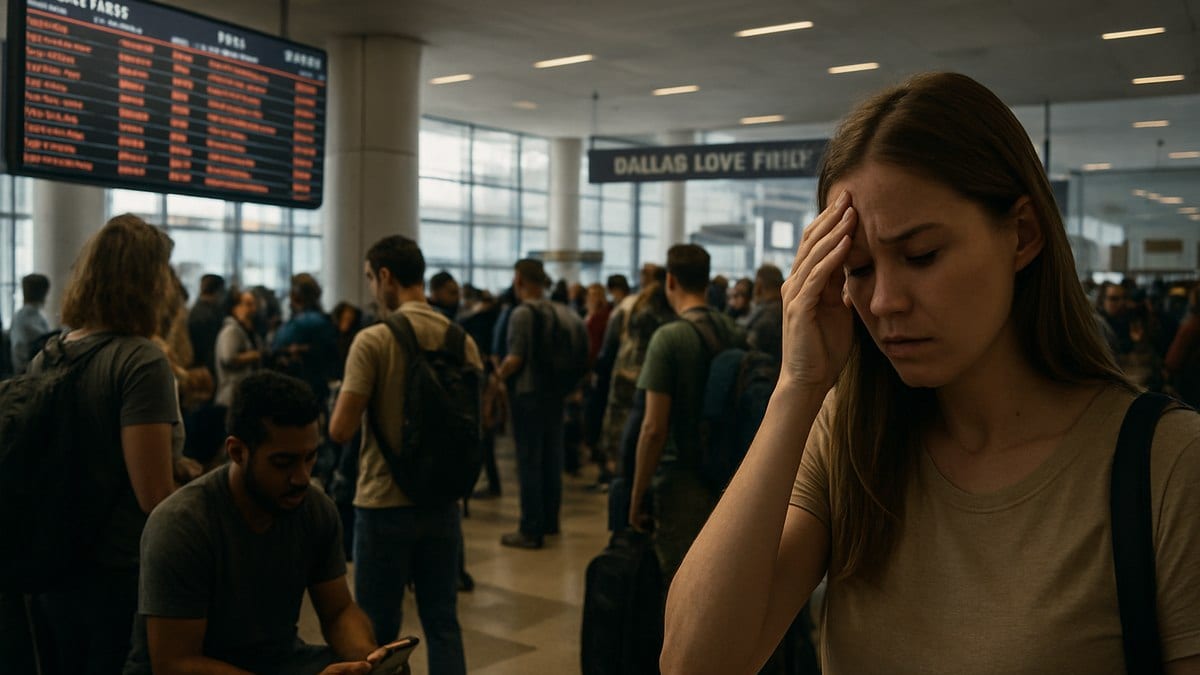
Spring travelers flying with Southwest Airlines out of Dallas Love Field on April 5 are facing another day of travel turmoil, as publicly available flight-tracking data shows 12 cancellations and more than 100 delays, snarling connections to major cities across the United States.
Get the latest news straight to your inbox!
Disruption Concentrated at Southwest’s Dallas Stronghold
Dallas Love Field once again emerged as a focal point of air travel disruption, with operational data indicating 12 Southwest Airlines cancellations alongside more than 100 delayed departures and arrivals on April 5. Reports from aviation tracking platforms and industry coverage describe a delay-heavy pattern, with a relatively small portion of the schedule outright canceled but a significant share running late.
While Love Field handles service from multiple carriers, Southwest maintains a dominant presence at the airport, operating the vast majority of daily departures. As a result, even a limited number of cancellations can create a disproportionate impact, especially when paired with a high volume of delayed flights coursing through the carrier’s point-to-point network.
Travel and aviation outlets note that Love Field recorded among the highest delay counts in the country on April 5, even as its cancellation rate remained comparatively modest. The figures underscore how a concentrated operational bottleneck at a single airport can radiate outward across dozens of routes and cities.
This latest disruption arrives at a time when U.S. carriers have been battling elevated delays nationwide, with early April statistics showing hundreds of cancellations and several thousand late flights tied to storms, congestion and staffing constraints at key hubs.
Major US Cities Feel the Ripple Effects
The knock-on effects from Dallas Love Field are being felt across a broad swath of the Southwest route map, particularly in the South and Southeast. Published coverage highlights disruptions affecting flights linking Dallas with Birmingham, Houston, El Paso, Austin and Atlanta, among other destinations, as late departures in Texas cascade into missed connections and late-night arrivals further afield.
Additional data from national flight-status trackers shows that the wider U.S. network is already under strain from weather and air traffic constraints. When a delay-prone day converges with a bottleneck at a major focus city like Dallas, passengers en route to secondary and midsize markets often experience amplified disruption, from compressed connection windows to rebookings on later services.
Travel industry analysts point out that Southwest’s reliance on a robust connecting flow through Love Field can magnify the consequences of even minor schedule slippage. A late departure to a city such as Atlanta or Chicago does not just affect that single flight; it can also displace the aircraft and crew needed for subsequent legs, forcing rolling delays that widen through the day.
For travelers bound to or from coastal hubs such as Los Angeles, San Francisco, Baltimore and Orlando, the disruption in Dallas can translate into last minute gate changes, overnight misconnects and longer-than-expected layovers at intermediate airports as the airline works to rebalance aircraft and crews.
Weather, Congestion and Crew Positioning Add to the Strain
Recent nationwide statistics for early April show that carriers have already been managing a challenging operational environment, with storm systems across Texas and the Southeast triggering ground delay programs and slowing arrivals into major hubs. Aviation data cited in travel-focused reporting indicates roughly 460 cancellations and about 5,500 delays across the United States on April 4, setting the stage for further strain going into the weekend.
Experts note that airlines increasingly try to protect their schedules by holding flights on the ground rather than canceling outright, a tactic intended to keep aircraft and crews in position once weather or airspace restrictions ease. However, that strategy can push departure times later into the day, compress connection banks and bring crews closer to their legal duty-time limits.
Once crews reach their regulated work-hour thresholds or aircraft fall out of their planned rotation, cancellations often start to occur during the afternoon and evening peaks. At an airport like Love Field, where gate space and turn times are tightly choreographed, even small disruptions can quickly reduce overall throughput, with late inbound flights forcing knock-on delays to outbound services.
Operational briefings and consumer guidance published in recent weeks also highlight how “downstream” effects from prior storms and system outages can linger for days. Aircraft may not be where they are scheduled to be, and crews may require additional rest, leaving the network more vulnerable when a fresh wave of weather or congestion arrives.
Southwest’s Reliability Record Meets a Fresh Test
Southwest’s current difficulties at Dallas Love Field come against the backdrop of a complex reliability story. The carrier has worked to rebuild its reputation since the high-profile scheduling crisis of late 2022, when a system-wide meltdown led to thousands of cancellations and intense scrutiny of its crew scheduling and technology infrastructure. Since then, operational data in several years has often shown Southwest posting relatively low cancellation rates compared with some competitors.
More recent analyses of flight performance suggest that the airline has generally moved toward a model focused on avoiding cancellations where possible, even if it means accepting longer average delays. Industry observers say this approach can be positive for passengers who ultimately still complete their trips the same day, but it also increases the risk of rolling disruptions when a core airport experiences sustained strain.
At Love Field, the airline also operates under unique constraints shaped by legacy agreements that limit the number of gates and define how carriers can use them. City documents and airport planning reports show that Southwest has committed to maintaining a large operational footprint at the airport through at least the next decade, betting on continued demand growth and increasing enplanements as Dallas builds toward major events such as the 2026 men’s World Cup.
The current wave of cancellations and delays is therefore not just an isolated inconvenience for today’s passengers; it is also a stress test of the carrier’s ability to manage an intense schedule at a constrained, heavily trafficked urban airport that anchors a significant portion of its domestic network.
What Travelers Can Do if Their Plans Are Disrupted
Consumer advocates and travel industry guidance suggest that passengers affected by today’s disruptions at Dallas Love Field take a proactive approach to managing their itineraries. Travelers are encouraged to monitor flight status frequently using airline apps and airport displays, as departure and arrival times can shift multiple times over the course of a delay-heavy day.
Same-day rebooking options may be available at no additional cost when a cancellation or significant schedule change occurs, particularly if the disruption is driven by operational factors within the airline’s control. For those with tight connections through Dallas, reviewing alternative routings through other hubs, or even shifting to nearby airports in Texas, can sometimes reduce the risk of overnight misconnects.
Published advice also stresses the importance of understanding each carrier’s policies on refunds, vouchers and duty-of-care support in the event of cancellations. While specific entitlements vary by airline and circumstances, passengers whose flights are canceled are often eligible to request a refund to the original form of payment, even if the airline has automatically rebooked them on a later service.
With spring weather and system congestion likely to remain factors in the weeks ahead, travelers flying through Dallas and other busy U.S. hubs are being urged to build extra flexibility into their plans, including longer connection times, travel insurance that covers delays and missed connections, and backup arrangements for critical trips where timing is essential.