

More news on this day
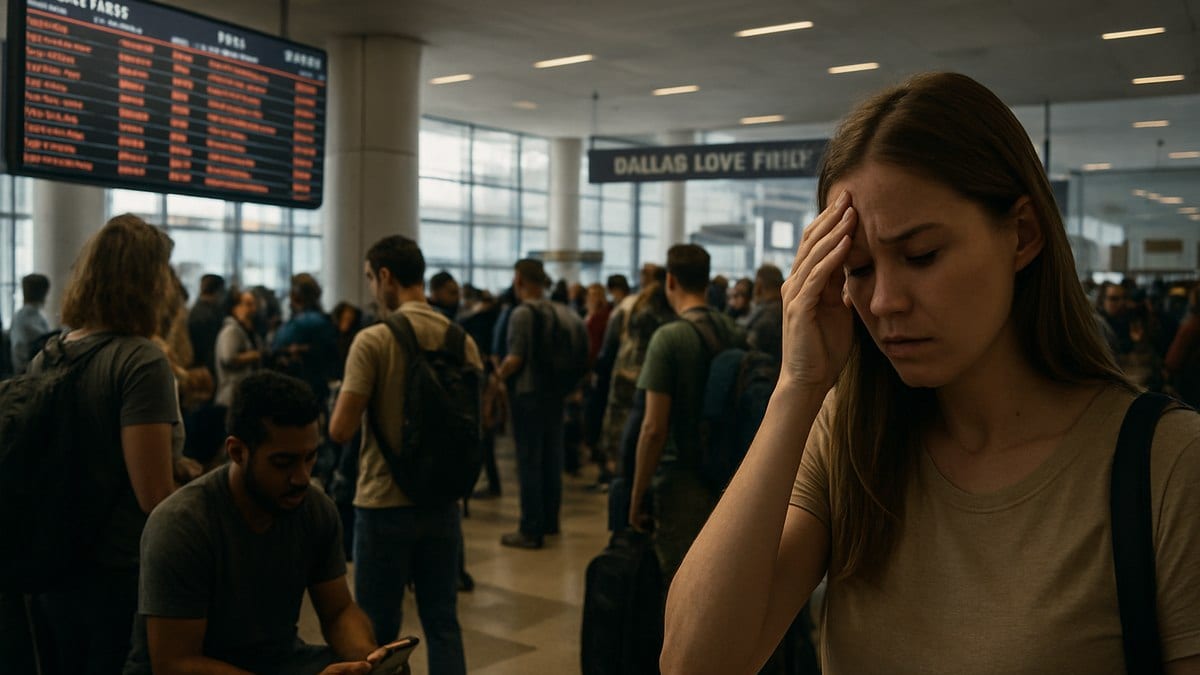
Travelers across the United States faced fresh disruption today as Dallas Love Field, the home base of Southwest Airlines, recorded 12 Southwest cancellations and more than 100 delayed departures and arrivals, triggering a ripple of schedule problems on routes to major cities nationwide.
Get the latest news straight to your inbox!
Operational Turmoil at a Key Southwest Hub
Dallas Love Field occupies a central role in Southwest Airlines’ domestic network, funnelling a high volume of short and medium haul flights through North Texas every day. Publicly available airport performance data today shows an unusually delay heavy operating picture at the airport, with Southwest bearing the brunt of the disruption compared with other carriers.
Reporting compiled by industry focused outlets indicates that Dallas Love Field logged 12 Southwest cancellations alongside more than 100 delays, far outpacing the interruption levels seen at many comparable US airports. While the percentage of canceled flights remains relatively low against the airport’s overall traffic, the concentration of delays within a short window has significantly complicated connections and turnarounds.
Analysts note that such patterns are especially disruptive at point to point focused airlines such as Southwest, where aircraft and crews are scheduled to operate multiple legs per day. When one segment is canceled or substantially delayed, subsequent flights on that aircraft or with that crew can quickly fall behind schedule, amplifying the initial disruption.
Ripple Effects Across Major US Cities
The disruptions at Dallas Love Field have not been contained to North Texas. Flight tracking and schedule data show that the delays and cancellations have affected services linking Dallas with major cities across the South and beyond, including Atlanta, Houston, Birmingham, El Paso and Austin, as well as larger markets in the Southeast.
Routes between Dallas and Houston, traditionally among Southwest’s most heavily traveled corridors, have seen clusters of delayed departures, contributing to longer than usual waiting times for passengers attempting same day returns or tight business itineraries. Connections from Dallas to Atlanta and Orlando have also been affected, complicating onward travel for leisure and family travelers at the start of the spring travel period.
Additional knock on effects are emerging at secondary airports that rely on a steady flow of Southwest traffic from Dallas. Cities such as Birmingham and El Paso are reporting late arriving aircraft, which in turn slow down turnarounds for outbound flights. Even when flights ultimately depart, rolling delays can erode confidence in same day connections and create uncertainty for travelers with time sensitive plans.
Weather, Congestion and a Fragile System
While the precise mix of causes behind today’s disruption has not been fully detailed in official summaries, recent patterns in US aviation suggest that multiple factors are likely in play. In recent weeks, spring weather systems have triggered large numbers of delays and cancellations at hubs around the country, particularly in Texas and the Southeast, as thunderstorms and low visibility reduce available arrival and departure rates.
Any meteorological constraint quickly interacts with air traffic control flow programs, runway capacity limits and the high utilization schedules favored by low cost carriers. With Dallas Love Field operating close to its gate and runway capacity under longstanding regulatory limits, relatively modest slowdowns can translate into long wait times for departures, extended taxi queues and holding patterns for arriving flights.
Aviation analysts point out that the US airline system remains highly sensitive to localized disruptions. When a major carrier experiences delays at a key base, the impact can spread throughout its network within hours as crews reach duty time limits and aircraft fall out of position. Today’s irregular operations at Dallas Love Field illustrate how a few dozen problem flights can complicate travel plans for thousands of passengers across multiple time zones.
Southwest Under Continued Scrutiny on Reliability
Southwest Airlines has faced heightened attention on its operational reliability since a historic scheduling breakdown in late 2022 led to thousands of cancellations over the winter holidays. Since then, the airline has pledged significant investments in technology, crew scheduling tools and customer recovery processes while also adapting its business model with new seating policies and network changes.
Regulators and consumer advocates continue to monitor how large carriers handle irregular operations, particularly at home base airports where they control the majority of flights. Recent settlements and policy changes in the United States have placed additional focus on transparency around delays, passenger notification practices and compensation in the event of controllable disruptions.
Today’s cluster of cancellations and delays at Dallas Love Field is far smaller in scale than the 2022 meltdown, yet it adds to a broader narrative in which travelers remain acutely aware of the potential for sudden schedule upheaval. Industry observers note that repeated local disruptions, even if modest by national standards, can gradually erode customer confidence if they occur too frequently on key business and leisure routes.
What Travelers Can Expect in the Coming Days
Irregular operations of the kind seen at Dallas Love Field today often take time to fully unwind. Even after the immediate causes subside, aircraft and crew imbalances can linger into subsequent days, creating isolated cancellations and minor delays as airlines work to restore their planned schedules. Travelers with upcoming Southwest flights through Dallas may see schedule adjustments or equipment changes as the carrier repositions resources.
Publicly available advisories from airlines and airports consistently encourage passengers to monitor their flight status frequently on the day of travel and to allow additional time for connections when disruptive patterns emerge at major hubs. Same day rebooking options, mobile boarding passes and real time notifications have become central tools for managing the uncertainty created by events like today’s Dallas disruptions.
For now, the data points to a focused but significant period of travel chaos at Dallas Love Field, with Southwest Airlines absorbing the largest share of the impact. As airlines, regulators and airports examine the latest wave of disruptions, the events in Dallas provide another test of how well the US aviation system can protect travelers when tight schedules collide with the complex realities of modern air travel.