

More news on this day
Southwest Airlines passengers across the United States encountered widespread disruptions as at least 16 cancellations and around 1,000 delays rippled through the carrier’s network, snarling travel plans in Chicago, New York, Los Angeles, and several other major cities.
Get the latest news straight to your inbox!
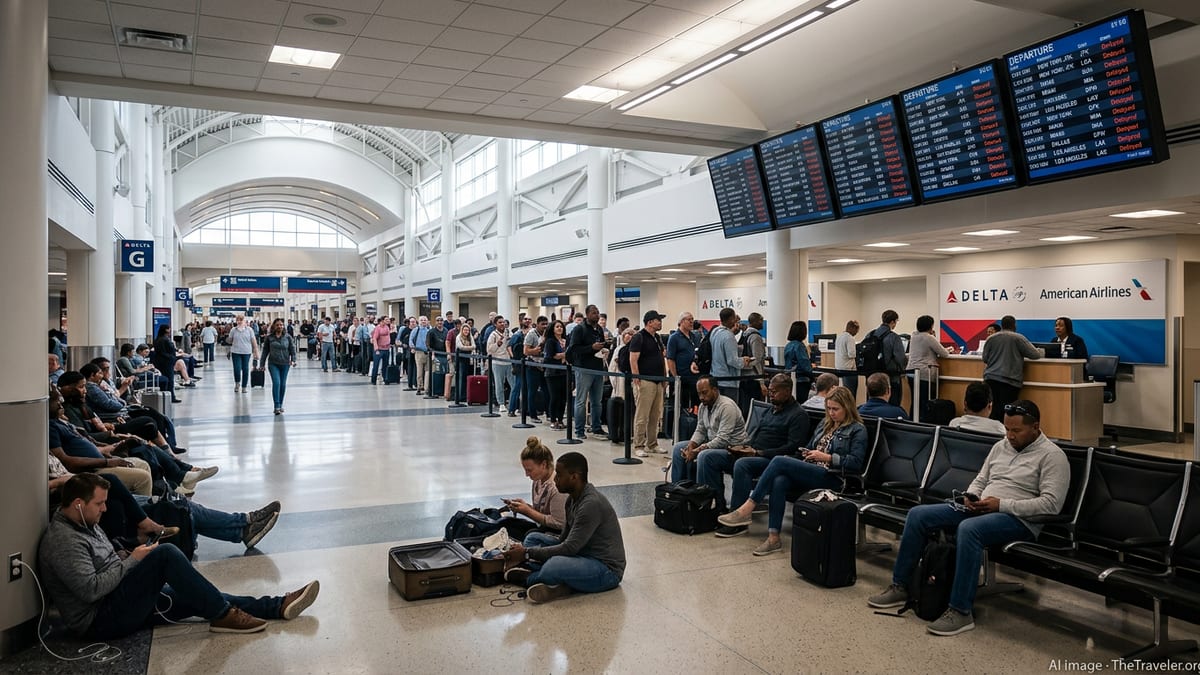
Network Strain Hits Major U.S. Gateways
Publicly available flight-tracking data showed Southwest’s operations coming under pressure as delays built up through the day at key airports, with Chicago, New York, and Los Angeles among the hardest hit. The pattern reflected a familiar scenario for U.S. air travel, where relatively small pockets of disruption can quickly cascade across a tightly scheduled national network.
Reports on overall U.S. aviation performance indicated thousands of delayed flights nationwide, with Southwest among the carriers experiencing knock-on effects as congestion and weather-related constraints narrowed the margin for on-time departures. While the airline’s share of cancellations remained modest in raw numbers, the volume of delayed services amplified the impact for travelers who depended on tight connections or time-sensitive itineraries.
Tracking services pointed to rising ground delays and holding patterns at several large airports as the day progressed, heightening the risk that initial timetable slips would turn into missed crew connections and aircraft out of position. In this environment, even a relatively small number of outright cancellations translated into widespread disruption for passengers trying to move through major hubs.
The latest operational strain comes at a time when air travel demand remains robust and many carriers are operating schedules close to pre-pandemic capacity. That combination has left little room to absorb disruptions, particularly for point-to-point operators whose aircraft and crews may be scheduled on multiple legs per day that cross several regions.
Chicago, New York, and Los Angeles Bear the Brunt
Chicago’s airports again emerged as a flashpoint, with data from local aviation dashboards and national trackers highlighting elevated delay levels. Chicago Midway, a longstanding Southwest stronghold, saw boarding times stretch and departure boards fill with new estimated times as weather and traffic-management programs affected operations across the region.
In New York, activity at LaGuardia and other major airports reflected similar pressures. According to published coverage of U.S. flight statistics, New York’s tight airspace and chronic congestion left limited flexibility when schedules began to slip, creating longer-than-usual ground holds and contributing to the growing tally of delayed Southwest services into and out of the region.
On the West Coast, Los Angeles International Airport featured among the large hubs reporting mounting delays as the day advanced. Passenger accounts and airport operations updates pointed to extended waits on taxiways and at gates, with some Southwest flights held for arriving crews or aircraft that had been delayed earlier in the day at airports in the Midwest and Northeast.
Secondary markets connected to these large hubs also felt the effects, as Southwest’s point-to-point network meant that a delayed departure from Chicago or New York could easily ripple into late-night operations in smaller cities. Travelers on those routes reported missed connections, shortened overnight layovers, and uncertainty over whether return flights would depart on schedule.
How Delays Cascade Across the Southwest Network
Analyses of recent Southwest performance note that the airline’s high-frequency, point-to-point model can be especially vulnerable when conditions deteriorate across multiple regions at once. A single delayed leg in Chicago, for example, may provide the aircraft and crew needed for a later departure from New York or Los Angeles, so an early disruption can reverberate through the day.
Industry-focused reports on Southwest’s operations in 2026 highlight that weather remains the primary external driver of irregular operations, but also emphasize the role of air traffic control programs, airport congestion, and tighter staffing margins. These factors can build on each other, turning what might be routine timetable adjustments into more extensive delays and eventual cancellations.
Recent winter and early-spring storms across North America have already produced several days with elevated cancellation and delay counts, underscoring how quickly the system can become strained. Publicly available statistics from earlier major weather events this year show that when large parts of the network are affected simultaneously, airlines can struggle to reposition aircraft and crews fast enough to restore normal operations by the next day.
For Southwest, the lingering memory of its nationwide scheduling crisis in late 2022 continues to shape public perception whenever large numbers of the airline’s passengers are stranded. While the current disruption is far smaller in scale, comparisons in consumer commentary and travel forums suggest that expectations remain high for clear communication and timely rebooking options when operations falter.
Passenger Impact and Options Under New Refund Rules
For travelers caught in the latest wave of disruptions, the practical challenges ranged from missed family events to lost workdays and unexpected overnight stays. Passenger reports across social media and travel forums described long lines at customer service desks, difficulties rebooking on already crowded flights, and struggles to obtain clear information about revised departure times.
Recent changes to U.S. Department of Transportation rules have shifted the landscape for affected passengers. Public summaries of those regulations note that airlines are now required to provide cash refunds, rather than vouchers, when flights are canceled or significantly delayed beyond specified thresholds, provided the traveler chooses not to accept alternative transportation. These rules apply broadly across U.S. carriers, including Southwest.
Consumer advocates have emphasized that passengers should document their disruption, retain receipts for extra costs such as meals and lodging, and monitor airline communications channels closely. While U.S. regulations do not require airlines to compensate travelers for consequential expenses beyond the ticket itself in most cases, some carriers issue travel credits or reimburse certain costs as a goodwill gesture during severe operational events.
In the current disruption, travel experts recommend that Southwest passengers check both the airline’s mobile app and departure boards frequently, as schedule changes can occur with limited advance notice. They also suggest exploring alternative airports within the same metropolitan area, such as shifting between Chicago Midway and O’Hare or between Los Angeles International and nearby secondary airports, when that is practical and seats are available.
Operational Scrutiny and the Road Ahead for Southwest
The latest bout of cancellations and delays arrives as Southwest remains under heightened scrutiny over its reliability. In late 2023, the airline agreed to a substantial federal penalty related to its 2022 holiday meltdown, and investor litigation focused on its technology and operations has continued into 2026. Court filings and legal analysis indicate that plaintiffs have argued the airline underinvested in system resilience before that crisis.
Southwest’s leadership has repeatedly pledged to upgrade technology, strengthen crew scheduling tools, and improve performance in challenging conditions. Operational overviews and investor materials released in recent months highlight investments in systems intended to better track aircraft and crews in real time, as well as schedule adjustments aimed at building more buffer into peak travel periods.
Yet, as the most recent disruptions demonstrate, the broader U.S. aviation system remains sensitive to weather volatility, air traffic control staffing constraints, and airport congestion. Even with improved tools and planning, airlines such as Southwest can find their operations strained when multiple large hubs, including Chicago, New York, and Los Angeles, are affected on the same day.
Travel analysts note that sustained improvements in reliability will likely require coordinated efforts across the industry, including investments in air traffic control modernization, additional staffing in critical roles, and continued refinement of airline schedules. For now, passengers confronting queues and departure boards filled with delayed Southwest flights are left navigating the immediate realities of a system operating close to its limits.