

More news on this day
A midair security scare that forced a Nashville to Fort Lauderdale Southwest Airlines flight to divert to Atlanta on March 6 is sending ripples across one of South Florida’s busiest tourism gateways, exposing how even a single disruption can strain airport operations, luxury hotel inventory and traveler confidence in peak season.
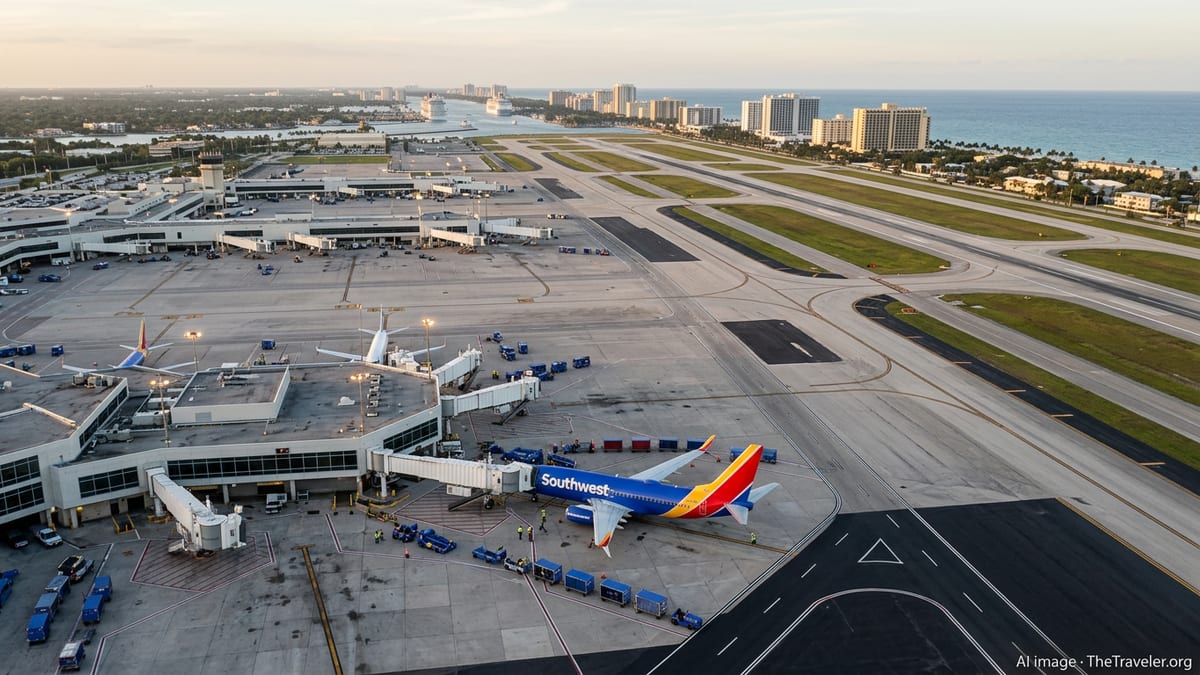
A High-Profile Diversion on a Key Leisure Route
Southwest Airlines Flight 2094 departed Nashville International Airport on the evening of March 6, bound for Fort Lauderdale-Hollywood International Airport, when a reported passenger disturbance and possible security concern prompted the crew to divert to Hartsfield-Jackson Atlanta International Airport. Law enforcement met the aircraft on arrival, and the passenger at the center of the incident was removed for questioning, according to statements from local authorities and the airline.
The episode unfolded on a route that has become a bread-and-butter leisure corridor for Southwest, linking a fast-growing Tennessee origin market with South Florida’s cruise terminals and beach resorts. With most travelers on board headed for weekend stays or cruise departures, the diversion triggered a chain reaction of missed connections, rebookings and extended overnight stays across multiple hubs.
While no injuries were reported and the airline characterized the issue as a misunderstanding after initial investigation, the high visibility of yet another in-flight disturbance on a U.S. carrier has sharpened attention on how fragile airport and hospitality ecosystems can be when a single aircraft does not reach its destination as planned.
Operational Strain at a Busy South Florida Gateway
Fort Lauderdale-Hollywood International Airport entered March already under pressure from a heavy schedule of domestic and Caribbean flying. Recent data show the airport recording well over one hundred delays in a single day across carriers during late February weather and congestion events, with Southwest among the airlines affected. In that context, the sudden disappearance of an inbound Boeing 737 from the arrival bank is more than a one-off anomaly.
Airports rely on predictable inbound flows to balance gates, turnaround times and staffing. When a flight diverts, planners must rapidly reallocate scarce resources: ground handlers switch equipment to other aircraft, gate assignments are shuffled and baggage operations adjust for luggage that will not appear on carousels as scheduled. At a mid-size but intensely utilized field such as Fort Lauderdale, those adjustments can cascade into tighter turnaround windows for subsequent departures.
The knock-on effect is often felt far beyond the single flight. Passengers who were due to connect from Fort Lauderdale to onward Caribbean routes, or to reposition for cruises out of Port Everglades and Miami, are pushed into later services, filling remaining seats and compressing what little slack is left in already strong March demand. For an airport where Southwest carries a double-digit share of passengers, even modest schedule shocks can reverberate across the day’s operation.
Luxury Hotels Feel the Shock of Disrupted Arrivals
Fort Lauderdale’s luxury and upper-upscale hotels, especially along the beachfront and near the cruise port, are finely tuned to weekend arrival patterns, with occupancy swelling on Fridays and Saturdays as domestic visitors fly in. When a full flight of guests fails to arrive on time, revenue managers must quickly decide whether to hold rooms, resell them or negotiate alternative arrangements with the airline for distressed travelers.
In this case, travel agents and hotel sales teams report a familiar pattern. Some diverted passengers opted to overnight in Atlanta when seats into South Florida became scarce late in the evening, effectively transforming a planned two-night beach escape into a single-night stay. Others were rebooked on early-morning flights to Fort Lauderdale, arriving hours before official check-in times and putting additional pressure on housekeeping and front-desk staff to turn rooms more quickly.
At the top end of the market, where daily rates remain elevated on strong winter and early spring demand, even a partial washout of one night’s arrivals is significant. Hotels that had been running near sold-out levels reported a mix of last-minute cancellations, no-shows and day-of rebookings, while also fielding calls from airline operations teams seeking blocks of rooms for disrupted guests. The result is an unusual combination of empty beds in some properties and acute overbooking risk in others, depending on how quickly travelers could be reaccommodated.
Tourism Confidence and Cruise Connections Tested
South Florida’s tourism economy depends heavily on frictionless air-to-cruise and air-to-resort connections. For visitors traveling from interior U.S. cities such as Nashville, Southwest’s nonstop to Fort Lauderdale is often the linchpin of a tightly choreographed itinerary that includes same-day embarkation on a cruise or prepaid activities along the beach.
When that linchpin fails, even temporarily, the consequences can be costly. Travel advisors report clients missing their scheduled embarkation windows or boarding ships with little time to spare, after hurried same-day rebookings routed through alternate Florida airports. Others forfeited prepaid excursions or first-night dinners because of late-night arrivals or unscheduled overnights in connecting hubs.
The latest diversion comes on the heels of a series of weather-related disruptions that have already left many travelers wary of cutting connections too close. Industry observers say this incident is likely to reinforce a trend toward building in extra buffer nights at the start of Fort Lauderdale vacations and cruise itineraries, which may ultimately benefit hotels but could raise overall trip costs for price-sensitive visitors.
Southwest’s South Florida Strategy Under the Microscope
The diversion also lands at a time when Southwest is actively rebalancing its Florida footprint, shifting some international flying away from Fort Lauderdale while expanding domestic and Caribbean connectivity from other state gateways. Even with those shifts, the carrier remains a major presence at Fort Lauderdale, moving hundreds of thousands of passengers through the airport each month on a mix of point-to-point and connecting services.
Analysts note that the combination of strong leisure demand, tight capacity and the occasional high-profile in-flight disturbance has created an environment in which any operational irregularity can quickly become a stress test. For Southwest, that means pressure to communicate rapidly and clearly with affected passengers, protect key cruise and resort connections and demonstrate that its network can absorb one-off shocks without prolonged disruption.
For Fort Lauderdale and its luxury hospitality sector, the episode is another reminder that resilience strategies increasingly need to span the entire travel chain, from cabin to curb to check-in desk. As peak season continues, stakeholders across the airport, airline and hotel communities will be watching closely to see whether lessons drawn from this diversion help soften the impact of the next inevitable disruption.