

More news on this day
Southwest Airlines is set to significantly boost US-Mexico leisure travel next year, doubling its nonstop service between San Diego and Los Cabos from October 2026 and signaling new momentum for cross-border tourism.
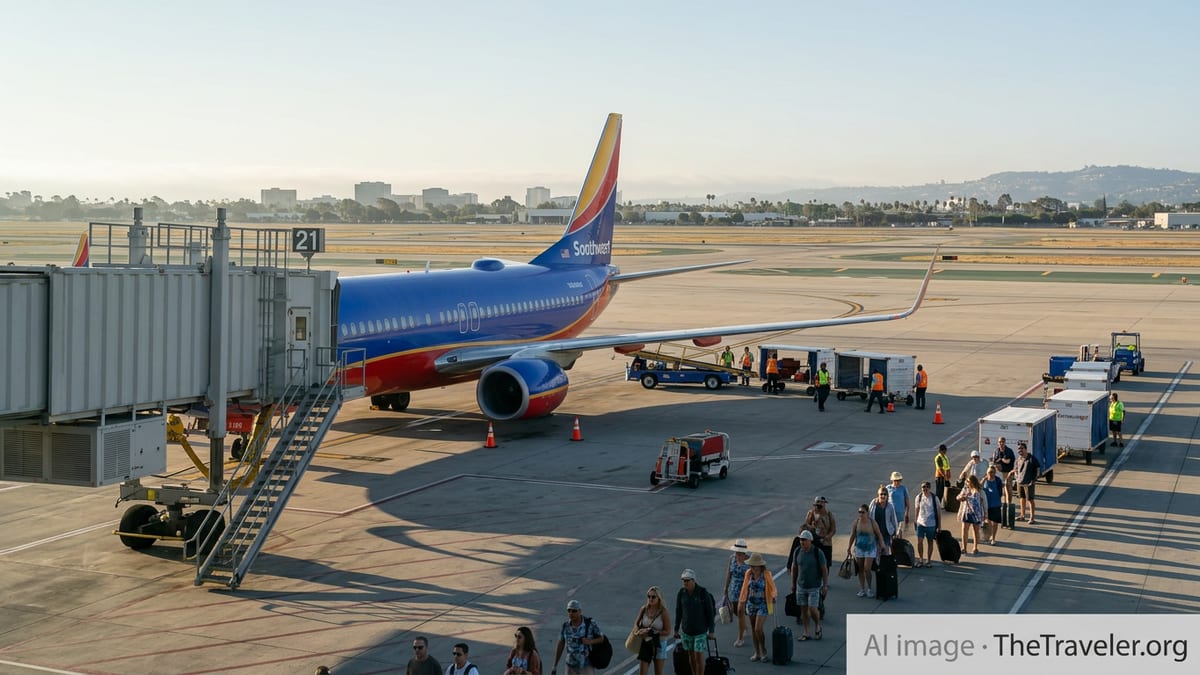
More Seats and Frequencies on a Key West Coast Leisure Route
According to recently filed schedules, Southwest plans to increase its San Diego–Los Cabos operation from one to two daily roundtrips starting in October 2026, turning an already popular leisure link into one of the densest short-haul international routes on its West Coast map. The added frequency will focus on peak travel days and shoulder-week demand, giving travelers more flexibility on departure times in both directions.
The flight time between San Diego International Airport and Los Cabos International Airport typically runs about two and a half hours, making it one of the quickest international escapes available to Southern California travelers. By doubling the number of daily departures, Southwest is effectively adding hundreds of extra weekly seats into the market at the start of the 2026–27 high season in Baja California Sur.
While the additional flights are expected to be branded as seasonal, industry analysts note that October is an important pivot point for Mexico beach travel, when fall shoulder-season trips roll directly into the busy winter period. If load factors hold, the extra capacity could become a recurring feature of Southwest’s winter schedule in subsequent years.
For the airline, the enhanced schedule also strengthens its position at San Diego, where it is already the largest carrier by departures and has been steadily adding more Mexico flying alongside its domestic network growth. The San Diego–Los Cabos route fits neatly into Southwest’s broader strategy of thickening high-demand leisure corridors rather than opening many entirely new international stations.
How the Added Flights Could Transform San Diego and Los Cabos Tourism
Tourism officials on both sides of the border are watching the capacity increase closely. San Diego’s visitor economy has been leaning into its role as a gateway to the Pacific and Latin America, and more nonstop links to Mexican resort areas tend to translate into stronger hotel performance, especially during shoulder periods. Extra October capacity to Los Cabos should help smooth seasonal dips and encourage more short, spontaneous getaways for regional travelers.
In Los Cabos, the boost from San Diego arrives as the region continues to court higher-spend visitors and diversify beyond its traditional winter-sun peak. Additional airlift from a high-income catchment area like Southern California typically feeds demand for luxury resorts, golf, wellness retreats and marina-based activities, fueling ancillary spending far beyond the airport and hotel zones.
The timing also aligns with a broader recalibration of US-Mexico air service. After several years of schedule volatility, airlines are increasingly favoring concentrated, high-frequency routes that can withstand shifts in demand and aircraft availability. A stronger San Diego–Los Cabos corridor fits that pattern, offering reliable, short-haul flying that can be flexed up or down more easily than long-haul international routes.
Local tourism boards in both destinations are expected to lean into cooperative marketing efforts as the new schedule firming up for late 2026, promoting two-center trips that combine urban coastal experiences in San Diego with beach and desert landscapes at the tip of the Baja California Peninsula.
What Travelers Can Expect From the New Schedule
For travelers, the practical impact of the October 2026 change will be felt most strongly in choice of departure times and connection options. A second daily roundtrip opens up more morning and afternoon combinations, making it easier to build long weekend escapes without sacrificing a full day to travel. It also improves onward connectivity across Southwest’s domestic network via San Diego for passengers heading into or out of Los Cabos from other US cities.
Southwest typically operates Boeing 737 aircraft on the San Diego–Los Cabos route, offering an all-economy cabin with open seating, two free checked bags and no change fees. As capacity increases, fare watchers expect a wider range of price points, particularly for travelers who can be flexible on days and times. That said, October remains a popular month for weddings, golf trips and fishing charters in Los Cabos, so early booking will still be advisable for peak weekends.
From an operational standpoint, additional frequency often brings improved schedule resilience. With more flights in the market, the airline has greater ability to rebook passengers in case of irregular operations, an important consideration during the late-hurricane-season weeks that overlap the early part of October in Baja California Sur.
Travelers should also expect the usual entry and documentation requirements for Mexico, including valid passports and any updated arrival form procedures implemented by authorities by 2026. Given the popularity of carry-on-only weekend trips on this route, experts recommend closely checking baggage rules and liquid restrictions before departure to avoid delays at security and boarding.
Competitive Pressures and the Wider US–Mexico Market
Southwest’s decision to deepen its San Diego–Los Cabos presence in October 2026 comes amid intensifying competition in the US–Mexico leisure market. Other carriers have also been increasing capacity into resort gateways like Cancun, Puerto Vallarta and Los Cabos from major US hubs, but few enjoy the same combination of brand loyalty and dense point-to-point networks that Southwest has cultivated on the West Coast.
By anchoring an additional daily flight out of San Diego, the airline gains more leverage in schedule comparisons where travelers weigh departure times, total journey duration and baggage policies rather than just headline fares. For Mexican tourism planners, a stronger Southwest presence can help diversify inbound traffic away from a handful of large US legacy carriers, spreading risk if any one airline shifts strategy or capacity.
The move also underscores how crucial cross-border leisure markets have become in airlines’ long-term planning. With fleet delivery timelines still uncertain and domestic business demand evolving, short-haul international routes to Mexico and Central America offer a relatively predictable revenue stream. High-frequency links like San Diego–Los Cabos are well positioned to benefit from that structural shift.
Industry observers will be watching to see whether other US carriers respond with their own schedule changes from Southern California or the broader Southwest region. Even without direct matching of frequencies, the added competition could stimulate promotional fares and package deals across the West Coast–Los Cabos market.
Planning Ahead: Booking Strategies for October 2026 and Beyond
With the new flights scheduled to debut in October 2026, frequent travelers and planners have ample time to fine-tune their strategies. Historically, Southwest opens its booking calendar in large blocks several months at a time, and popular weekend departures on international leisure routes can sell out early at the lowest fare tiers.
Travel advisors recommend monitoring the schedule as soon as October 2026 dates become available, particularly for group trips, weddings and high-demand holiday periods that might overlap with the expanded service. Securing air seats first, then layering on flexible accommodation and activity options, can help protect budgets from later price spikes if demand outpaces capacity.
Given that airlines sometimes tweak frequencies and timings in the months leading up to departure, travelers should also prepare for modest schedule adjustments. Building in a buffer on arrival day, especially for cruises, major events or nonrefundable experiences, remains good practice even with more daily frequencies.
For those eyeing multi-stop itineraries, the enhanced San Diego–Los Cabos link could become the backbone of broader West Coast and Baja journeys, pairing San Diego’s beaches, craft beer and cultural districts with the contrasting desert, coastline and nightlife of San José del Cabo and Cabo San Lucas. With more flights on the horizon from October 2026, the corridor between the two destinations is set to feel smaller, more connected and more accessible than ever.