

More news on this day
Southwest Airlines is preparing to end service at Chicago O’Hare International Airport and Washington Dulles International Airport, a network shift that will consolidate its presence at nearby hub airports and force impacted travelers to adjust summer and fall plans.
Get the latest news straight to your inbox!
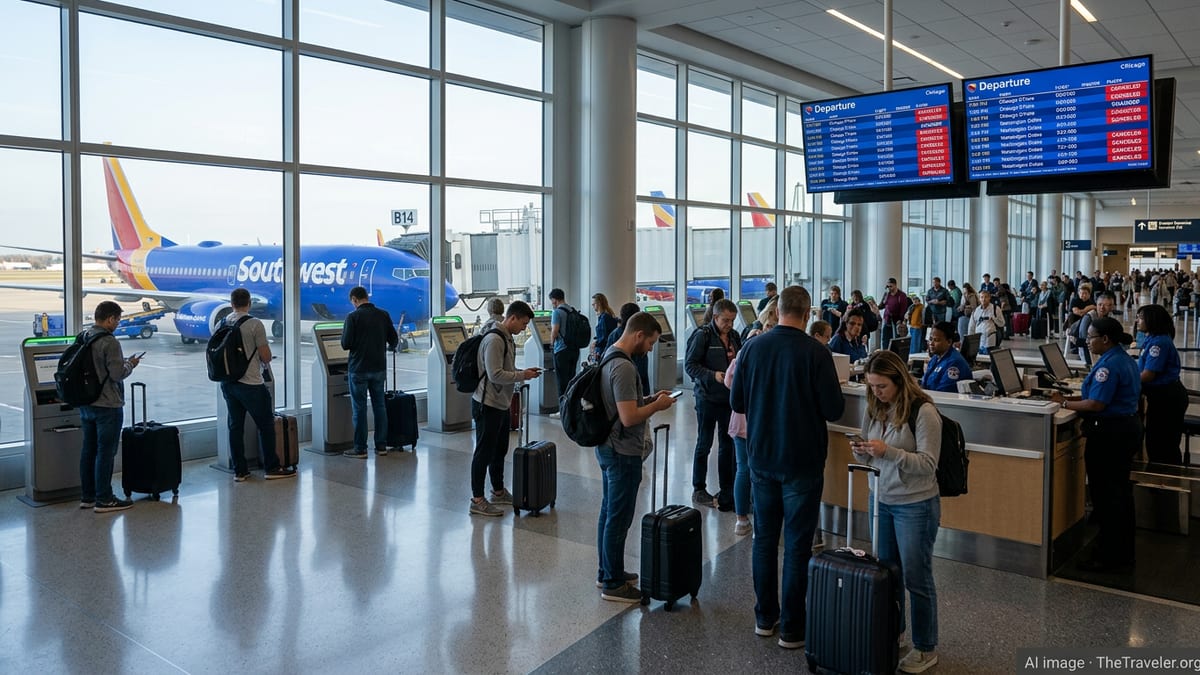
What Is Changing at O’Hare and Dulles
Southwest’s retreat from Chicago O’Hare and Washington Dulles affects only a small portion of its nationwide schedule, but it is highly visible because both airports are major gateways for domestic and international travel. Publicly available schedule data and traveler notices indicate that Southwest flights into and out of O’Hare will cease in early June, while service at Dulles is also being removed from upcoming timetables.
The airline has long concentrated its Chicago operations at Midway Airport, with O’Hare added more recently to tap into a different slice of the market and offer additional connections. In the Washington region, Southwest has historically relied on Baltimore/Washington International and Reagan National for most of its traffic, with Dulles playing a smaller supporting role. Industry coverage suggests that the decision now is to focus even more tightly on those core airports.
Travel analysts note that such shifts are part of a broader trend in which carriers refine their route maps to prioritize the strongest performers and concentrate aircraft where demand and operating conditions are most favorable. For Southwest, that increasingly means doubling down on airports where it already has a dominant presence and extensive connecting networks.
For passengers, the most immediate impact is not a loss of Chicago or Washington service altogether, but rather a change in which specific airports will be used, how long trips will take, and which connections are available on existing bookings.
Why Southwest Is Consolidating These Routes
According to published coverage of recent schedule updates and investor materials, Southwest has been scrutinizing underperforming routes and reallocating aircraft to markets showing stronger demand or better yields. Exiting O’Hare and Dulles appears consistent with that strategy, as both airports are heavily served by other major airlines and offer less of the cost and operational advantages that underpin Southwest’s business model.
O’Hare and Dulles also present challenges that can weigh on point-to-point carriers, including congestion, air traffic constraints, and higher operating costs than at secondary airports. By contrast, Chicago Midway and Baltimore/Washington International are long-established bases for Southwest, giving the carrier more control over schedules, gate availability, and turn times.
Network planners often describe these types of changes as a redeployment of capacity rather than a simple cut. Aircraft and crews freed up by leaving O’Hare and Dulles can be used to add flights or new routes from airports such as Midway, Nashville, Baltimore, or other growth markets in the Southwest system.
For business travelers who preferred O’Hare or Dulles because of their connectivity to other global airlines, the shift may reduce options under a single ticket, especially where they previously paired Southwest flights with long-haul international services via separate bookings. Leisure travelers, however, may find that Midway or Baltimore offer more nonstop choices on Southwest itself, even if the drive or ground transport changes.
How to Check If Your Flight Is Affected
Travelers with upcoming Southwest itineraries involving O’Hare or Dulles should first verify the status of their bookings. The most direct way is to log in to the airline’s website or mobile app and review each trip segment for aircraft type, flight number, and airport codes. If any segment shows Chicago O’Hare (ORD) or Washington Dulles (IAD), it may be subject to schedule changes or cancellation as the exit dates approach.
Airlines typically process schedule adjustments in batches, meaning that some flights may disappear or change times before customers receive notifications. Passengers should monitor their reservations regularly, especially for trips scheduled after early June for O’Hare and for late summer or fall dates involving Dulles.
Most affected customers can expect to receive an email or app alert outlining any cancellation or rerouting, along with options for rebooking. However, message delivery is not always instantaneous, particularly if a booking was made through an online travel agency or corporate travel tool. Confirming details directly in the airline’s systems helps avoid surprises close to departure.
Those who rely on O’Hare or Dulles for specific ground transport links, such as commuter rail connections or parking arrangements, should also factor in potential changes to their airport choice and travel times on the day of departure.
Steps to Rebook on Midway, BWI, or Reagan National
For most Chicago-based customers, Southwest is expected to steer disrupted O’Hare bookings toward Chicago Midway, where it operates a much larger schedule. In practical terms, this will usually involve changing your existing reservation from ORD to MDW on the same or a nearby date, subject to seat availability and any fare rules applicable to the original ticket type.
In the Washington region, passengers whose itineraries used Dulles are likely to see alternatives offered to Baltimore/Washington International or, where permitted by slot and schedule constraints, Reagan National. Depending on the direction of travel, this may involve a different mix of nonstop and connecting options, and in some cases a change in total journey time.
When a schedule change or cancellation originates with the airline, carriers commonly allow customers to switch to another flight or nearby airport within a defined window at no additional fare, though the exact terms can depend on the type of fare purchased and the scope of the disruption. Passengers should review the rebooking instructions in their notification carefully and complete any changes as early as possible to access the widest choice of alternatives.
Travelers who need to keep the original airport for logistical reasons may also explore options on other airlines serving O’Hare or Dulles. In that scenario, it is important to compare the total cost, including any checked bag and seat selection fees, against the convenience of staying with Southwest at an alternate airport.
Practical Tips for a Smooth Airport Switch
Switching from O’Hare to Midway or from Dulles to another Washington-area airport can be manageable with some planning. Travelers should begin by mapping out new ground transportation options, including public transit, ride-hailing, or parking arrangements, and building in extra time for the first trip under the new plan.
In Chicago, Midway is located closer to many neighborhoods on the city’s South and West Sides and offers direct rail access. For travelers accustomed to O’Hare’s highway and commuter rail links, a change in routine may be required, but overall travel time can be similar or even shorter depending on the starting point.
In the Washington region, the choice between Baltimore/Washington International and Reagan National will depend heavily on where travelers live or work. BWI may be more convenient for those in the northern suburbs and along key interstate corridors, while Reagan National is closer to central Washington and parts of Northern Virginia. Checking travel times at the same hour and day of the week as your planned flight can help set realistic expectations.
Regardless of the airport, travelers are advised to monitor their reservations in the days leading up to departure, confirm terminal and gate information on the day of travel, and keep an eye on any additional schedule refinements as Southwest continues to adjust its post-O’Hare and post-Dulles operations.