

More news on this day
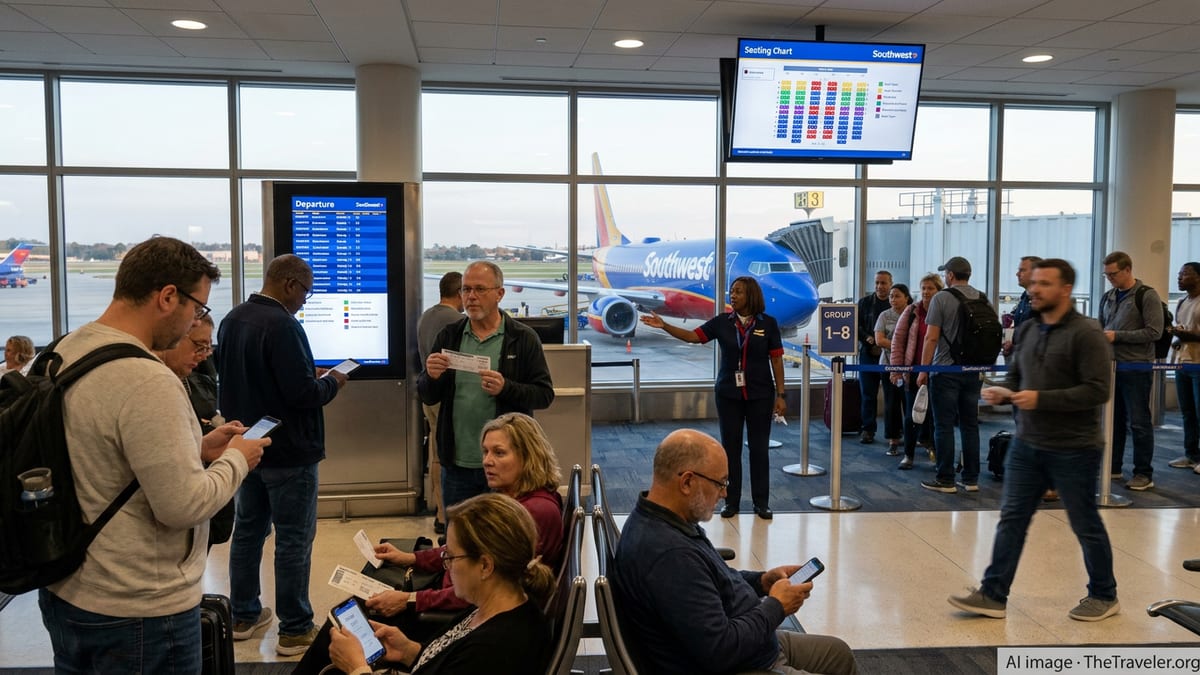
Southwest Airlines is dismantling one of the most recognizable quirks in U.S. aviation, phasing out its free-for-all open seating in favor of assigned seats on flights departing January 27, 2026, a move that is reshaping the carrier’s identity and sharply dividing its loyal customer base.
A Historic Shift for the Last Holdout
For more than five decades, Southwest’s boarding ritual stood apart from the rest of the industry. Passengers checked in early, jockeyed for a low boarding position and then rushed on board to claim any open seat. That system, long defended by the airline as efficient and even fun, will now give way to a conventional assigned-seat model that looks much more like what travelers find on other major U.S. carriers.
The shift became real for customers booking travel for January 27, 2026, and beyond, when Southwest opened assigned-seat inventory and introduced a new cabin layout with Extra Legroom, Preferred and Standard seats. The airline is also retiring its familiar A, B and C boarding groups and numbered positions, replacing them with eight boarding groups more tightly aligned to seat type, fare and frequent-flier status.
Southwest executives say the overhaul is a direct response to years of surveys and focus groups suggesting many travelers, especially infrequent fliers and families, want to know exactly where they will sit before they reach the gate. The airline is branding the package of seating and cabin changes under the marketing banner “Seatisfaction,” signaling that this is not a limited trial but a core part of its future product.
Behind the scenes, analysts say the move also reflects growing pressure from investors to generate more revenue from the same aircraft and schedule. By carving the cabin into tiers and linking seat selection to higher fares and premium credit cards, Southwest is taking a page from competitors that have turned seating into a powerful ancillary revenue stream.
New Seats, New Fares and a Rebuilt Boarding Process
At the heart of the change is a redesigned cabin in which every seat now falls into one of three categories. Extra Legroom seats cluster at the front of the cabin and exit rows, offering up to roughly five additional inches of space and commanding the highest fares or elite perks. Preferred seats, concentrated in more desirable sections of the cabin, sit in the middle of the hierarchy. Standard seats make up the remaining majority of the aircraft.
Southwest has also rebadged its fare bundles to match the new architecture. Its entry-level Basic ticket, the successor to the well-known Wanna Get Away fare, is now the most restrictive option and does not allow customers to choose a specific seat at booking. Basic passengers will instead receive an automatic seat assignment at check-in or the gate, unless they hold certain Southwest credit cards or elite status that unlock additional choices.
Higher-priced Choice, Choice Preferred and Choice Extra fares allow most travelers to select seats during booking, with the priciest options tied to Extra Legroom and the earliest boarding groups. Traditional perks like two free checked bags have been scaled back or reserved for top tiers, marking a stark break from Southwest’s once-simple promise of no bag or change fees.
The boarding process, once structured around lines of passengers clustering at stanchions in numerical order, is also being reengineered. With seats now assigned, boarding groups serve mainly to manage overhead bin access and cabin flow. Southwest is selling a new Priority Boarding option that can be purchased 24 hours before departure, further monetizing what used to be a race to the check-in button.
Cheers From Planners, Jeers From Purists
Reaction from customers has been immediate and polarized. Many travelers who disliked the stress of the old system say assigned seats are overdue. Parents worried about being separated from young children, older travelers who move more slowly, and infrequent fliers unfamiliar with Southwest’s rituals have welcomed the ability to lock in seats together when they buy tickets.
Southwest has pledged to prioritize seating families together, especially those with children 12 and under, and says families on the same reservation will be grouped in the same boarding category. For customers who forget to pick seats or buy Basic fares, the airline promises its agents and algorithms will work to keep at least one parent next to a child whenever possible.
But the airline’s social media feeds and customer forums tell a different story among longtime loyalists. Many say the free-for-all boarding was part of the fun and a key reason they chose Southwest over legacy rivals. Popular posts have blasted the new model as a “disaster” and likened its complex mix of fares, seat maps and paid upgrades to a form of “extortion,” accusing the carrier of hiding desirable seats behind extra fees.
Some frequent fliers argue that the spirit of egalitarianism that once defined the airline is eroding. Under the old system, a budget-conscious traveler who checked in promptly had a realistic shot at a good aisle or window near the front. Under the new structure, those seats are more likely to be reserved for customers paying higher fares, carrying premium credit cards or holding elite status.
Loyalty, Credit Cards and the Fight for Overhead Space
Southwest is cushioning the transition by tying many of the most coveted seating perks to its Rapid Rewards loyalty program and co-branded credit cards. A-List and A-List Preferred members now receive broad seat-selection benefits at booking and will board in earlier groups, while top-tier fliers can access Extra Legroom seats at no additional cost when they are available.
Credit card holders are also being pulled deeper into the ecosystem. Certain card tiers let customers choose Standard or Preferred seats for themselves and companions at no extra charge within specific time windows before departure, and guarantee earlier boarding groups even when flying on lower fares. Industry observers say the strategy mirrors trends at other U.S. airlines, where seat selection and boarding priority are increasingly tied to card spending rather than just flying.
To ease concerns about overhead bin space, one of the pressure points created by tighter boarding hierarchies, Southwest is in the midst of a cabin retrofit program. The airline plans to install larger overhead bins on most of its Boeing 737 fleet by the end of 2026, a change it says will boost bag capacity by about half on many aircraft. Some bin space will be loosely designated for Extra Legroom and premium-seat customers, a subtle but tangible reinforcement of the new class-like structure on board.
Whether those hardware upgrades are enough to win over skeptics remains an open question. Many long-term customers say the combined effect of checked bag fees, more restrictive discount fares and now assigned seating feels like a steady chipping away at a once-refreshingly simple airline product. The risk for Southwest is that its new revenue streams could come at the cost of the brand loyalty that helped it stand out for so long.
What It Means for the Wider Airline Landscape
With Southwest’s pivot, every major U.S. airline has now embraced assigned seating and increasingly granular cabin segmentation. Industry analysts say the move confirms that the era of genuinely “open” cabins on large scheduled carriers is over, replaced by data-driven systems that treat almost every aspect of the seat as inventory to be priced and optimized.
For travelers, the practical effect is a growing need to study fare rules, seat maps and credit card perks before booking. Where Southwest once marketed a straightforward experience with few fees or surprises, customers now face a matrix of choices that look much more like the legacy carriers it once sought to disrupt.
Yet some experts note that the airline still retains a few differentiators, including its single-cabin layout, flexible change policies on many fares and a loyalty program with no blackout dates on reward redemptions. If Southwest can preserve those elements while delivering on its promises of smoother boarding and clearer expectations at the gate, the backlash over seating may soften with time.
For now, though, the abrupt end of an iconic open-seating tradition has left many passengers nostalgic for an era when scoring the perfect seat was less about card tier and cabin code and more about how fast you could tap “check in” at exactly 24 hours before departure.