

More news on this day
Southwest Airlines is facing a fresh wave of employee anger after quietly tightening its non-revenue travel rules so that only pilots and flight attendants may use cabin jumpseats, cutting off a key last-resort travel option for thousands of other staff across the network.
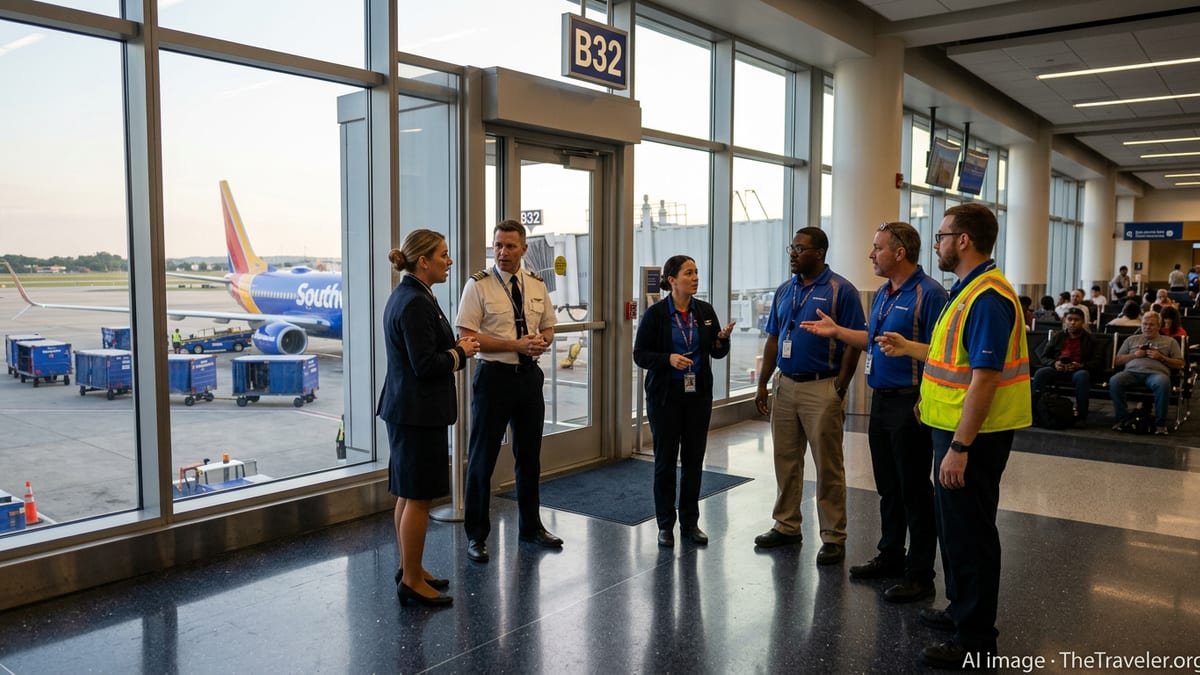
New Policy Reserves Jumpseats for Aircrew Only
The Dallas-based carrier has updated its internal non-revenue travel policy to stipulate that cabin jumpseats on all Southwest flights are now reserved exclusively for working and commuting pilots and flight attendants. Previously, spare flight attendant jumpseats could be used by a broader range of employees traveling standby, including gate agents, ramp staff and reservations agents, when no regular seats were available.
The change aligns Southwest more closely with several major competitors that already restrict cabin jumpseats to trained crew members. At Southwest, however, the move is being perceived as a sharp break with an employee-friendly culture that historically extended generous travel privileges to staff across departments, not just those in the cockpit or cabin.
Internal communications from the Transport Workers Union Local 556, which represents Southwest flight attendants, describe the shift as a safety-driven win that it has pursued for years. The union touted the revision as a formal guarantee that the cabin jumpseat is now dedicated to crew members only, both pilots and flight attendants, and framed the update as bringing Southwest in line with what it calls industry norms.
Southwest has not issued a broad public statement detailing the fine print of the change, but people familiar with the policy say it applies across the fleet and to all routes. It effectively removes one of the most valuable backup options for non-crew employees trying to travel on oversold or peak flights.
Safety Rationale Collides With Employee Frustration
Flight attendant leaders argue that the new restrictions are primarily about safety and operational control in the cabin, not perks. In a memo to members, union officials said that only trained flight attendants and pilots fully understand the demands of working in the galley and are qualified to perform emergency procedures from those positions. They contend that having non-crew riders on the jumpseat can interfere with in-flight duties and may dilute the airline’s ability to respond in an evacuation.
The memo points to annual safety and evacuation training that is mandatory for flight attendants but not for other staff, suggesting that allowing untrained employees to occupy those seats is inconsistent with delivering what the union calls the highest level of safety. Advocates for the change also note that, in an emergency, a person with no cabin-crew training could become a liability rather than an asset when seated in a position typically assigned to safety-critical crew.
Many non-crew employees, however, see the move very differently. On internal forums and social media, some workers have described the decision as another erosion of Southwest’s once-legendary employee benefits, coming on the heels of controversial customer-facing changes such as assigned seating and tighter enforcement of size-related seating rules. Several have questioned why the airline did not pursue a compromise that would preserve at least some jumpseat access for other staff on less-full flights.
Some commentators within the airline community acknowledge the safety arguments but say the rollout has been poorly communicated and is fueling a perception that pilots and flight attendants are being elevated at the expense of other work groups. Others worry that the change could magnify existing divides between frontline airport staff and inflight crews at a time when morale across the industry remains fragile.
Impact on Commuters and Non-Rev Travelers
The practical effects of the policy are likely to be most visible on full or near-full flights, especially on routes connecting crew bases and major hubs. Nearly one third of Southwest flight attendants are believed to commute by air to their assigned bases, often relying on standby travel and, when necessary, jumpseats to reach work in time to operate scheduled trips.
By locking jumpseats to aircrew only, the airline effectively reserves scarce space for pilots and flight attendants who must move around the network to cover flights. Supporters argue that this prioritization is essential in an era of tight staffing and packed load factors. Ensuring that a working crew member can get to an assignment, they say, has a direct impact on the reliability of the schedule and the risk of last-minute cancellations and delays.
The losers are other Southwest employees who used to rely on cabin jumpseats as a last resort for both personal and commuting travel. Gate and reservations agents, ramp crews and other ground staff will now be turned away from those seats even when a jumpseat is physically empty, forced instead to hope for a standard cabin seat or rebook on a later flight. Some staff have complained that this sharply reduces the value of their longstanding non-revenue travel benefits, particularly during peak holiday and vacation periods when flights routinely go out full.
For rank-and-file workers, the change also carries a symbolic sting. Many joined the company attracted by its reputation for egalitarian culture and shared perks, and are now grappling with the reality that certain benefits are being ring-fenced for specific groups. On online message boards, some employees have called the policy a tipping point that may influence their willingness to pick up extra shifts or relocate for the airline.
Union Politics and Contract Negotiations in the Background
The timing of the jumpseat decision is also drawing scrutiny because it comes amid a broader period of labor tension and contract talks across the industry. Flight attendant unions at several major carriers, including Southwest, have been pressing for higher pay, better scheduling protections and improved working conditions following the pandemic era.
Aviation analysts note that securing crew-only control of cabin jumpseats may have been one of several quality-of-life improvements sought by Southwest’s flight attendants in their negotiations. Even if the policy has limited direct financial cost to the airline, it can be marketed internally as a tangible win on safety and professional recognition for cabin crew, who have argued that their role is often misunderstood or undervalued compared with pilots.
That framing, however, sits uneasily with some other employees and even a few pilots, who worry that perceived side deals risk deepening divisions between work groups just as Southwest is asking all staff to adapt to sweeping operational changes. Critical voices inside the company suggest that management may be using the policy as a bargaining chip, trading a valuable benefit away from one set of employees to satisfy another, rather than investing in broader solutions.
Labor experts say that as airlines scramble to contain costs while upgrading fleets and technology, these kinds of non-cash concessions and policy tweaks are likely to become more common features of contract settlements. The Southwest jumpseat dispute, they argue, highlights how even highly technical travel rules can become flashpoints in a delicate internal balance between safety, equity and employee morale.
Growing Scrutiny of Southwest’s Evolving Culture
The uproar over jumpseats arrives as Southwest undergoes one of the most significant strategic pivots in its history, including the rollout of assigned seating, new boarding groups and stricter enforcement of certain passenger policies. Many longtime customers and employees already view these changes as the end of the airline’s freewheeling, first-come-first-served identity that once set it apart from competitors.
In that context, the crew-only jumpseat rule is being interpreted by critics as another step away from the camaraderie and egalitarian ethos that previously defined the brand internally. Employees who feel sidelined by the change point to what they describe as a pattern of decisions that elevate revenue optimization and operational control over the informal, flexible culture they were promised.
Travelers are unlikely to notice the jumpseat rule directly, but the internal mood at an airline can ultimately shape the passenger experience. Disappointed employees have warned that cutting coveted benefits can dampen enthusiasm on the front lines, with subtle effects on service, attentiveness and the willingness to go above and beyond during disruptions.
For now, Southwest shows no sign of reversing course, and flight attendant leaders are celebrating a long-sought safety goal finally written into policy. Whether the airline can convince its broader workforce that the change serves a higher operational purpose, and not just a narrow group interest, will be a key test of leadership as the carrier navigates a turbulent period of transformation.