

More news on this day
Thousands of travelers were left stranded across the United States on Sunday as Southwest Airlines scrubbed at least 335 flights and delayed more than 500 others, snarling operations at major leisure and business gateways including Tampa, Fort Lauderdale, San Juan, Louisville and Boston amid a powerful winter storm system sweeping across multiple regions.
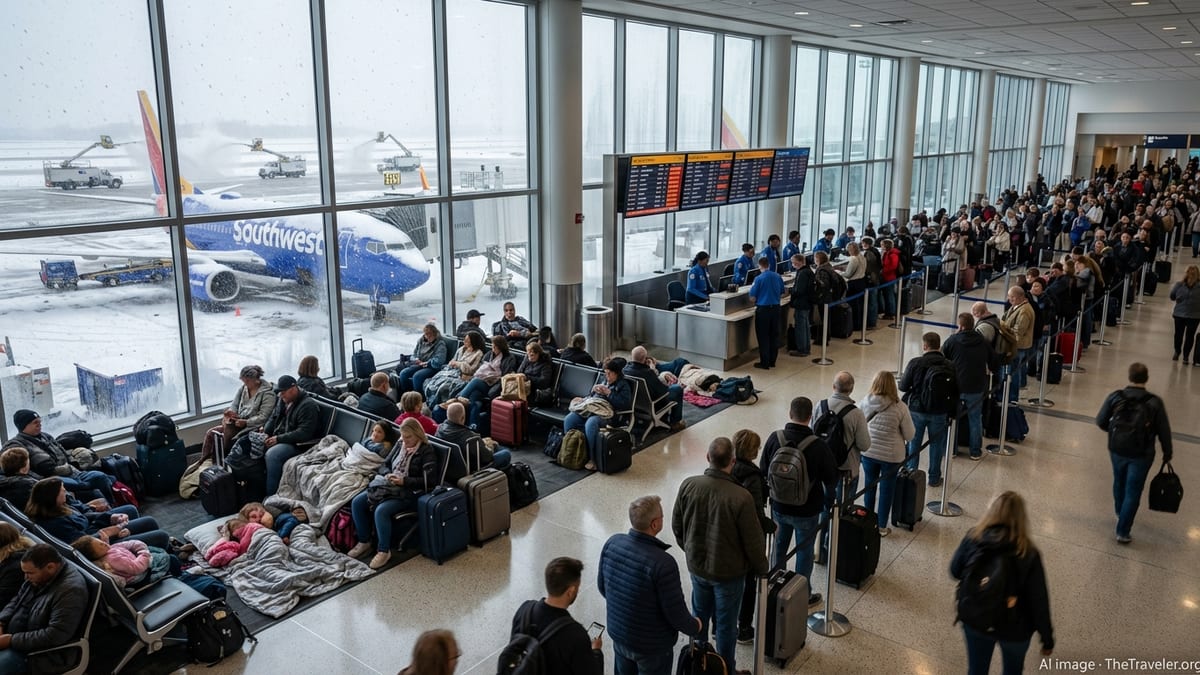
Storm-Driven Disruptions Ripple Through Southwest Network
The latest wave of Southwest disruptions came as winter weather hammered large swaths of the country, triggering widespread cancellations and delays across multiple carriers. Flight tracking data showed Southwest among the hardest hit, as the Dallas based airline trimmed its schedule and struggled to keep remaining flights on time while snow, ice and strong winds swept through key hubs and focus cities.
Airports from Florida to New England reported mounting disruption as the day progressed, with gate boards at Tampa, Fort Lauderdale and Boston Logan filling with red and orange status alerts. While some cancellations were preemptive, designed to keep aircraft and crews out of the worst of the storm, others cascaded throughout the day as conditions deteriorated and earlier delays bled into later departures.
Travel analysts noted that the pattern mirrored broader nationwide turmoil in which several major airlines canceled or delayed thousands of flights as the storm stalled over the East Coast and Mid Atlantic. For passengers booked on Southwest, however, the impact was often compounded by the carrier’s point to point operation, where delays in one region can quickly knock on to distant parts of the network.
Florida Hotspots: Tampa and Fort Lauderdale Bear the Brunt
In Florida, where winter storms elsewhere in the country can still wreak havoc on outbound and inbound schedules, Tampa International and Fort Lauderdale Hollywood International became flashpoints for Southwest’s latest operational crunch. By midday, dozens of Southwest departures in and out of the state faced significant delays, and a growing number were canceled outright as the airline reshuffled aircraft and crew assignments.
Passengers at Tampa described crowded concourses and long lines at customer service desks as families, cruise travelers and vacationers tried to salvage spring break getaways and weekend returns home. With other airlines also contending with weather related disruptions and high load factors, same day rebooking options were often limited or prohibitively expensive.
Fort Lauderdale, a major gateway for both domestic and Caribbean traffic, experienced a similar scene. Travelers bound for northern cities found their flights repeatedly pushed back or canceled as weather along the Eastern Seaboard shut down key arrival and departure windows. For many, the only option was to accept rebooked flights several days out or seek refunds and attempt overland alternatives.
Puerto Rico Links Severed as San Juan Flights Scrubbed
Southwest’s disruption extended deep into the Caribbean network, with San Juan’s Luis Muñoz Marín International Airport seeing multiple cancellations and rolling delays on routes linking Puerto Rico with the mainland. The island, heavily dependent on air connectivity for tourism and visiting friends and relatives travel, felt an immediate impact as flights to and from Florida and other U.S. cities were pulled from the schedule.
Passengers scheduled to return to the mainland reported abrupt notifications of cancellations, sometimes arriving only hours before departure. At San Juan’s terminals, queues stretched beyond roped areas as travelers sought information from overwhelmed gate agents and help desks about hotel vouchers, rebooking and compensation options.
For those attempting to reach Puerto Rico for cruises, family events or business trips, the disruption created a chain reaction of missed connections and nonrefundable losses. Some travelers turned to social media to share images of crowded boarding areas and to vent frustrations over limited same day alternatives and difficulty reaching Southwest’s call centers.
Louisville and Boston Highlight Nationwide Reach of the Crisis
Beyond sunbelt gateways, the disruption underscored Southwest’s reach into the broader domestic network. Louisville Muhammad Ali International, a key link city for Kentucky and surrounding states, experienced cancellations that left travelers bound for connections in Chicago, Denver and Florida scrambling to replan itineraries. With fewer daily frequencies than at larger hubs, the loss of even a handful of flights translated into days of displacement for some passengers.
In Boston, where winter weather regularly tests airline operations, the storm’s effects were felt acutely. Southwest’s cancellations added to an already stressed Logan International Airport, where other major carriers were also trimming schedules. Travelers reported departure boards dominated by delayed and canceled notices across multiple airlines, with Southwest’s groundings contributing to long security lines, crowded seating areas and limited options to reroute.
The combination of medium sized markets such as Louisville and major coastal hubs like Boston illustrated how quickly a concentrated wave of cancellations at one airline can reverberate through the broader U.S. aviation system. With crews and aircraft out of position, even cities far from the worst weather found their local schedules heavily disrupted.
Passengers Confront Long Lines, Limited Options and Mounting Costs
For stranded travelers, the statistics behind Southwest’s 335 cancellations and more than 500 delays translated into very personal disruptions. Families missed milestone celebrations, cruise departures and long planned vacations. Business travelers found key meetings postponed or moved online as they sat on terminal floors refreshing airline apps in hopes of an earlier seat opening up.
At many affected airports, customer service counters quickly backed up as agents struggled to process rebookings, refunds and hotel accommodations. Queues stretched for hundreds of meters in some concourses, and passengers reported waiting hours to speak with a representative while simultaneously attempting to reach call centers and digital chat agents on their phones.
Last minute hotel stays, ride share fares between alternate airports, meals and replacement tickets on other airlines added to the financial burden. Some travelers, wary of further disruption, opted to rent cars and drive through wintry conditions rather than risk additional cancellations. Others resigned themselves to extended airport overnights as nearby hotels sold out.
Southwest’s Operational Resilience Under Fresh Scrutiny
The latest meltdown instantly revived questions about Southwest’s operational resilience, coming just a few years after its high profile holiday scheduling crisis in 2022 that led to tens of thousands of cancellations and a record regulatory penalty. While Sunday’s disruptions were smaller in scale, analysts said they would nonetheless intensify scrutiny on how the airline manages its complex point to point route structure during severe weather.
Unlike traditional hub and spoke carriers, Southwest relies on aircraft cycling through multiple cities in a single day, which can amplify the impact of localized storms or staffing shortages. A canceled early morning departure in one region can leave aircraft and crews stranded, forcing later flights in distant cities to be delayed or scrubbed as well.
Industry observers noted that Southwest has pledged significant investments in technology and crew scheduling tools since the 2022 crisis. The performance of those upgrades during this latest storm related disruption is likely to be closely examined by regulators, consumer advocates and investors, particularly if cancellations remain elevated in the days ahead.
Coordination Challenges Across a Congested National Airspace
Southwest’s storm driven schedule cuts unfolded against a backdrop of extraordinary strain on the wider U.S. aviation system. Multiple airlines reported thousands of cancellations and delays as the nor’easter and associated weather bands disrupted operations in New York, Boston, Philadelphia, Chicago, Orlando, Washington and other major markets, forcing carriers to thin out schedules and divert aircraft.
Air traffic control facilities, ground handling operations and airport authorities all grappled with the combined effects of low visibility, icing conditions and high winds. When several airlines simultaneously reduce flying, the resulting rush to rebook passengers can overwhelm both digital systems and human staff, creating bottlenecks that persist long after the worst of the weather has passed.
For travelers, that meant even those not booked on Southwest often found their options constrained as competing carriers filled up with displaced passengers from multiple airlines. The crowded conditions and rolling delays underscored how tightly coupled airline operations have become, with events at one carrier reverberating quickly through the national network.
What Stranded Travelers Can Do Now
With Southwest’s disruptions likely to continue into early Monday as aircraft and crews are repositioned, travel experts urged passengers to take a proactive approach. Checking flight status frequently, using both the airline’s app and airport departure boards, can provide early warning of schedule changes and open rebooking windows before flights officially cancel.
Customers whose flights were canceled are generally entitled to a refund if they choose not to travel, regardless of the cause of the disruption. Those who still need to fly are often best served by accepting the first workable rebooking option, even if it is not ideal, and then monitoring for better alternatives as additional seats become available closer to departure.
For travelers who have flexibility, postponing nonessential trips until after the storm system has cleared and operations stabilize can help avoid the worst of the turmoil. Travel advisers also recommend building extra buffer time into connections, avoiding the last flight of the day where possible and keeping essential medications, chargers and a change of clothes in carry on bags in case of unexpected overnight stays.