

More news on this day
A Southwest Airlines flight operating as SWA1908 from Houston to Denver made an unscheduled diversion and emergency landing in Oklahoma City, disrupting travel plans for scores of passengers but concluding without any immediate reports of injuries, according to early online flight-tracking data and local media coverage.
Get the latest news straight to your inbox!
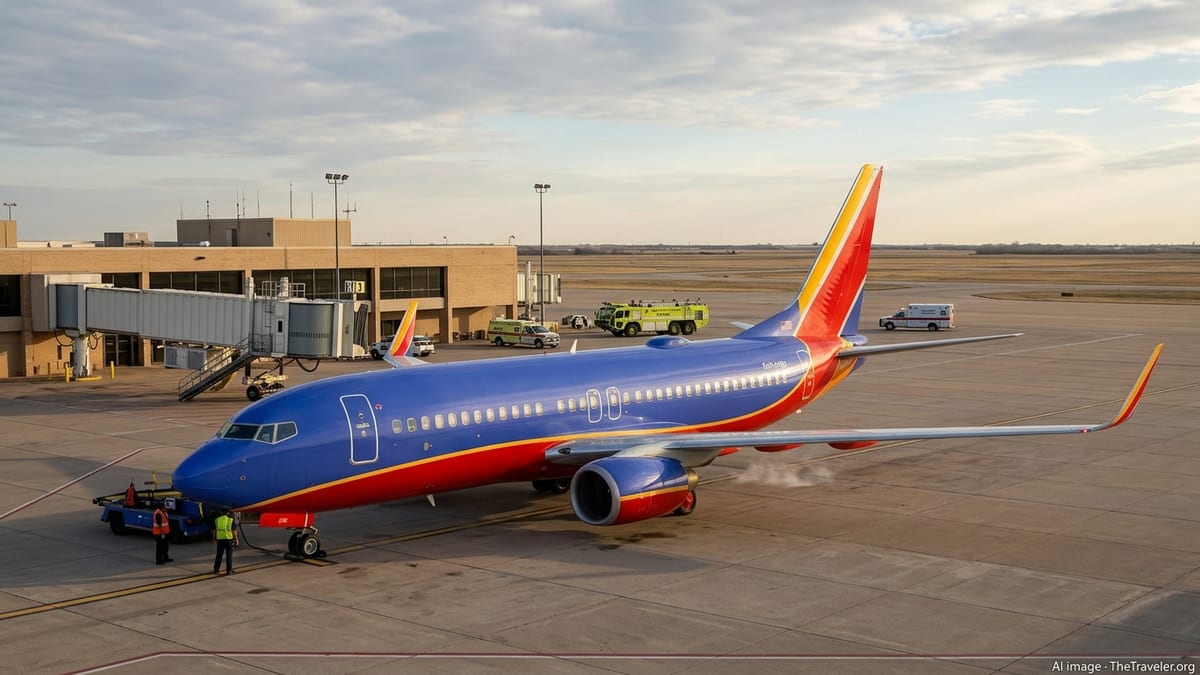
Mid-Route Diversion Redirects Houston–Denver Service
Publicly available flight information indicates that Southwest Airlines flight SWA1908 departed Houston on a scheduled service to Denver before deviating from its planned northwesterly route and turning toward Oklahoma City. The Boeing 737 aircraft landed at Will Rogers World Airport, where the flight was classified as an emergency arrival by airport and aviation tracking channels monitoring the event.
Initial reports describe the event as an “urgent” diversion, with the crew electing to terminate the flight in Oklahoma rather than continue to Colorado. Although specific technical details have not yet been fully outlined in official investigative documents, the flight’s abrupt change of course and priority handling into Oklahoma City point to a precautionary response to an in-flight issue.
The diversion occurred partway through the journey between Texas and Colorado, a corridor that is heavily trafficked by both business and leisure travelers. Passengers expecting a routine hop between Houston and Denver instead found themselves landing in central Oklahoma, where airline staff began working to reorganize onward travel.
Emergency Landing Ends Without Immediate Injury Reports
Information published by local outlets and aviation-focused platforms notes that the aircraft landed safely, with no early indications of injuries among passengers or crew. The aircraft was able to exit the runway under its own power or with standard ground handling support, allowing emergency vehicles to assess the situation as a precaution.
Standard protocol in such events typically involves fire and rescue teams staging along the runway and taxiways until the aircraft has come to a complete stop. While the precise level of emergency alert in this case has not been publicly detailed, descriptions of the response suggest that airport operations treated the arrival with elevated caution while prioritizing the safety of those on board.
After landing, passengers were expected to disembark at the terminal for further evaluation of the aircraft and to allow the airline to determine whether a continuation to Denver would take place on the same jet or a replacement aircraft. That process commonly involves maintenance inspections, safety checks, and coordination with federal aviation authorities if a reportable in-flight incident is involved.
Travel Disruption for Denver-Bound Passengers
The diversion left travelers facing the familiar ripple effects of an interrupted journey: missed connections, rebooked itineraries, and uncertainty over arrival times. Publicly available schedule data and typical disruption patterns suggest some passengers may be re-accommodated on later nonstop Oklahoma City–Denver services, while others could be routed through additional cities to reach their final destinations.
For many passengers, diversions introduce practical challenges beyond the flight itself, including rearranged ground transportation, hotel bookings, and time-sensitive plans in Denver and surrounding areas. While airlines often provide rebooking assistance and, in some cases, meal or accommodation vouchers, the level of support typically varies depending on the cause of the disruption and the carrier’s policies.
Travel industry observers note that diversions such as the SWA1908 incident can also strain airport operations at the unscheduled destination. Gate availability, ground staff resources, and baggage handling workflows can all be impacted when an additional full flight of passengers arrives unexpectedly, particularly during busy travel periods.
Safety Context: Diversions as a Precautionary Tool
Aviation safety specialists frequently emphasize that emergency diversions, while unsettling for those on board, are designed to reduce risk and bring an aircraft to the ground quickly when crews detect irregularities. Historical incident records involving major U.S. carriers show that precautionary landings often end without serious consequences, precisely because crews opt to divert early rather than continue to the scheduled destination.
In the broader safety landscape, events like the SWA1908 diversion are typically analyzed alongside similar cases involving route changes for mechanical warnings, unusual odors, pressurization alerts, or medical issues among passengers or crew. These patterns help regulators, airlines, and manufacturers refine procedures, training, and maintenance regimes aimed at keeping overall incident rates low.
While official investigative reports can take weeks or months to be finalized, preliminary flight-tracking data and operational records from the airport generally provide an initial framework for understanding what occurred. Over time, these findings contribute to industry-wide safety improvements, even when a particular incident results in no injuries or visible damage to the aircraft.
What Passengers Can Expect After an Emergency Diversion
For travelers on flight SWA1908, the immediate next steps likely include rebooking onto later flights, retrieving checked baggage in Oklahoma City, and receiving further updates on the status of the original aircraft. Passengers with tight onward connections in Denver may need to coordinate with the airline to adjust downstream itineraries, including international links or separate bookings on other carriers.
Consumer travel guidance generally recommends that passengers document any additional expenses resulting from a diversion, such as unexpected hotel stays or alternative transport arrangements, in case reimbursement is possible under airline policies or travel insurance coverage. In many cases, carriers issue travel credits or offer flexible rebooking options as a gesture of goodwill, even when the underlying cause is safety-related.
As more information about the SWA1908 diversion is compiled and assessed, the episode will likely join a growing catalog of instances where precautionary decisions by flight crews led to safe outcomes, albeit at the cost of disrupted schedules. For travelers, the incident serves as a reminder of both the complexity of modern air operations and the layers of contingency planning that come into play when a routine flight suddenly changes course.