

More news on this day
Southwest Airlines is adding new nonstop flights between Little Rock and Nashville this spring, a move poised to shrink travel times, boost tourism on both ends of the route, and give Arkansas travelers a faster on-ramp to one of the carrier’s fastest-growing focus cities.
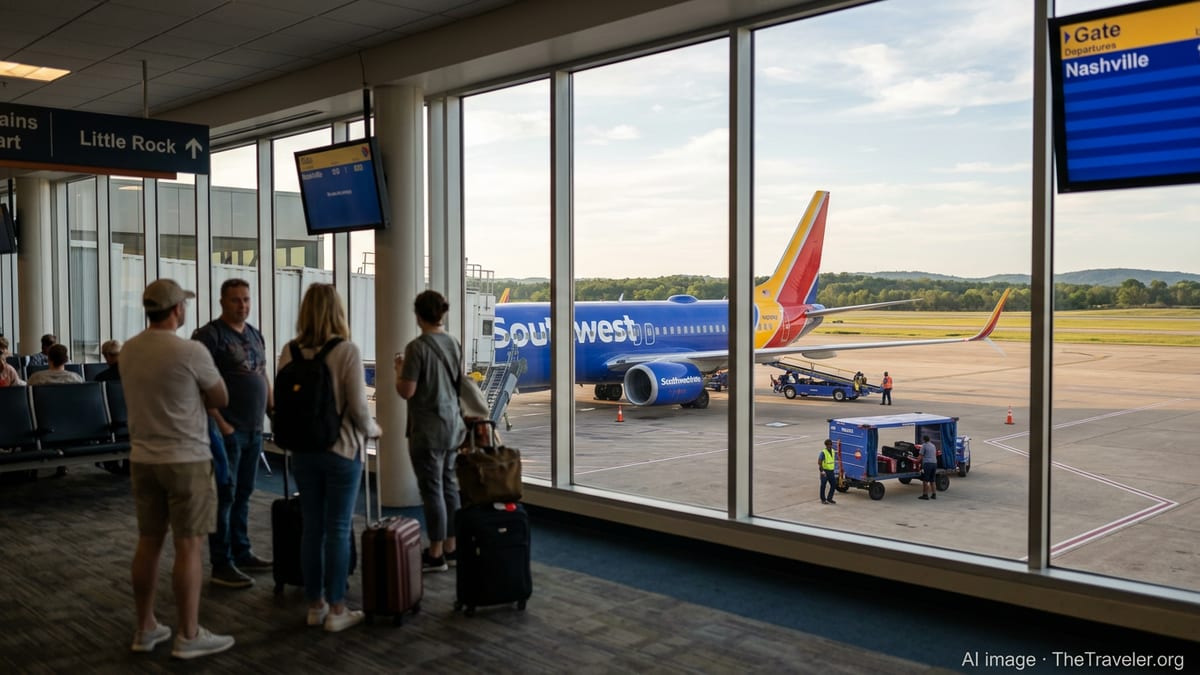
A Strategic New Link Between Capital Cities
The new Southwest service will directly connect Bill and Hillary Clinton National Airport in Little Rock with Nashville International Airport, tying together two fast-growing Southern capitals that have long relied on time-consuming drives or connections through other hubs. By removing the need for a plane change in cities like Dallas or St. Louis, the route is expected to cut total journey times by several hours for many travelers.
For Southwest, which has been steadily deepening its presence in Nashville while reshaping parts of its network across the South and Midwest, the Little Rock flights underscore the carrier’s bet on point-to-point connectivity between mid-sized cities. The airline already uses Nashville as a powerful connecting node, and adding nonstop service from Arkansas plugs Little Rock customers straight into that web of opportunities.
Airport and tourism officials in both states are positioning the new flights as more than a schedule adjustment. They see them as a competitive tool in luring weekend visitors, convention business, and corporate relocations that might otherwise gravitate to larger hubs. The added connectivity, they say, sends a signal that Little Rock and Nashville are firmly on the radar of one of the nation’s most influential domestic carriers.
Faster Getaways and Easier Weekend Escapes
For leisure travelers, the appeal is straightforward: a short, single-hop journey instead of a half-day in transit. Travelers who once weighed the prospect of a five- to six-hour drive across Arkansas and Tennessee can now opt for a quick flight that delivers them from the Arkansas River to the Cumberland River in roughly the time it takes to watch a movie.
The schedule is designed to support weekend and short-break travel, with departures timed to allow Little Rock residents to finish a workday on Friday and still make it to a Nashville concert, sports event, or dinner reservation that night. Return options early in the week give them enough flexibility to squeeze in a full weekend without taking extra vacation days.
On the flip side, Nashvillians will gain a convenient way to sample central Arkansas, from Little Rock’s revitalized River Market district and burgeoning culinary scene to outdoor escapes along the Arkansas River and nearby state parks. Tourism leaders are preparing targeted campaigns aimed at Music City visitors who may never have considered Little Rock as an easy, flight-length getaway until now.
Business Travelers Gain Time and Flexibility
Corporate travelers are also expected to be among the biggest beneficiaries. Both metro areas are home to growing sectors in healthcare, logistics, finance, and government services, and executives have long relied on connecting flights that added hours and uncertainty to quick trips. Nonstop options mean a morning departure can now realistically support a full day of meetings and an evening return.
Regional firms with offices or clients in both markets will see travel budgets stretch further as workers spend less time in transit and more time on the ground. For small and mid-sized businesses, the ability to make same-day trips without the premium prices often associated with last-minute itineraries through big hubs could prove especially valuable.
Officials in Little Rock have emphasized that improved air access is a crucial selling point when courting new employers or federal offices. Direct links to Nashville strengthen the case that Little Rock offers the connectivity companies expect while still providing the lower costs and quality of life that can be harder to find in larger metros.
What This Means for Southwest’s Southern Network
The Little Rock–Nashville launch fits squarely into a broader phase of network fine-tuning for Southwest, which has been expanding in Nashville while pulling back in some other secondary markets. By positioning Nashville as a high-frequency connecting point rather than a traditional legacy-carrier hub, the airline can offer more one-stop options from smaller cities without the complexity of a full hub-and-spoke system.
New nonstop routes like Little Rock–Nashville give the airline a way to retain loyal customers in mid-sized communities at a time when some competitors have concentrated capacity in major hubs. For travelers, that translates into more options that avoid backtracking through faraway airports and a greater likelihood of finding schedules that line up with real-world needs.
The move also reinforces Southwest’s strategy of leaning into cities where it can offer a dense roster of domestic routes and connections. In Nashville, that network now stretches broadly across the country, so adding Little Rock gives Arkansans more single-connection options to destinations that once required two stops or a patchwork of carriers.
How to Make the Most of the New Route
With introductory schedules typically set to test demand, travel experts suggest that early adopters lock in fares and flight times as soon as they firm up plans. New routes can attract strong interest from both leisure and business travelers, and popular departure windows often fill quickly once word spreads.
For Little Rock residents, the advice is to think beyond Nashville itself. Because the Tennessee capital serves as a fast-growing connective point in Southwest’s system, the new nonstop effectively opens up a host of convenient one-stop itineraries to other cities across the Midwest, East Coast, and Sun Belt that may not currently be served directly from Arkansas.
For Nashville-based travelers, the Little Rock route offers an efficient way to explore a different slice of the South without committing to a long road trip. With flight times short and fares expected to remain competitive, a weekend in central Arkansas now looks far more accessible, from museum-hopping and riverfront dining in Little Rock to day trips into the state’s lakes and foothills.