

More news on this day
Southwest Airlines has moved to restrict cabin jumpseats to working pilots and flight attendants only, a shift toward industry norms that is triggering fierce pushback from other employee groups who say they are being squeezed out of a vital commuting lifeline.
Get the latest news straight to your inbox!
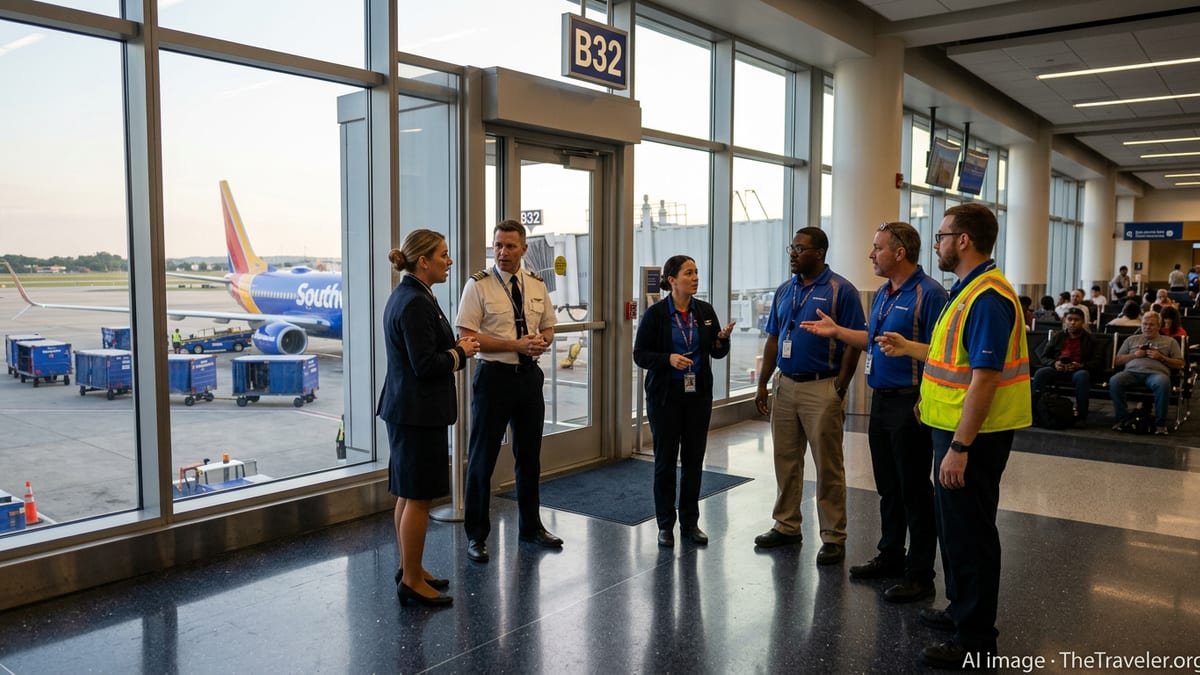
A Sudden Policy Shift on a Critical Travel Perk
The Dallas-based carrier quietly updated its internal travel policy this week so that only aircrew may occupy cabin jumpseats, the folding seats typically used by flight attendants during takeoff and landing. Until now, a wide range of off-duty Southwest staff, from gate agents to mechanics and corporate employees, could occasionally use those spots when regular seats were full.
The change comes as Southwest is already navigating turbulence from a broader overhaul of its brand, including the end of open seating and the introduction of new fees and fare tiers. Many employees viewed jumpseat access as one of the last remaining buffers that made commuting to work or taking personal trips predictable in an era of packed flights.
Internally, the policy was framed as an operational decision, but its immediate effect has been to redraw the hierarchy of who gets priority when aircraft are full. While revenue passengers and on-duty crew remain protected, non-crew employees who previously relied on jumpseats now find themselves with sharply reduced options.
The announcement landed just as spring travel ramps up in the United States, when standby seats are already scarce. That timing has intensified the sense of frustration among staff who say the benefit disappeared overnight with little meaningful consultation.
Union Advocacy, Safety Rationale and Industry Norms
The new restriction follows years of lobbying by the union representing Southwest flight attendants, which argued that cabin jumpseats should be reserved for trained crew members. In a recent memo celebrating the change, union leaders said dedicating those positions to pilots and flight attendants improves safety and protects the integrity of in-flight duties.
Union messaging to members emphasized that non-crew employees in the jumpseat can disrupt service flows in tight galley spaces and may not fully understand safety and evacuation protocols. Only flight attendants, the memo argued, are required to demonstrate physical standards, operate doors, and prove annual proficiency in emergency procedures specific to those locations.
Southwest has publicly pointed to safety and operational consistency as the main drivers of the decision. By aligning its practice with most other large U.S. carriers, which typically limit cabin jumpseats to aircrew, the airline is positioning the move as a long-deferred correction rather than a cutback.
Aviation analysts note that, from a regulatory perspective, the policy brings Southwest closer to what has long been considered standard in the domestic airline industry. They add, however, that even if the safety rationale is sound, the abrupt rollout without visible offsetting benefits for other workers has left the company vulnerable to charges of favoritism and poor internal communication.
Employee Backlash Over Commuting and Lost Flexibility
Among those most angered by the change are Southwest employees who live far from their assigned base and have relied on occasional jumpseat access as a safety valve when flights filled up. For them, the loss is not merely symbolic; it directly affects their ability to get to work on time or return home without paying last-minute fares on competing airlines.
Internal chatter on employee forums and social media in recent days has been sharply critical, with some ground staff accusing leadership of elevating one group of workers over another at a time when morale is already strained by schedule disruptions and broader policy changes. Several longtime employees described jumpseat privileges as an unwritten part of their overall compensation that helped offset modest pay and unpredictable hours.
The blow is particularly acute during peak travel windows, when standbys clear infrequently and flights leave with every regular seat sold. Without access to a spare jumpseat, workers who once had a backstop now face the prospect of rolling the dice through multiple oversold departures or paying out of pocket for confirmed tickets.
Some employees warn that the policy could have knock-on effects for day-of-operation reliability if staff miss trips they previously could have reached using jumpseats. While the intent is to prioritize commuting pilots and flight attendants, critics caution that fraying goodwill among other front-line workers could carry its own operational costs.
Labor Relations and Culture at a Crossroads
The jumpseat dispute arrives at a sensitive moment in Southwest’s labor relations. The airline has only recently emerged from contentious contract talks with several unions and continues to manage the reputational fallout from its December 2022 scheduling meltdown and more recent changes to seating and baggage policies.
For decades, Southwest cultivated a reputation as a uniquely employee-friendly carrier, with a strong internal culture and relatively generous travel perks helping to offset comparatively lean work rules. Many insiders see the jumpseat decision as another sign that the company is moving away from that legacy and toward a more conventional, cost-driven model.
Labor experts say even benefits that affect only a subset of workers can take on outsized symbolic weight, especially when they intersect with commuting and quality-of-life issues. Removing or restricting those perks, they argue, can erode trust unless paired with clear explanations, data on safety benefits, or tangible new advantages for those who lose out.
At Southwest, the fact that the change appears to have originated from one union’s successful campaign has added a layer of intra-employee tension. Some workers now worry that future negotiations will become a zero-sum contest between groups, undermining the sense of a unified internal community that has long set the airline apart.
What Comes Next for Southwest’s Travel Policies
Southwest has not indicated any timeline for revisiting the jumpseat rules, and early messaging suggests the company sees the move as both a safety enhancement and a permanent realignment with industry practice. However, the intensity of the backlash has already prompted calls for clearer communication and possible mitigation measures to help affected workers.
Options being discussed informally among employees include expanded positive-space commuting for certain roles on critical routes, greater flexibility to list on partner carriers, or limited exceptions on days where operational risk is low and seats are available. None of these possibilities have been formally endorsed by the airline.
The controversy also plays into a broader narrative about how Southwest will balance its historic culture with the financial and competitive pressures reshaping the U.S. airline industry. As the carrier standardizes many aspects of its service and revenue model, each incremental change to employee or customer benefits is drawing sharper scrutiny than in the past.
For now, the new jumpseat rules underscore a reality that many Southwest workers say they are still coming to terms with: an airline once defined by flexibility and informal perks is increasingly governed by strict hierarchies and policies, even when those decisions land closest to home inside its own ranks.