

More news on this day
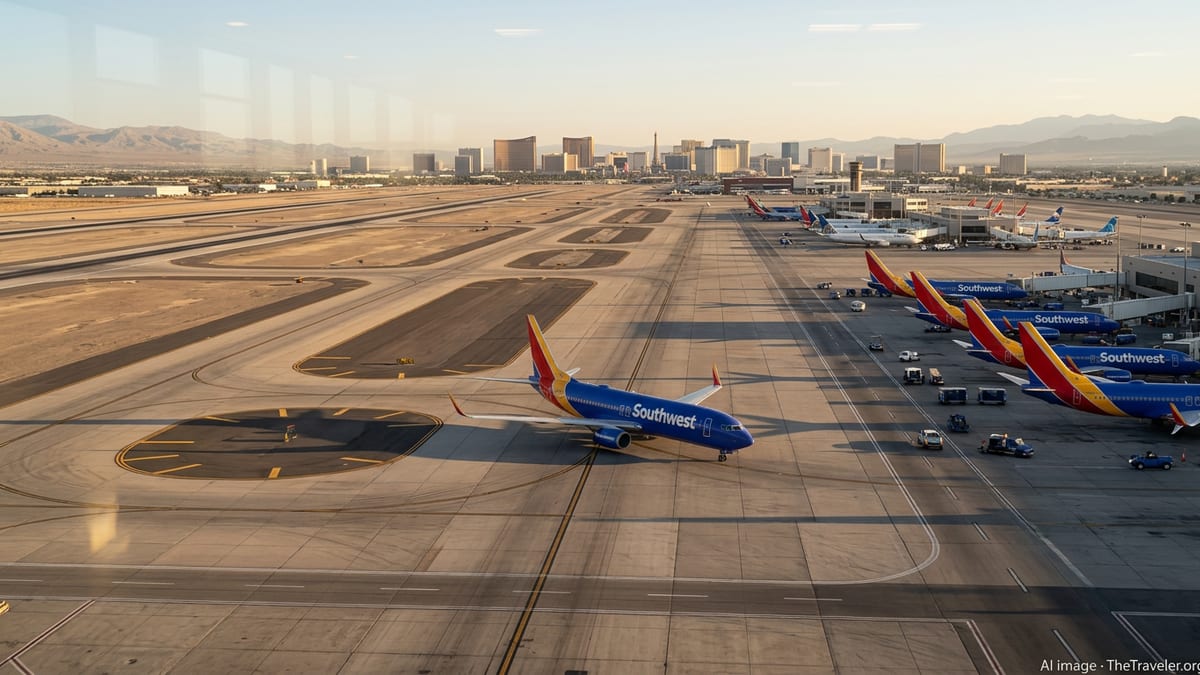
Southwest Airlines is pushing through one of its most significant policy and network overhauls in decades, and tourism powerhouses in Florida, Texas and Las Vegas are bracing for a bumpy 2026 as the carrier trims capacity, shifts routes and rolls out new fees and seating rules that could reshape how millions of Americans vacation in the Sun Belt.
From Growth Engine to Cost Cutter in Key Tourist Markets
Long a volume driver for leisure travel across Florida, Texas and Nevada, Southwest has spent the past two years pivoting from aggressive growth to hard-edged cost control. After a difficult period of earnings pressure and aircraft delivery delays, the airline has closed smaller stations, scaled back flying at certain hubs and signaled that capacity will follow profitability rather than pure market share.
For tourism officials, that shift matters because Southwest still carries more domestic nonstop passengers within the United States than any other airline and has a particularly strong footprint at secondary, traveler-friendly airports that serve beach and entertainment destinations. Even modest pullbacks in flight frequencies can translate into higher average fares, fewer last-minute deals and thinner options on off-peak days.
While 2026 schedules continue to show Southwest serving marquee gateways such as Las Vegas, Orlando and major Texas cities, planners and hotel revenue managers are watching closely how many seats the airline ultimately flies into those markets across shoulder seasons like late spring and early fall, when leisure demand is more fragile.
Route Cuts, Crew Base Changes and What They Mean for Florida
Florida’s tourism economy, heavily dependent on domestic airlift, is feeling both the immediate and potential longer-term effects of Southwest’s restructuring. The carrier has already pared some point-to-point routes into smaller Florida airports and is consolidating crew resources, including closing at least one crew base in the state as part of a broader move to cut corporate overhead and streamline operations.
For travelers, the practical impact in 2026 is likely to show up as fewer nonstop choices from mid-sized cities, especially outside peak winter and spring break windows. Some flights that once operated daily may appear only on peak days, forcing vacationers to accept connections through larger hubs or adjust trip dates to match limited nonstop service.
Tourism marketers in Gulf Coast and Central Florida destinations are responding by nudging visitors to book earlier and consider midweek stays, where capacity still exists but is tightening. Hotel partners, particularly independent beach properties, say they are building air capacity trends into pricing strategies more aggressively than in the past, anticipating that Southwest’s network discipline could limit the sort of last-minute airfare softness that often filled rooms in shoulder periods.
Texas Hubs Adjust to a Leaner Network Strategy
Texas, home to major Southwest operations in cities like Dallas and Houston, is also feeling the ripple effects of the airline’s capacity reset. The company has been shrinking schedules in select markets, leaning into higher-yield routes and retreating from underperforming or highly competitive city pairs as it works to improve financial performance.
Industry data for 2025 and early 2026 already show a pattern of thinner frequencies on some intra-Texas and Texas-to-California routes, even as demand for leisure and business travel remains strong. That means travelers originating in Texas who once relied almost exclusively on Southwest to reach resort areas in Florida or entertainment hubs like Las Vegas may increasingly encounter sold-out flights at preferred times or need to connect through alternative cities.
Texas tourism officials, particularly in cities that depend on weekend getaway traffic such as San Antonio and Austin, are monitoring whether fewer Southwest seats translate into more drive-market visitors and stronger demand for competing carriers. Airports, meanwhile, are courting additional airlines and new routes to backfill any structural Southwest reductions that may persist into late 2026.
Las Vegas Braces for Capacity Shifts and Policy Changes
Las Vegas, one of Southwest’s marquee leisure destinations, is less likely to lose the airline’s presence than to see it repositioned. Even as Southwest trims underperforming routes elsewhere, it continues to prioritize high-demand, high-visibility markets where planes reliably go out full, and Las Vegas fits squarely into that category.
What may change in 2026 is how and when visitors can get there. Capacity is expected to remain strong over marquee weekends, major conventions and sports events, but may thin out on slower weekdays or from smaller origin cities. Combined with the airline’s broader shift toward revenue optimization, that could mean higher average fares into Las Vegas outside of traditional low-demand periods and fewer ultra-cheap last-minute trips.
Policy changes layered on top of network adjustments could also subtly alter the Las Vegas travel experience. As Southwest transitions away from its historic open-seating model toward assigned seats and experiments with new fare products and fees, passengers may find that securing preferred boarding positions or extra legroom requires careful fare selection rather than simply checking in early. For group trips and bachelor or bachelorette parties, that increases the premium on planning ahead.
What 2026 Travelers Should Watch Before Booking
For vacationers eyeing trips to Florida beaches, Texas cities or the Las Vegas Strip in 2026, the most important shift is that Southwest is behaving less like an endlessly flexible discount carrier and more like a capacity-conscious network airline. Flights will still be available, but the mix of routes, times and prices is becoming more finely tuned to profitability and demand patterns.
Travel advisors recommend that Southwest loyalists pay close attention to schedule updates, particularly as the airline opens and adjusts inventory further into late 2026. Routes that appear today may see frequency reductions, day-of-week changes or seasonal suspensions, especially from secondary airports. Travelers with fixed dates or cruise departures are being urged to lock in air arrangements earlier than they might have a few years ago.
Tourism boards in Florida, Texas and Nevada, for their part, are stepping up marketing partnerships across multiple airlines rather than leaning too heavily on a single carrier. The message to would-be visitors is that the destinations remain accessible and competitive, but that the old assumption of limitless Southwest options at the last minute is fading. In its place is a more disciplined network strategy that rewards those who plan ahead for 2026.