

More news on this day
Southwest Airlines is facing a federal lawsuit in the United States after a passenger who uses a wheelchair alleged that the carrier and its contractors failed to provide promised assistance during a layover at Hartsfield-Jackson Atlanta International Airport, leaving her stranded, distressed and fearing for her safety.
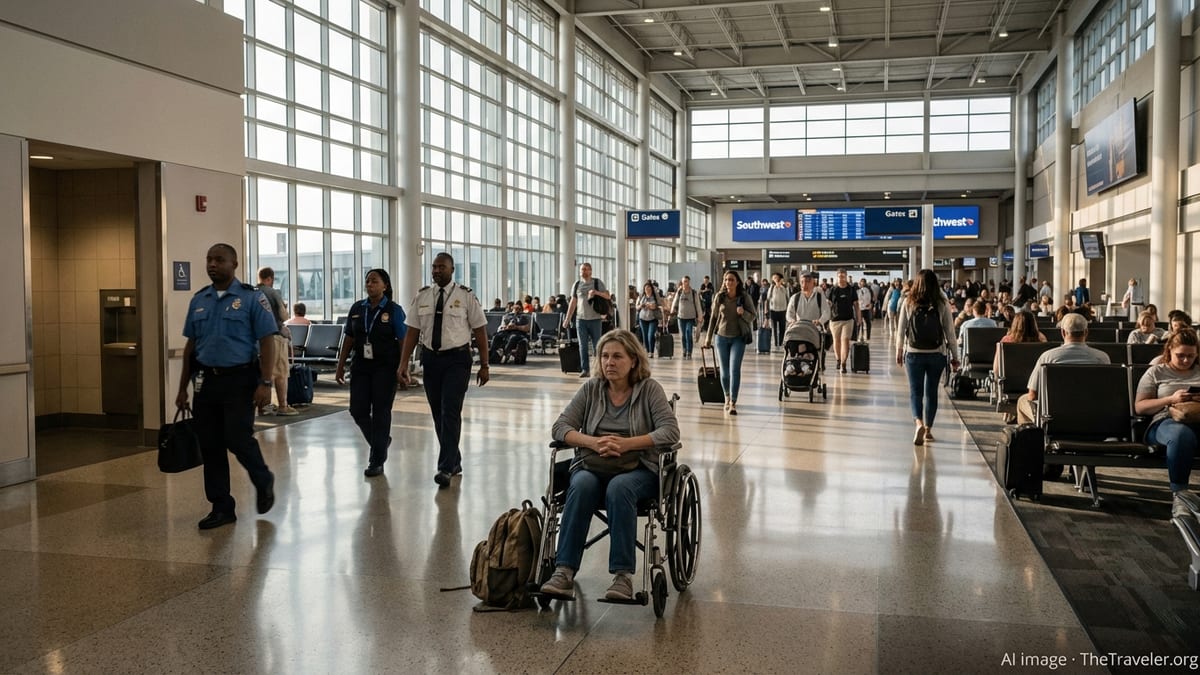
Allegations of a Harrowing Layover for a Disabled Traveler
The lawsuit, filed in federal court, centers on the experience of Mary Lynn Ellison, a 64-year-old passenger from South Carolina who uses a wheelchair and lives with severe anxiety and panic disorder. According to the complaint, Ellison prearranged wheelchair support for her multi-leg trip and received written confirmation that assistance would be available throughout her journey, including during a connection in Atlanta.
When Ellison’s Southwest flight landed at Hartsfield-Jackson Atlanta International Airport in February 2024, she expected personnel to meet her at the aircraft door with a wheelchair and escort her to her next gate. Instead, the lawsuit alleges that a male Southwest employee refused to provide a chair or escort service and directed her to make her own way through the terminal, despite her documented mobility and mental health conditions.
Unable to walk long distances and without a wheelchair, Ellison claims she was forced to sit on the floor of the busy concourse for an extended period. During this time, she allegedly had no access to her medication, water or a restroom, and began to experience mounting anxiety and physical symptoms associated with her panic disorder.
Attorneys for Ellison argue that the experience was not an unfortunate delay but a breakdown of obligations that airlines have toward passengers with disabilities, transforming a routine connection into what they describe as a terrifying ordeal in one of the world’s busiest airports.
Claims of Abandonment in an Airport Restroom
The complaint further alleges that Ellison eventually received limited assistance when an airport cart transported her from the concourse to a restroom so she could relieve herself and try to recover. However, she contends that the employee operating the cart then left her there without a plan for getting her back to her departure gate or to a wheelchair.
Alone in the restroom and unsure how she would return to her gate in time for her connecting flight, Ellison says she suffered escalating anxiety and distress. The lawsuit describes her as feeling trapped and physically vulnerable, with no means to move independently through the terminal corridors and gate areas.
According to the filing, a wheelchair was not provided until just 10 to 15 minutes before boarding for her onward flight. By that time, Ellison claims she was in the midst of a significant mental health episode, marked by panic symptoms and physical manifestations such as rapid heartbeat, shaking and shortness of breath.
Her legal team argues that the alleged abandonment in a restroom, coupled with the extended wait on the concourse floor, demonstrates a systemic failure to ensure continuous, reliable support for a passenger whose disability and need for assistance were known and documented before travel.
Legal Grounds and Federal Disability Protections at Issue
The case against Southwest Airlines is framed around alleged violations of federal disability protections, including the Air Carrier Access Act, which prohibits discrimination against air travelers with disabilities and sets out detailed requirements for assistance at airports and aboard aircraft. The lawsuit contends that Southwest and its contractors failed in their duty to provide timely wheelchair service, safe transfers between gates and appropriate handling of a known mental health condition.
In addition to federal law, the complaint invokes state negligence standards, arguing that airline staff and agents did not exercise reasonable care when they left Ellison on the concourse floor and later unaccompanied in the restroom. Her attorneys say these actions fell far short of industry norms and created foreseeable risks to her physical and emotional well-being.
Ellison is seeking more than 75,000 dollars in damages for alleged physical and emotional injuries, including trauma-related symptoms and an increase in her clinical needs since the incident. The suit claims that the experience has had a lasting impact on her mental health, eroding her confidence in flying and limiting her ability to travel independently in the future.
Southwest Airlines has declined to discuss the specifics of the case, citing the ongoing litigation, but the lawsuit arrives at a time when U.S. carriers are facing growing scrutiny over how they serve travelers with disabilities, particularly those who rely on wheelchairs and mobility devices.
Southwest’s Response and a Controversial Voucher Offer
While the airline has not issued a detailed public statement addressing each allegation, Ellison’s lawsuit notes that Southwest later contacted her with what she describes as a modest gesture of goodwill: a 150 dollar travel voucher. Her attorneys say the offer dramatically understated the seriousness of the incident and did not acknowledge the depth of her distress or the long-term consequences she alleges.
For disability advocates and some travelers, the voucher has become symbolic of what they see as an industry-wide tendency to treat accessibility failures as customer service glitches rather than civil rights issues. The complaint suggests that a small credit toward a future ticket cannot remedy the alleged violation of federal protections or the damage to Ellison’s sense of safety in airports.
Southwest, one of the largest low-cost carriers in the United States, has historically highlighted its customer service culture and hospitality. The airline will now have to defend its practices and the actions of its employees and contractors in a federal forum, where evidentiary records and policies regarding wheelchair assistance and support for passengers with anxiety disorders are likely to come under close examination.
For now, the case underscores how even a brief layover, when mishandled, can have enduring legal and reputational consequences for airlines, particularly when it involves vulnerable passengers who depend on consistent, hands-on assistance.
What the Case Reveals About Wheelchair Assistance Gaps
Beyond the individual allegations, the lawsuit sheds light on broader concerns about wheelchair services in major U.S. hubs. Hartsfield-Jackson Atlanta International Airport is among the busiest in the world, and passengers with reduced mobility depend on tightly coordinated handoffs between airline staff and ground-handling contractors to navigate long concourses, security checkpoints and gate changes.
Advocacy organizations in recent years have documented stories of travelers left waiting for long periods for wheelchairs, missed connections due to late assistance and a lack of training among staff tasked with supporting passengers who have invisible disabilities such as anxiety and panic disorders. Ellison’s experience, as outlined in the complaint, echoes many of those concerns, particularly regarding communication, accountability and continuity of care.
In high-traffic airports, staff may juggle large numbers of passengers needing assistance, but disability rights experts note that volume does not diminish legal obligations. They argue that airlines and their partners must ensure that each traveler who prearranges wheelchair service has a reliable, door-to-door plan that includes restroom stops, gate changes and potential delays, rather than ad hoc solutions that can result in passengers being left alone.
The Atlanta incident is likely to renew questions about how airlines oversee third-party contractors who provide on-the-ground support. If a carrier outsources wheelchair services, it remains responsible for ensuring that those contractors meet legal standards and that lapses are investigated, corrected and prevented from recurring.
Growing Pressure on Airlines to Improve Disability Access
The case against Southwest arrives amid heightened attention to disability access in air travel, as federal regulators, advocacy groups and travelers call for more robust protections and enforcement. Recent reports to the U.S. Department of Transportation have highlighted thousands of disability-related complaints each year, from damaged wheelchairs to poor communication about boarding and deplaning assistance.
Wheelchair users frequently describe air travel as one of the most challenging forms of transportation, due in part to the need for multiple transfers, tight boarding timelines and the physical separation from their personal mobility devices while in flight. When assistance at key points such as connections or restroom stops breaks down, passengers may have little recourse in the moment other than relying on the goodwill of bystanders or pleading with overburdened staff.
Advocates say that mental health conditions like anxiety and panic disorder should be taken just as seriously as visible physical impairments when airlines plan and deliver support. In Ellison’s case, her attorneys argue that failing to account for her panic disorder compounded the harm and transformed delays in service into what they describe as a full-blown mental health crisis in a crowded terminal environment.
Public attention on such cases can push carriers to reevaluate training and staffing. Airlines that do not adapt may face not only legal risks but also reputational damage among travelers with disabilities, who often share their experiences widely and use them to guide future booking decisions.
Implications for Travelers With Reduced Mobility
For travelers who rely on wheelchairs or other mobility aids, the lawsuit serves as a stark reminder of the importance of documentation, communication and self-advocacy. Disability organizations advise passengers to confirm assistance requests directly with airlines, keep copies of all confirmations and arrive early to allow time for coordination at the airport.
However, advocates are quick to note that responsibility for safe and dignified travel should not rest primarily on passengers’ shoulders. Federal regulations place the onus on airlines to provide assistance that is timely, safe and respectful, without requiring travelers to repeatedly beg for support or educate staff about their legal rights while in transit.
If Ellison prevails or secures a settlement that acknowledges wrongdoing, her case could encourage other passengers to bring forward their own claims and could prompt carriers to invest more in specialized training for employees and contractors who interact with travelers with disabilities. That might include scenario-based training on managing connections, assisting passengers in restrooms and responding to panic symptoms compassionately and efficiently.
At the same time, disability rights lawyers caution that legal remedies can be slow. For passengers planning trips in the near term, they recommend proactive planning combined with a clear understanding of complaint channels available through airlines and federal regulators if promised assistance does not materialize.
How Airports and Airlines May Respond Going Forward
The lawsuit in Atlanta is likely to be closely watched by airports and airlines across the United States, particularly those operating large hubs where connecting passengers with disabilities move through multiple terminals each day. Hartsfield-Jackson and similar facilities depend on coordination between airport authorities, airlines and private contractors to deliver seamless experiences, and a high-profile allegation of abandonment challenges the perception that support systems are working as intended.
Industry observers say that carriers may respond by reviewing wheelchair assistance procedures, auditing contractor performance and increasing supervisory oversight during peak times. Some may also explore using technology, such as real-time tracking of assistance requests, to reduce the risk of passengers being overlooked during busy periods or shift changes.
Airports, for their part, may look to strengthen their own accessibility initiatives, from clearer signage and wayfinding aids for passengers with reduced mobility to designated waiting areas where travelers using wheelchairs can reliably find staff. Collaborative efforts between airlines and airport authorities could help ensure that restroom stops and other necessary breaks are integrated into assistance plans, rather than treated as separate, uncoordinated events.
As Ellison’s case moves forward, it will add to a growing body of legal and public pressure on the aviation industry to treat wheelchair assistance not as an optional courtesy but as a core part of safe and equitable air travel. The outcome could influence how carriers across the United States approach disability training, staffing and accountability in the years ahead.