

More news on this day
Southwest Airlines is preparing for its first Boeing 737 MAX 7 jets to arrive in late 2026 and enter service in early 2027, a long-awaited milestone the carrier hopes will jump-start a delayed fleet modernization and restore growth plans repeatedly knocked off course by Boeing’s certification setbacks.
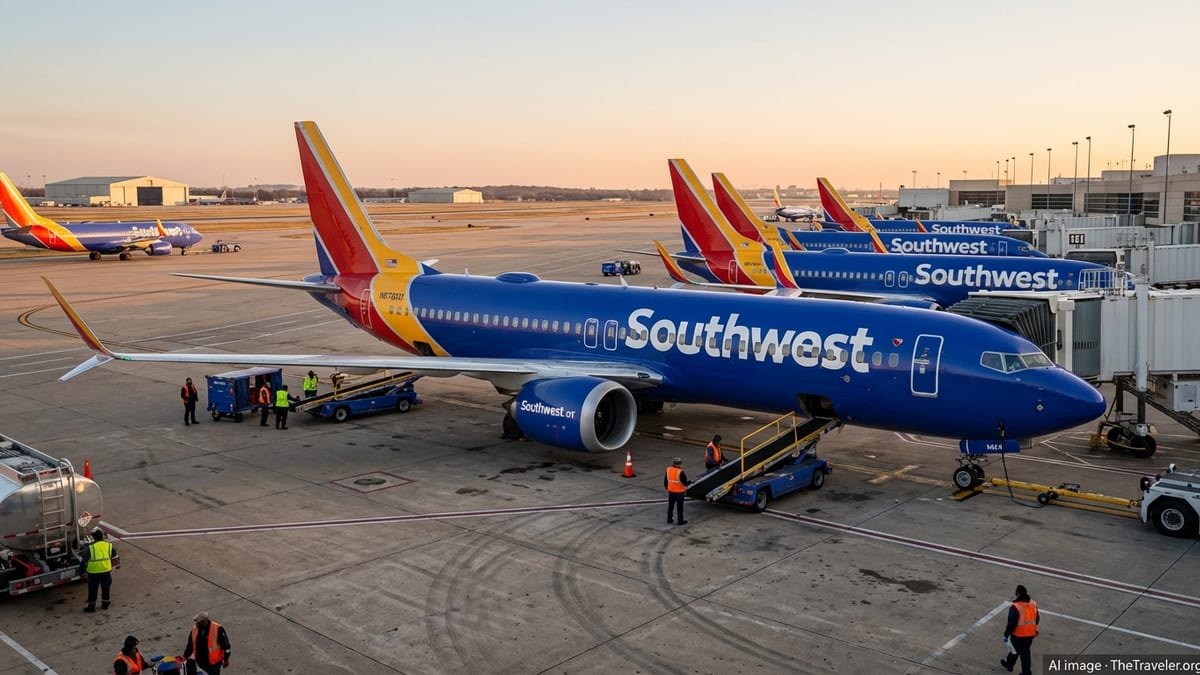
New Timeline Emerges After Years of Uncertainty
After several years of shifting projections, Southwest Airlines has finally framed a clearer path for the introduction of the Boeing 737 MAX 7. Speaking at recent industry events, senior executives said they are now “optimistic” that U.S. regulators will approve the type in the second half of 2026, clearing the way for first deliveries to Southwest late in the year and entry into commercial service in the first quarter of 2027. That target marks the most concrete alignment yet between Boeing’s revised certification goals and the fleet needs of the MAX 7’s launch customer.
The airline’s latest outlook follows repeated delays linked to Boeing’s redesign of the 737 MAX family’s engine anti-ice system, a safety fix required by the Federal Aviation Administration before the smallest MAX variant can be certified. While Boeing previously aimed to complete the redesign and win approval earlier, the schedule has steadily slipped, forcing Southwest to repeatedly rework its fleet and capacity plans. Executives now say they are building additional buffers into their assumptions, treating early 2027 as the practical start of MAX 7 revenue flying even if certification arrives slightly ahead of the most recent guidance.
For Southwest, which once expected to have dozens of MAX 7s in service by the mid-2020s, the new 2027 horizon represents both relief and continued frustration. It gives planners a reference point they can use for workforce, network, and maintenance scheduling, yet it also underlines how far reality has drifted from the aggressive replacement timeline the Dallas-based carrier originally mapped out when it committed to the variant more than a decade ago.
A Critical Aircraft for Southwest’s Single-Type Strategy
The stakes around the MAX 7 are particularly high for Southwest because of its unique single-type fleet strategy. The airline operates an all-Boeing 737 fleet and has long relied on the 737-700 as the backbone of its high-frequency, point-to-point network. The MAX 7 was designed to be the natural successor, offering similar seating with significantly better fuel burn, modern flight deck options, and lower emissions, all while preserving commonality that simplifies pilot training and maintenance.
Southwest holds hundreds of firm orders and options for the MAX 7, alongside additional commitments for the larger MAX 8, stretching through the early 2030s. Corporate filings and public statements indicate that roughly 269 MAX 7s are on firm order, with well over a hundred additional options that could eventually be exercised. The intent is clear: methodically retire aging 737-700s and move toward an all-MAX fleet by around 2031, leveraging the efficiency of newer airframes to offset rising labor and fuel costs.
That vision has been complicated by the certification delays, which forced Southwest to lean more heavily on the MAX 8 and to convert some MAX 7 positions into larger aircraft for near-term delivery. While the move has helped preserve seat growth and maintain capacity in key markets, it has also skewed the balance of the fleet away from the smaller-gauge aircraft that are often better suited to thinner or off-peak routes. The arrival of the MAX 7 beginning in 2027 is expected to restore that balance, giving planners more flexibility in matching aircraft size to demand.
Inside Boeing’s Certification Bottleneck
The most recent schedule reshuffle is rooted in Boeing’s extended struggle to resolve concerns around the 737 MAX family’s engine anti-ice system, an issue that first surfaced publicly in early 2024. Regulators concluded that the existing design raised the risk of engine inlet overheating in rare but serious scenarios, prompting restrictions on how airlines could use the system on in-service MAX 8 and MAX 9 jets and forcing Boeing to redesign it entirely on the yet-to-be-certified MAX 7 and MAX 10.
Boeing has said that completing engineering work, testing, and documentation for the new system has proven more complex and time-consuming than originally anticipated. The manufacturer now targets 2026 as the year it will secure certification for both the MAX 7 and MAX 10, a timeline that aligns broadly with Southwest’s expectation of regulatory sign-off in the latter half of that year. Until that happens, none of the roughly two dozen completed but undelivered MAX 7 airframes built for Southwest can transition from Boeing’s facilities into the airline’s operating fleet.
The situation illustrates how tightly coupled airline fleet plans are to manufacturer execution and regulatory oversight. In the post-MAX-grounding era, the FAA has pledged a far more hands-on approach to new aircraft approvals, slowing what once was a relatively predictable process. While airlines have largely welcomed the renewed emphasis on safety, they have also had to accept greater uncertainty in when critical new models will be ready for revenue service, as the MAX 7 saga starkly demonstrates.
Reworking Fleet Plans and Delivery Streams
In public disclosures and earnings calls over the past two years, Southwest has repeatedly revised its Boeing delivery expectations, swapping scheduled MAX 7 arrivals for additional MAX 8s and trimming annual fleet growth targets as certification timelines slipped. Financial filings from late 2025 show a book of several hundred firm MAX 7 and MAX 8 orders spread across 2025 through 2031, yet the near-term mix has shifted decisively toward the larger variant because it is already certified and in full-rate production.
The carrier has used this flexibility to mitigate the impact of delays, but there are limits to how far it can reconfigure its order book without undermining its long-term strategy. Executives have stressed that they still view the MAX 7 as the cornerstone of their modernization effort, especially for replacing 737-700s on shorter and medium-haul routes where additional seats from the MAX 8 might not consistently be filled. As a result, recent conversions from MAX 7 to MAX 8 orders are widely seen as a temporary workaround rather than a lasting pivot.
Southwest has also been retiring older aircraft at a measured pace, seeking a delicate balance between keeping maintenance costs in check and avoiding a squeeze on available capacity. The airline has parked and sold some of its oldest 737-700s while replenishing the fleet with new MAX 8s, but the most significant wave of 700 retirements is still tied to the anticipated arrival of the MAX 7. Once deliveries begin in earnest, Southwest expects to accelerate withdrawals of the older type through the late 2020s, with a view to exiting the 737-700 entirely around the start of the next decade.
Financial Pressures and Compensation Talks
Lengthy certification delays have financial consequences for both the airline and the manufacturer. For Southwest, every year that the MAX 7 is pushed back translates into higher fuel bills than originally forecast, as less efficient 737-700s remain in service longer than planned. The carrier also loses some of the cost and revenue benefits that newer cabins and systems can provide, from improved reliability to better passenger appeal. While these impacts are diffuse, they compound over time, especially across a fleet of more than 800 aircraft.
To offset some of this strain, Southwest has negotiated additional agreements with Boeing that include credits and other financial concessions tied to the delays. Though details remain confidential, industry analysts say such packages typically take the form of price adjustments on future deliveries, support for spare parts or training, or other commercial considerations that soften the blow of late aircraft. These arrangements reflect both the scale of Southwest’s order book and the importance of preserving a long-term partnership between the airline and its sole narrowbody supplier.
Even with concessions, Southwest cannot fully recapture the operational opportunities it has foregone. Route launches that depended on the MAX 7’s economics have been postponed or reconfigured to use other aircraft, while some planned frequency increases have been scaled back. The airline has cautioned investors that growth in seats and available seat miles will remain under pressure until the new variant is firmly in the fleet, underscoring how central the aircraft has become to its future financial performance.
Operational Preparations for an Early 2027 Debut
With first revenue flights now penciled in for early 2027, Southwest has turned more of its attention to the practical steps required to introduce the MAX 7 into daily operations. Although the new variant shares a high degree of commonality with the MAX 8 and the 737-700, every fleet addition requires detailed work on manuals, training programs, maintenance procedures, spare parts provisioning, and regulatory approvals specific to the airline.
According to executives speaking at an industry conference, Southwest expects to spend four to six months between the first delivery and the start of scheduled service preparing aircraft for operations. That window will allow time for the carrier to incorporate any configuration updates stemming from the final FAA-approved baseline for the MAX 7, as well as to complete internal checks on systems such as head-up displays, cabin layouts, and connectivity features. Southwest has long been an early adopter of advanced cockpit tools, and ensuring those systems are fully integrated on the MAX 7 will be a priority.
On the frontline, pilot and cabin-crew training plans are being refined so that transitions to the new type can occur smoothly once aircraft arrive. Given the similarities across the 737 family, training demands are expected to be manageable, but Southwest will still need to sequence simulator time, check rides, and route familiarization carefully to avoid bottlenecks. Ground staff at key maintenance and crew bases will also prepare for the variant’s arrival, ensuring that hangar infrastructure, tooling, and line maintenance procedures are ready for the first airframes.
Implications for Passengers and Route Networks
For travelers, the debut of the MAX 7 in Southwest colors will be most visible through subtle differences in cabin feel and potentially through expanded or more finely tuned route options. The aircraft is expected to seat roughly a similar number of passengers as the 737-700 but with a modernized interior concept aligned with Southwest’s existing MAX 8s. Passengers can expect quieter engines, improved overhead bin design on many aircraft, and cabin systems engineered to support consistent onboard connectivity and lighting.
Network planners are likely to deploy the MAX 7 first on routes where the airline wants the fuel savings and range performance of the new type but does not need the additional seats of the MAX 8. That could mean more flexibility on medium-distance city pairs and seasonal or time-of-day flights that benefit from right-sizing capacity. Over time, as the number of MAX 7s in the fleet grows, Southwest may also use the type to open new markets that previously would have been marginal with the older, less efficient 737-700.
While Southwest does not operate a traditional hub-and-spoke system, the carrier’s dense network depends heavily on aircraft that can be turned quickly and operate high daily utilization. The MAX 7’s combination of commonality with the existing fleet and improved economics is designed to support that model. If Boeing can deliver aircraft in the quantities and cadence Southwest envisions from 2027 onward, passengers may see more schedule choices and potentially some relief from capacity constraints that have lingered since the pandemic era.
Industry-Wide Capacity Squeeze and Competitive Dynamics
Southwest’s experience with the MAX 7 is unfolding against a broader backdrop of tight global aircraft supply. Across the industry, both Boeing and Airbus have struggled to meet airlines’ appetite for new narrowbody jets, citing supply chain constraints, labor shortages, and certification hurdles. Those pressures have contributed to higher airfares in many markets and limited carriers’ ability to add capacity as demand rebounded. In this environment, each additional airframe delivered to Southwest takes on outsized importance, particularly as competitors vie for similar aircraft from the same manufacturers.
Rivals in North America have responded to delays in their own Boeing orders by adjusting fleet plans, accelerating Airbus deliveries where possible, or leasing additional aircraft on the secondary market. Southwest, bound by a strict single-type strategy, has fewer such levers to pull, which heightens the strategic value of its MAX 7 order stream. If Boeing meets the late-2026 certification target and begins shipping aircraft at a sustained pace in 2027, Southwest could regain some of the growth momentum it has ceded to carriers with more diversified fleets.
At the same time, the airline’s loyalty to Boeing is being closely watched by analysts and competitors alike. While there is no indication that Southwest is preparing to break with its 737-only model, each delay reignites speculation about whether the carrier might eventually consider alternate aircraft families. For now, the airline continues to pin its future on the MAX 7 and MAX 8, betting that the challenges of the mid-2020s will give way to a more stable and predictable delivery landscape by the end of the decade.