

More news on this day
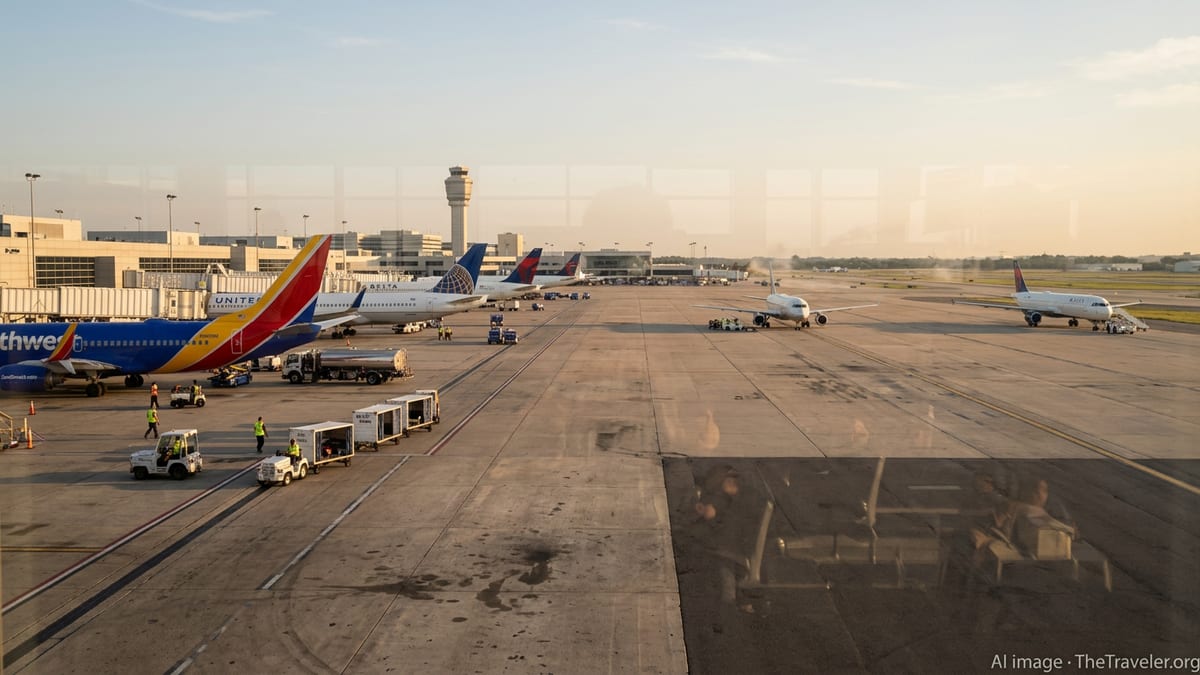
U.S. airlines are facing a renewed jet fuel shock in early 2026, but Southwest Airlines, United Airlines and Delta Air Lines are moving quickly to blunt the impact even as several competitors slide deeper into financial distress.
Get the latest news straight to your inbox!
Fuel Costs Surge Again, Testing Airline Profit Models
Jet fuel costs, long the most volatile line item on airline balance sheets, have surged again following fresh geopolitical tensions and supply concerns in early 2026. Industry analyses indicate average jet fuel prices have climbed sharply compared with early 2025 levels, reversing the brief relief carriers enjoyed when fuel costs eased last year. Fuel remains one of the largest single expenses for U.S. airlines, typically accounting for around one fifth to one quarter of operating costs, leaving even well-capitalized carriers exposed when prices spike.
Recent research and market commentary highlight that higher fuel prices are compressing margins and weakening investor confidence, with airline stocks experiencing one of their sharpest sell-offs in more than a year. Reports describe the latest jump in fuel prices as an external shock hitting an industry that had already been wrestling with rising labor costs, engine reliability issues and constrained aircraft deliveries. While large network airlines entered 2026 on the back of strong revenues, the renewed fuel squeeze is revealing significant differences in how carriers manage cost volatility.
Industry groups such as the International Air Transport Association have previously projected modest strengthening in global airline profitability in 2025, driven in part by lower average fuel prices and efficiency gains. However, IATA and consulting firms have also underscored that profitability varies widely by region and business model, with low cost and ultra-low-cost carriers particularly vulnerable when operating costs rise faster than they can adjust capacity or fares. The latest run-up in oil prices is now putting those warnings into sharper focus.
Southwest Shifts from Hedging to Structural Cost Control
Southwest Airlines built a reputation over several decades as the outlier among U.S. carriers that aggressively hedged fuel, reaping billions of dollars in gains when oil prices spiked in the 2000s. That playbook has now changed. Company filings show that Southwest began allowing its fuel derivatives portfolio to roll off through 2024 and 2025, and recent disclosures indicate it intends to let remaining hedge positions expire in the second quarter of 2025 without adding new contracts. The move effectively aligns Southwest with a broader U.S. industry trend away from financial hedging.
Instead, Southwest is leaning more heavily on fleet efficiency, network adjustments and ancillary revenue initiatives to offset fuel volatility. Its latest annual results for 2025 point to a broad business transformation effort, including the launch of its own packaged vacations product and changes intended to better match capacity with demand. Filings also acknowledge that jet fuel and oil still represent more than one fifth of total operating expenses, and that managing exposure to availability, price increases and volatility remains a central risk for the company.
Southwest has also taken steps in sustainable aviation fuel adoption, including the introduction of lower-carbon jet fuel at Chicago Midway in 2024. While sustainable fuel remains more expensive than conventional jet fuel and volumes are limited, such initiatives are framed as part of a long-term strategy to diversify fuel supply and support environmental goals. In the near term, however, the carrier’s pivot away from hedging means its ability to handle sudden price spikes will depend more on how quickly it can adjust schedules, fares and non-fuel costs.
United and Delta Rely on Scale, Refining and Sustainability Plays
United Airlines and Delta Air Lines, often grouped with Southwest among the industry’s most closely watched U.S. carriers, are responding to fuel pressures with a mix of network discipline, balance sheet strength and longer-term bets on alternative fuels. United has reported that fuel expense remains a major driver of quarterly earnings swings, but its most recent outlook emphasized cost control in other areas and efforts to steer capacity toward higher-yielding routes. Public sustainability reports show United has expanded its use of sustainable aviation fuel at several major hubs and is investing in low-carbon fuel producers through its corporate venture arm, positioning those partnerships as a partial hedge against future carbon and fuel-price risk.
Delta continues to stand apart with its ownership of the Monroe Energy refinery in Pennsylvania, acquired more than a decade ago to secure jet fuel supply for its network. Analysts note that while the refinery has not eliminated Delta’s exposure to oil prices, it gives the carrier more influence over part of its fuel supply chain and potential upside when crack spreads are favorable. Previous disruptions have illustrated how fuel costs can swing during operational crises, but Delta maintains that controlling a refinery remains a strategic asset in managing long-term fuel needs.
Both United and Delta have also sought to improve their fleets’ fuel efficiency by retiring older aircraft and adding newer models with lower per-seat fuel burn. Industry data suggest that across North America, mainline carriers with diversified fleets and robust premium revenue are better positioned to absorb temporary spikes in fuel prices. Their size and global networks give them more levers to pull, from redeploying aircraft to trimming unprofitable flying, than smaller rivals that rely heavily on a narrow set of routes.
Low-Cost and Ultra-Low-Cost Carriers Face Mounting Strain
The latest fuel shock is hitting low-cost and ultra-low-cost carriers at a particularly delicate moment. Analyses by industry associations and consulting firms throughout 2025 have pointed to a revenue challenge for this segment, as intense competition, weaker discretionary demand and rising labor costs have eroded the cost advantage that once underpinned their model. With airfares under pressure, many low-cost carriers have had limited ability to pass higher fuel expenses on to passengers without dampening demand.
Spirit Airlines has become one of the clearest examples of the strain. The Florida-based ultra-low-cost carrier entered Chapter 11 bankruptcy protection in late 2024, emerged in March 2025 after a restructuring, and then filed for bankruptcy again in August 2025. According to recent coverage, Spirit has since announced a preliminary agreement with lenders aimed at exiting bankruptcy by late spring or early summer 2026, alongside capacity cuts, station closures and workforce reductions. The airline has cited rising operating costs, pandemic-era losses and mounting debt as key pressures on its finances.
Other low-cost carriers have begun trimming growth plans, deferring aircraft deliveries or reducing frequencies on marginal routes. Market research indicates that limited access to capital markets and a narrower base of higher-yield corporate travelers can make it harder for these airlines to ride out prolonged periods of elevated fuel prices. For some, the current environment is prompting a shift toward hybrid models that add more ancillary services and premium seating options in search of additional revenue streams that can offset structurally higher costs.
New Challenges Emerge as Industry Reassesses Risk
Beyond immediate fuel prices, airlines are confronting a broader set of challenges that interact with energy costs in complicated ways. Engine durability issues affecting certain narrow-body fleets, pilot shortages and aircraft delivery delays have constrained capacity growth, especially for fast-expanding low-cost carriers. At the same time, airport fees, air traffic control constraints and environmental regulations are adding to the structural cost base across many markets.
Industry forecasts show that while global air travel demand is expected to keep rising in 2025 and 2026, the gap between carriers able to convert that demand into sustainable profits and those struggling to cover their cost of capital is widening. Higher fuel prices accelerate that divergence by rewarding airlines with newer fleets, diversified revenue and robust balance sheets, while punishing those that rely on rock-bottom fares and thin margins. For investors and travelers alike, the latest fuel shock is becoming a litmus test of which business models remain resilient when operating costs unexpectedly climb.
For Southwest, United and Delta, the current period is reinforcing the importance of strategic flexibility, from refinery ownership and sustainability investments to transformations in network planning and product mix. For more vulnerable airlines, especially in the ultra-low-cost segment, it is exposing the limits of aggressive growth strategies in a world where fuel, labor and capital are all more expensive than before the pandemic. As jet fuel prices continue to fluctuate, the question for the industry is not whether costs will rise again, but which carriers will be ready when they do.