

More news on this day
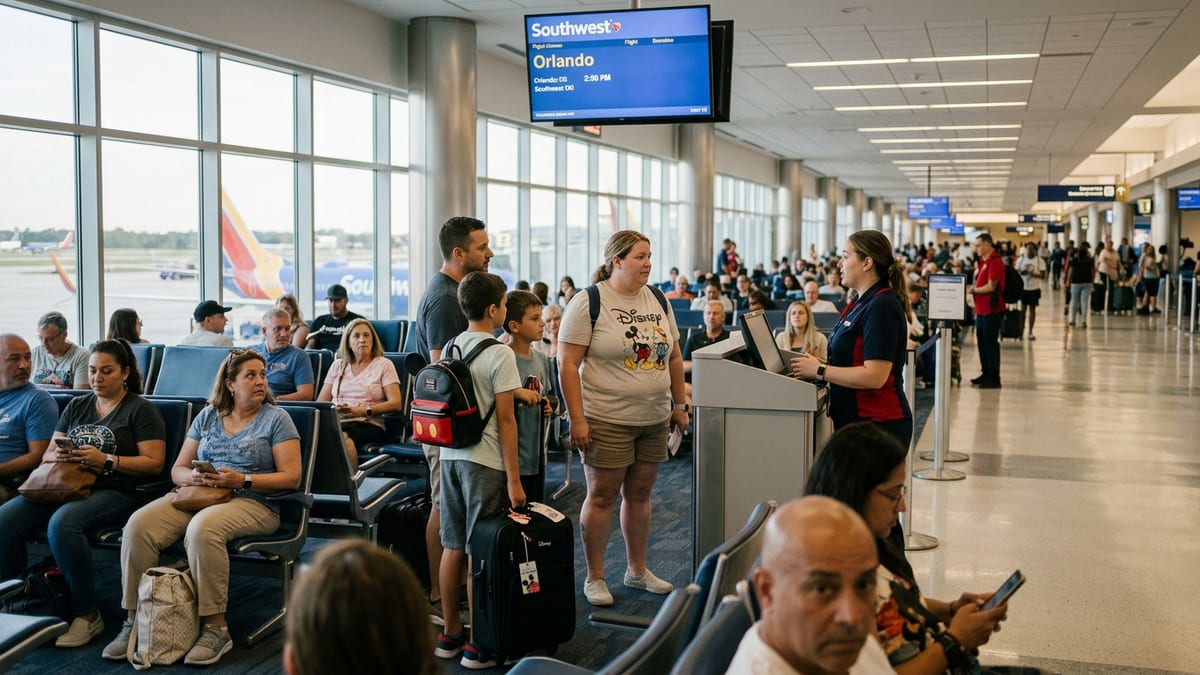
Southwest Airlines’ updated “Customer of Size” policy, which took effect on January 27, 2026, is fueling confusion and anxiety among plus-size travelers heading to Walt Disney World, as families worry about surprise costs, public embarrassment at the gate, and how to secure enough space on packed Orlando flights.
What Changed in Southwest’s Customer of Size Rules
For years, Southwest was widely praised by plus-size travelers for allowing qualifying passengers to receive a complimentary extra seat when needed, with a straightforward refund process after the flight. That model helped many people travel more comfortably to high-demand destinations like Orlando without paying double in advance.
Under the new rules introduced in January 2026, customers who may not fit comfortably within a single economy seat are now expected to proactively purchase an additional seat before travel. The airline’s current language stresses that passengers who “encroach upon” a neighboring seat should secure the extra space ahead of time rather than relying on day-of-travel discretion at the gate.
Southwest still offers refunds for the second seat in some circumstances, but the process has become more restrictive. Travelers must generally book both seats in the same name and reservation, complete their trip, then submit an online refund request within a set time frame, and only if the flight departed with at least one empty seat. On popular Orlando routes, where load factors are often high, that condition can make refunds far from guaranteed.
These changes coincide with Southwest’s broader shift away from its long-standing open seating model and toward assigned seats and new boarding groups. For Disney-bound families, that means navigating multiple unfamiliar policies at once: new seat assignments, potential baggage fees, and now stricter rules around how much space each traveler is entitled to occupy.
Disney World Trips Highlight the Stakes for Plus-Size Travelers
Few leisure trips carry as much emotional and financial investment as a Disney World vacation. Many guests save for years, travel in multigenerational groups, and pack tight schedules of park reservations, character dining, and hard-to-get ride times. Against that backdrop, the possibility of being told at the airport to buy a last-minute second seat can feel devastating.
Recent viral posts and user accounts describe larger travelers being informed at check-in or at the gate that they must purchase an additional seat to fly, sometimes at walk-up fares that far exceed the original ticket price. For those bound for Orlando, where school breaks and holiday periods routinely push flights to capacity, the cost and stress can be particularly intense.
Parents and caregivers planning trips with children to Walt Disney World report a new layer of anxiety: they worry not only about whether they themselves will be flagged as a “customer of size,” but also whether a surprise conversation in the boarding area will unfold in front of their kids. Some travelers say they now question whether to book Southwest at all for Orlando runs, even if the airline still advertises competitive fares and convenient schedules into the region’s main gateway airports.
Body-image concerns further complicate the experience. Mental health professionals and travelers themselves have warned that being singled out in a crowded terminal, potentially weighed against a policy standard that is not clearly communicated, can compound long-standing insecurities. For many Disney fans, who view the resort as a place of escape and acceptance, the fear of humiliation before the vacation even begins is especially painful.
How the Policy Works in Practice on Orlando Routes
In practice, Southwest’s updated Customer of Size policy puts much of the responsibility on travelers to self-assess whether they need more than one seat. The airline points to armrests that must be able to go fully down and the need not to encroach into a neighbor’s space as informal guideposts, but there is no widely publicized numeric standard, such as a specific waist or hip measurement.
Travelers who decide to purchase a second seat are generally instructed to book two seats under the same passenger name and fare type, sometimes adding a middle name indicator like “XS” or “EXTRA SEAT” to help gate staff recognize the arrangement. On assigned-seat flights, the system is designed to place both seats together so the customer can use the full width without impacting another passenger.
After travel, customers seeking a refund for the extra seat must go to Southwest’s website and complete a dedicated Customer of Size refund request. Reports from recent travelers indicate that refunds are typically denied on fully booked flights, because the carrier could have sold that second seat to another customer. On Orlando services, which often run at or near capacity during peak Disney seasons, that makes a refund far from automatic.
For those who do not pre-purchase a second seat, discretion remains with airport and inflight staff. If an agent determines that a customer requires additional space and there is an empty seat available, the traveler may still be required to buy that second seat at the prevailing day-of-travel fare. If the flight is completely full, some customers of size may be asked to take a later departure, which can disrupt tightly planned Disney itineraries and park reservations.
Why Anxiety Is Rising Among Southwest and Disney Fans
The timing of the Customer of Size update has amplified anxieties for loyal Southwest customers. In the past year, the airline has rolled out a cluster of revenue-raising and policy-shifting changes, including ending open seating, introducing new seat and boarding categories, and tightening some refund and fee rules. For frequent Disney travelers who once viewed Southwest as a predictable, customer-friendly option, the overall direction feels unfamiliar.
Another source of concern is the perceived lack of consistent communication. Some plus-size passengers say they never received direct notification about the Customer of Size changes despite having used the policy for years. Others describe different explanations from call center representatives, social media teams, and airport agents, leaving them unsure what will actually happen at the gate.
The emotional weight is significant. Many travelers heading to Walt Disney World frame their trip as a once-in-a-decade celebration, a child’s make-a-wish-style vacation, or a reward after significant life events. The fear that a technical seating rule could derail those dreams, or saddle families with hundreds of dollars in unplanned charges, has fueled frustration online and on social media platforms where Disney and airline communities overlap.
At the same time, some passengers argue that clearer enforcement of seating boundaries is necessary for safety and fairness to neighboring travelers who might otherwise find themselves squeezed or unable to use their seat features. That tension between individual comfort, body diversity, and shared public space is now playing out at 30,000 feet, with Orlando flights as a highly visible flashpoint.
What Disney World Travelers Should Do Before Booking
For travelers of size planning a Disney World trip on Southwest in 2026, advance preparation is now crucial. Experts and frequent flyers alike stress that the best way to reduce the risk of day-of-travel surprises is to review the airline’s current Customer of Size policy directly before purchasing tickets, since details and refund criteria can evolve.
Passengers who believe they may need extra room are increasingly choosing to proactively book a second seat when they buy their Orlando tickets, building that cost into their vacation budget. While it can be a difficult emotional step, some travelers say it gives them peace of mind, ensuring they will not be confronted at the gate or forced into last-minute decisions in front of a crowd.
Customers are also being urged to document everything: save confirmation emails showing two seats in the same name, keep records of conversations with call center agents, and take screenshots of any policy language they rely on when booking. Should questions arise about seating or refund eligibility after the flight, having a clear paper trail can make it easier to navigate the process.
Finally, Disney-bound travelers who remain uncomfortable with the uncertainty around Southwest’s Customer of Size policy are starting to compare alternatives more closely. Other major carriers serving Orlando often have their own size-related rules and fees, but some publish more explicit seat-width dimensions, sell premium economy cabins with wider seats, or offer greater predictability through assigned seating and family seating programs. For plus-size passengers determined to reach the Magic Kingdom without added stress, the airline decision is becoming as important as choosing the right resort or park ticket.