

Space Center Houston is more than a museum. It is the official visitor center of NASA’s Johnson Space Center and the public front door to human spaceflight. Here, you can stand beneath a flown rocket, touch a real moon rock, ride an open-air tram into the heart of Mission Control and watch the next era of exploration to the moon and Mars take shape.
With new exhibits focused on the Artemis program and an expanding slate of immersive experiences, this is one of the most compelling science attractions in the United States. This guide explains what to expect, how to plan your day and how to make the most of your time in Space City.
Orientation: Understanding Space Center Houston
Space Center Houston sits in the Clear Lake area about 25 miles southeast of downtown Houston, adjacent to NASA’s Johnson Space Center campus. It operates as a nonprofit organization and serves as Johnson’s official visitor center, which means it combines traditional museum-style exhibits with rare behind-the-scenes access to working NASA facilities. Visitors move between two worlds: the visitor center’s 183,000 square feet of galleries, theaters, simulators and artifacts, and the active NASA campus next door reached by guided tram tours.
General admission gives access to the main center, permanent exhibits, most theater experiences and the standard NASA Tram Tour, which is the signature way to see Johnson Space Center. Premium add-ons such as simulator rides, breakfast with an astronaut, early access tours and VIP bus tours may be available for an extra fee, so it is worth deciding ahead of time whether you want a simple museum day or a deeper dive into astronaut training and mission operations.
As of early 2026, the center is open daily. Recent updates from the organization indicate hours typically run from mid-morning to late afternoon on weekdays and slightly longer on weekends, with extended hours during peak times such as spring break and summer. Because operating hours can shift seasonally and during special events, travelers should confirm the day’s schedule and any timed-entry requirements before arriving.
Space Center Houston remains open even when federal funding issues affect NASA, because it operates independently of the agency. However, some on-site NASA experiences may be temporarily adjusted when Johnson Space Center operations change. If you are specifically interested in specialty or VIP tours accessing working facilities, check their current status before you book.
Planning Your Visit: Tickets, Timing and Practicalities
Space Center Houston strongly encourages advance ticket purchases, and timed entry has become standard practice for crowd management. Choosing a morning entry slot is often the best strategy if you want to secure an early NASA Tram Tour, experience popular exhibits before they get crowded and have flexibility to linger in the afternoon. Families with young children often find that starting early also makes it easier to pace the day and navigate nap times or breaks.
Ticket pricing is tiered by age, with children under three entering free and discounts available for seniors, groups, some membership programs and holders of bundled attraction passes such as city discount packages. Buying online usually secures the lowest price and guarantees admission for your chosen time. Walk-up tickets may cost more and can sell out on busy weekends, holidays and school vacation periods, particularly around March for spring break and during the summer travel season.
Parking is available in the large lot directly in front of the center and is paid separately from admission. As of the latest guidance, payment is handled by phone or QR code once you arrive, with kiosks or guest services available if you cannot use a mobile device or have an international phone number. Members receive complimentary parking, which can be a significant convenience if you plan multiple visits or are staying in the area for an extended period.
Inside the center, you will find ATMs, a large cafeteria-style dining area known as The Food Lab, smaller snack outlets and a sizable gift shop stocked with NASA-branded apparel, models, toys and mission patches. Maps are available digitally and in print, but the facility is straightforward to navigate, with clear signage pointing to headline attractions like Independence Plaza, the Starship Gallery, the Artemis-themed exhibits and the tram tour departure point.
Signature Experiences: NASA Tram Tours and Behind-the-Scenes Access
The NASA Tram Tour is the experience that most clearly distinguishes Space Center Houston from a traditional science museum. Included with general admission, this guided open-air tram ride takes guests through the gate into the working Johnson Space Center campus. Routes and stops can vary, but they typically include a visit to the Space Vehicle Mockup Facility, where full-scale modules of the International Space Station and other spacecraft are used for astronaut training, and a visit to one of the Mission Control centers, such as the restored Apollo-era control room or the modern International Space Station control room.
Because the tram is open-air, it is important to dress for the weather. Houston’s heat and humidity can be intense for much of the year, and afternoon thunderstorms are common in summer. Comfortable shoes are essential; guests should be prepared for some walking and standing during facility stops. Tram tours can and do sell out, especially midday, so your best chance of securing a time that fits your plans is to head directly to the tram boarding area soon after you enter on busy days or to reserve your slot as early as policies allow.
For visitors seeking more exclusive access, NASA VIP Tours have historically offered small-group bus excursions into operational areas that are not part of the standard tram route, including astronaut training facilities, mission support centers and the Neutral Buoyancy Laboratory. As of early 2026, VIP tours are temporarily unavailable, with reservations paused while Space Center Houston evaluates scheduling around Johnson Space Center operations. Travelers with existing bookings prior to the pause are being directed to coordinate with the center’s reservations team, and future visitors should monitor updates if a behind-the-scenes experience is a priority.
Even without the VIP option, the blend of historical and contemporary stops on the standard tram provides a rare window into both NASA’s heritage and its current work on the International Space Station and Artemis missions. This real-world context is one of the center’s greatest strengths, turning exhibits inside the visitor center into living stories you have just seen play out in the control rooms next door.
Exhibits That Define the Experience
Inside the main building, the Starship Gallery and Independence Plaza anchor the collection of more than 400 spaceflight artifacts. Starship Gallery houses flown capsules from the Mercury, Gemini and Apollo programs, including spacecraft that orbited Earth and the moon. Standing close to the burn marks on a heat shield or peering into the cramped interior of an early capsule offers a visceral sense of just how daring the first human spaceflights were.
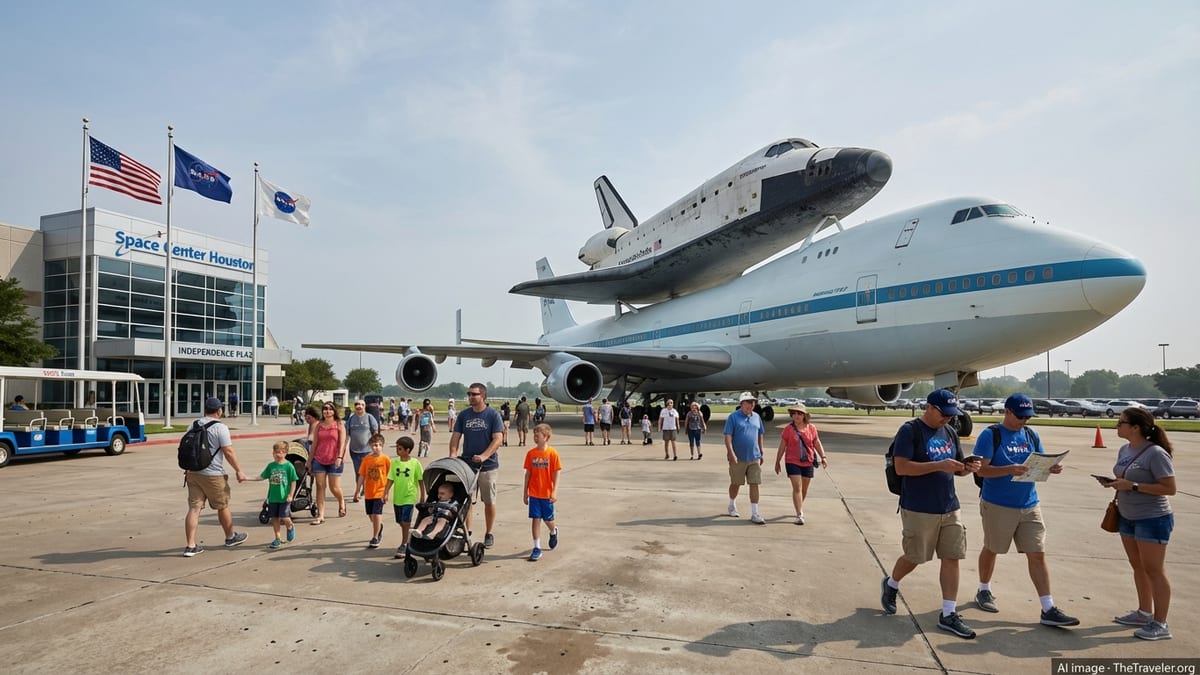
Independence Plaza features a full-scale shuttle replica mounted atop the original Shuttle Carrier Aircraft, a modified Boeing 747 that once ferried orbiters across the country. Visitors can tour both the aircraft and the shuttle replica, walking through the payload bay and flight deck to see how crews lived and worked during missions. Interpretive displays explain how NASA developed and tested the shuttle system and how lessons from that era inform today’s vehicles.
The International Space Station is another central theme throughout the center. Mockups and interactive exhibits allow you to experience how astronauts eat, sleep and conduct experiments in microgravity. In theaters, high-definition films showcase life aboard the station and the science that crews conduct in partnership with researchers around the world. With astronaut training and ISS mission control physically located at Johnson Space Center next door, the narrative feels immediate and grounded in active work.
Galaxies Beyond and other science-focused galleries broaden the story beyond human spaceflight, exploring astronomy, planetary science and the search for life beyond Earth. Families will find hands-on experiments, interactive screens and child-friendly explanations that make abstract concepts like gravity, radiation and orbital mechanics more accessible. These exhibits offer a good break for younger visitors between more technical or historically dense areas.
Artemis, The Moon and Mars: Looking Toward the Future
One of the most important recent additions to Space Center Houston is the permanent Artemis exhibit, which brings NASA’s current program to return humans to the moon into sharp focus. Visitors walk through lighted panels and interactive stations that explain the Artemis missions, from the uncrewed Artemis I test flight around the moon to the upcoming crewed Artemis II mission and beyond. Displays highlight how these missions will land the first woman and the first person of color on the lunar surface and use the moon as a testbed for eventual human journeys to Mars.
The exhibit encourages hands-on exploration. Guests can feel the layered materials of a modern moonwalking spacesuit, compare simulated lunar landing sites from the Apollo and Artemis eras and design their own mission patches or lunar habitats. The experience is intentionally participatory, aimed at inspiring the next generation of scientists, engineers and explorers. There are also opportunities to submit questions for astronauts, who may answer selected queries in videos and educational programming.
Beyond the dedicated Artemis gallery, references to the moon program and Mars exploration thread through the center. Models and graphics explain NASA’s Space Launch System rocket and Orion spacecraft, while updated materials highlight milestones such as the Artemis II crew selection and preparations for lunar orbit flights planned in the coming years. Live or recorded briefings in the theaters often touch on these developments, connecting what visitors see on display to headlines about upcoming missions.
The result is that Space Center Houston feels very much like a bridge between the Apollo past and the Artemis future. Artifacts from the first moon landings sit steps away from exhibits that describe how NASA and its partners are designing new lunar terrain vehicles, habitats and communication networks. For travelers, this makes a visit both a nostalgic look back and a timely primer on where human spaceflight is headed in the next decade.
Immersive Shows, Simulators and Special Programs
In addition to static exhibits and tours, Space Center Houston invests heavily in immersive storytelling and interactive technology. Motion simulators and virtual reality experiences, available for an additional per-ride fee, give guests a sense of the forces and sensations associated with launch, re-entry or a spacewalk outside the International Space Station. These attractions typically cost under ten dollars per ride and operate on a first come, first served basis, with height or health restrictions posted at the entrance.
The center’s theaters host a mix of live talks, educational presentations and cinematic experiences. A recent highlight has been an immersive multi-screen film about the Apollo moon missions, developed with Hollywood talent and designed to place audiences in the middle of launch pads, spacecraft and lunar landscapes. Combined with archival footage and commentary from astronauts, these shows help visitors emotionally connect to milestones that might otherwise feel distant in time.
Regular public events often bring astronauts, mission specialists and engineers to the stage for question-and-answer sessions and lectures. Some of these are included with general admission, particularly on weekends or during special celebration days, while others may require separate tickets. For families, youth-focused programs and camp-style offerings provide structured ways for children to engage with robotics, rocketry, coding and planetary science.
A suite of premium options rounds out the experience. Breakfast with an Astronaut combines a meal, a talk and time for photos and autographs in a small-group setting. Early access tours allow limited numbers of guests to enter certain exhibits before the center opens to the general public, which can be valuable during high season. For groups, private guides and tailored itineraries can be arranged through the reservations team, giving educators and corporate visitors more control over pacing and content.
Navigating the Day: Families, Accessibility and Insider Tips
Space Center Houston is designed to accommodate visitors of all ages, but a little planning helps ensure a smooth day. Families with strollers will find elevators and ramps throughout the center, along with family restrooms and dedicated quiet spaces during designated sensory-friendly events. These special sessions, scheduled regularly, feature lowered audio levels, modified lighting and additional support for visitors with sensory processing differences.
For young children, rotating between high-energy activities and quieter exhibits can help manage attention spans. Many families begin with a tram tour early in the day, then return to the main building for lunch before focusing on indoor galleries and short theater shows in the afternoon heat. Hands-on zones and play areas offer chances to decompress between more structured experiences like live talks or films.
Accessibility extends to wayfinding and interpretation. Exhibits increasingly feature bilingual signage, audio narration and tactile elements that invite touch alongside sight and sound. Guests are encouraged to speak with staff at Guest Services about wheelchairs, accommodation requests and the best route through the center if mobility or sensory considerations are a concern. The nonprofit mission of the organization includes a strong educational focus, and staff and volunteers are generally enthusiastic about helping visitors tailor the experience.
To make the most of your visit, consider arriving close to opening time, especially during holidays and school breaks. Prioritize the NASA Tram Tour and one or two must-see exhibits such as Independence Plaza or the Artemis gallery, then allow for flexibility to wander and respond to what captures your interest. Keeping a light schedule also leaves room for spontaneous opportunities like pop-up science demonstrations or an unscheduled astronaut appearance.
The Takeaway
Space Center Houston is not simply a collection of space artifacts. It is an active gateway into NASA’s work, where the history of human spaceflight and the next steps toward the moon and Mars are presented side by side. Visitors can touch a piece of lunar rock, stand beneath a shuttle-carrying jumbo jet, peer into historic Mission Control and then walk into an exhibit that explains how Artemis missions will build on that heritage. Few attractions offer such a direct link between museum displays and real-time exploration efforts.
For travelers, this means a visit can be as simple as a half day of family-friendly science fun or as rich as a full day of in-depth engagement with the engineering and decision-making behind space missions. Thoughtful planning around tickets, tram tours and a few key exhibits helps ensure you see the highlights, while leaving time for serendipity will let unexpected moments, from meeting an astronaut to watching a live mission update, become the true memories of your trip.
Whether you grew up watching Apollo, followed each shuttle launch or are just now learning the names of the Artemis II crew, Space Center Houston offers a chance to stand at the threshold of space exploration. In a single day, you can trace a line from those first words spoken from the moon to the next generation of explorers preparing to go farther than ever before, all from the heart of Space City.
FAQ
Q1. How much time should I plan for a visit to Space Center Houston?
Most visitors find that four to six hours allows enough time for the NASA Tram Tour, several major exhibits such as Independence Plaza and the Artemis gallery, a theater show and a relaxed lunch. Enthusiasts, families with children who enjoy interactive areas or guests attending a premium experience may want to plan an entire day.
Q2. Do I need to reserve tickets and tram tours in advance?
Advance purchase of timed-entry tickets is strongly recommended, especially during weekends, holidays and school vacations. The NASA Tram Tour is included with admission but can fill quickly on busy days. Securing your preferred tram time as early as possible, either when you arrive or through any pre-arrival system in place, helps avoid disappointment.
Q3. What should I wear and bring for the NASA Tram Tour?
The tram is an open-air vehicle and portions of the tour take place outdoors, so dress for the weather. Lightweight, breathable clothing is ideal in Houston’s heat, and a light jacket can be useful in cooler months or in air-conditioned buildings. Comfortable walking shoes are essential. A small bag for water, sunscreen, a hat and a camera is recommended, and all bags are subject to security screening at the entrance.
Q4. Are all exhibits included with general admission?
General admission includes access to the main exhibit halls, most galleries, the standard NASA Tram Tour and many theater presentations. Some experiences, such as motion simulators, virtual reality rides, breakfast with an astronaut, early access tours or other premium programs, require separate fees. Pricing and availability can change, so it is best to confirm what is included at the time you purchase tickets.
Q5. Is Space Center Houston suitable for young children?
Yes. Many exhibits are designed with families in mind, featuring hands-on elements, interactive screens and engaging visuals. Strollers are welcome, and restrooms and dining areas are stroller accessible. Very young children may not fully grasp the technical details, but they often enjoy climbing into the shuttle replica, seeing rockets up close and participating in simple science activities.
Q6. What accessibility accommodations are available?
Space Center Houston offers wheelchair-accessible entrances, ramps and restrooms, and the tram tour can accommodate many mobility needs. The center hosts sensory-friendly events with reduced noise and lighting, and staff are available to discuss specific accommodations or provide guidance on the most accessible routes. Guests are encouraged to contact the center in advance if they have detailed questions about mobility or sensory support.
Q7. Can I bring food and drinks into the center?
Policies on outside food can vary, but in general visitors are encouraged to use the on-site dining facilities, including the main cafeteria and snack stands. Sealed water bottles are typically permitted, and there are drinking fountains within the center. Families with special dietary needs or baby food should check current guidelines before visiting and may be asked to have items inspected at security.
Q8. How does Space Center Houston differ from other space museums?
What sets Space Center Houston apart is its role as the official visitor center for NASA’s Johnson Space Center. In addition to artifacts such as flown capsules and the shuttle carrier aircraft, visitors can travel by tram into an active NASA campus, see astronaut training facilities and visit historic and current Mission Control centers. This combination of museum exhibits and access to working operations is unusual among space-related attractions.
Q9. Are there opportunities to meet an astronaut during my visit?
Space Center Houston regularly hosts astronauts for talks, autograph sessions and premium experiences like Breakfast with an Astronaut. While it is not guaranteed on any given day, schedules often list when astronaut appearances are planned. Checking the events calendar and, if interested, booking special programs in advance increases your chances of meeting a current or former astronaut.
Q10. What is the best time of year to visit Space Center Houston?
Weekdays outside of school holidays and major travel periods tend to be the least crowded, with shorter lines for tram tours and simulators. Spring and fall often offer more comfortable outdoor temperatures. Summer and spring break can be very busy but also feature extended hours and additional programming. Regardless of season, arriving close to opening time typically provides the smoothest experience.