

More news on this day
Spain is heading into 2026 with record tourism momentum and a sharp uptick in nonstop capacity from the United States to Madrid and Barcelona, as major US carriers deepen their transatlantic bets on the country’s two largest cities.
Get the latest news straight to your inbox!
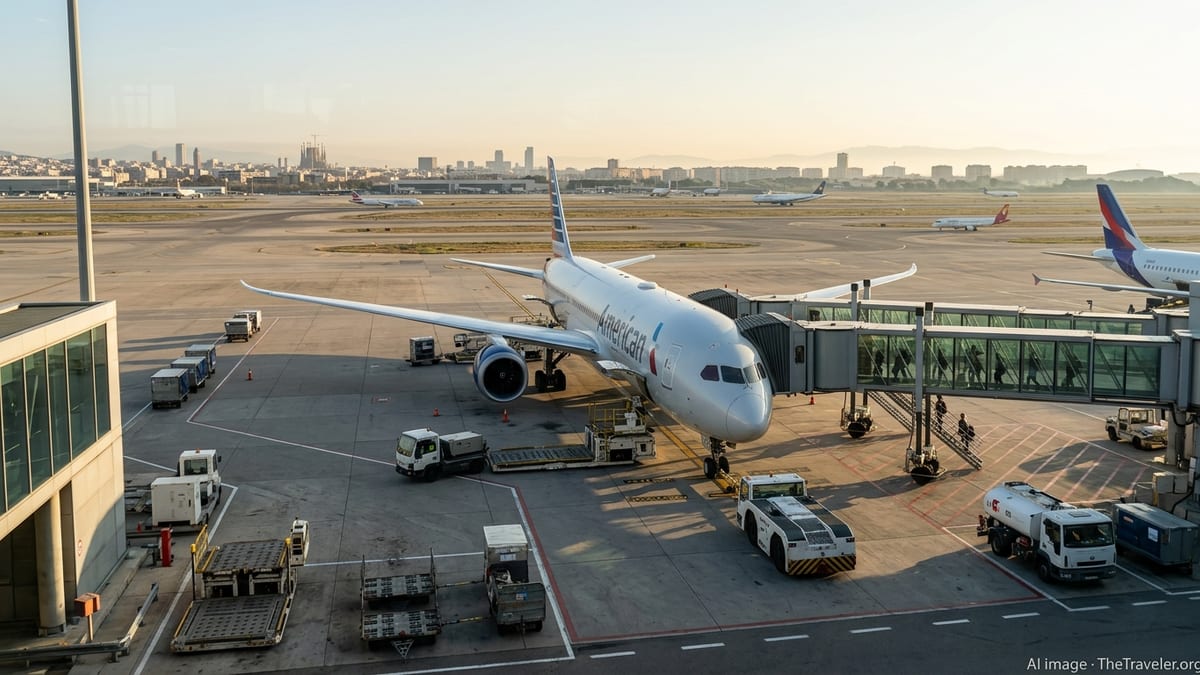
US Carriers Scale Up Nonstop Links to Spain’s Big Two Cities
Publicly available schedule information shows that US airlines are adding new links and more frequencies between major American gateways and Spain’s primary hubs, Madrid and Barcelona, for the 2025–2026 seasons. The focus is squarely on nonstop connectivity that shortens journey times for US leisure and business travelers heading to Spain and onward to Europe, North Africa, and Latin America.
Delta Air Lines has been steadily expanding its Spain portfolio, building on longstanding links from New York and Atlanta to Barcelona. A recently launched Boston to Barcelona service has added a New England gateway to Catalonia’s capital, and the carrier’s own winter 2025–2026 network documents highlight Madrid and Barcelona as part of an enlarged transatlantic schedule from key US hubs. Industry reports also point to a forthcoming Seattle to Barcelona route in 2026, further diversifying access from the US West Coast.
Delta’s growth is mirrored by United Airlines, which has progressively broadened its network in Spain. United already connects US travelers nonstop to Madrid and Barcelona from its East Coast hub at Newark. Its wider Spain strategy now includes secondary cities such as Malaga, Palma de Mallorca, and Bilbao, demonstrating confidence in sustained US demand for both flagship and regional Spanish destinations.
American Airlines is also sharpening its Spain focus, supported by joint business partners in Europe. According to recent route coverage, American’s transatlantic schedule features Madrid and Barcelona alongside new Spanish additions such as Seville, indicating that the airline views Spain as a central pillar of its broader European offering.
New Routes and Longer Seasons Boost Capacity
Beyond headline route announcements, a key change for 2026 is the extension of seasonal services and the shift of traditionally summer-only links into the shoulder or even winter months. United has already moved to stretch certain Spain–US routes deeper into the winter 2025 calendar, with Madrid and Barcelona among the cities benefiting from longer operating windows. This approach reflects a broader industry trend to smooth demand across the year rather than concentrate capacity solely in peak summer.
Delta’s transatlantic updates for summer 2025 and into 2026 point to more frequent services and aircraft upgrades on Iberian routes. Reports on the airline’s network strategy note that capacity to Spain has been increasing in step with the carrier’s overall growth in Europe. The Boston to Barcelona route, initially launched with several weekly flights, is part of a pattern in which promising leisure‑heavy markets are initially tested and then scaled up if demand proves robust.
In parallel, schedule data and specialist aviation outlets highlight that Barcelona in particular is set to gain an additional nonstop corridor to the Pacific Northwest through a Seattle–Barcelona service operated by Delta. This would place the Catalan capital among a relatively small group of European cities with direct links to the US West Coast, underlining Barcelona’s status as both a tourism hotspot and a cruise and conference hub.
Network expansion is not limited to new city pairs; aircraft choices also point to a qualitative upgrade. US airlines are increasingly assigning newer widebody types such as the Airbus A330-900neo on Spain routes, raising seat counts while improving fuel efficiency and onboard amenities. For travelers, the result is more options on more days of the week, with a greater likelihood of finding nonstop seats in both economy and premium cabins on Spain-bound flights.
Record Tourism Underscores Spain’s Transatlantic Appeal
The aviation build‑up is occurring against the backdrop of exceptional tourism performance. Official statistics from Spain’s National Statistics Institute and international tourism organizations show that the country welcomed around 97 million international visitors in 2025, retaining its position as one of the world’s most visited destinations. Tourism now accounts for more than one tenth of Spain’s gross domestic product, underlining the sector’s strategic weight in the national economy.
Madrid and Barcelona remain the primary gateways funneling visitors into this booming market. Recent data releases indicate that visitor numbers through Spain’s two largest metropolitan areas continue to grow, buoyed by a mix of city‑break tourism, cultural travel, gastronomy, sporting events, and large‑scale conferences. Airlines and tourism boards alike see these cities as anchors that distribute travelers onward to coastal resorts, wine regions, and smaller historic towns.
At the global level, a January 2026 bulletin from UN Tourism reported a 4 percent rise in international tourist arrivals during 2025, signaling that travel demand has not only recovered from the pandemic shock but moved into new record territory. Spain stands out within this landscape as one of the clearest beneficiaries of renewed long‑haul travel appetite, particularly from North America.
Analysts note that the growing presence of US carriers feeds directly into this performance. More nonstop seats from US gateways reduce friction for high‑spend visitors, including cruise passengers embarking in Barcelona, business travelers heading to Madrid’s financial district, and long‑stay tourists combining urban visits with beach or countryside stays. The interplay between airline capacity and tourism spending is especially pronounced in Spain, where hospitality and related services form a major employment engine.
Infrastructure, Regional Growth and Sustainability Debates
The surge in flights and tourists is placing renewed focus on Spain’s aviation and tourism infrastructure. Airport operator Aena continues to invest in facilities at Madrid–Barajas and Barcelona–El Prat to handle rising passenger volumes, while regional airports such as Malaga, Palma de Mallorca, Bilbao, and Santiago de Compostela benefit from new or reinforced US links. United’s expansion into secondary Spanish markets, for example, has widened the range of entry points available to North American visitors.
However, the upswing has not been without controversy. Over the 2024–2025 period, Spain has seen highly publicized protests and public debates over the impact of mass tourism on housing affordability, urban congestion, and environmental pressure in hotspots such as Barcelona, the Balearic Islands, and parts of Andalusia. Local groups have called for tighter controls on short‑term rentals and for caps on visitor numbers in certain districts, reflecting anxiety that tourism growth may be outpacing the capacity of communities to absorb it.
These tensions create a complex context for the current wave of transatlantic expansion. On one hand, central and regional governments recognize that long‑haul visitors from the US are among the highest‑spending tourists and play a meaningful role in supporting jobs in hotels, restaurants, transport, and cultural institutions. On the other, there is growing pressure to align aviation and tourism development with national climate goals and emerging European Union policies on emissions and sustainable travel.
Industry observers suggest that airlines and destinations may respond by emphasizing longer, higher‑value trips rather than sheer visitor volume, encouraging travelers to explore beyond the most saturated neighborhoods. Improved rail links from Madrid and Barcelona to secondary cities and resort areas could also help disperse flows, allowing Spain to benefit from robust demand while addressing local concerns about overtourism.
What US Travelers Can Expect in 2026
For US travelers planning Spain trips in 2026, the practical implications of these network changes are clear. There is likely to be a wider choice of nonstop flights into both Madrid and Barcelona from major US hubs, including additional options from Boston and new connectivity from Seattle. Expanded seasons on some routes may also make it easier to find direct flights outside the peak July and August window, opening up spring and autumn as attractive alternatives.
The rise in capacity is expected to add some downward pressure on average fares, particularly in economy cabins, although strong demand and higher operating costs may limit how far prices fall. Travelers willing to be flexible on departure days or to consider nearby US gateways could find more competitive deals as airlines fine‑tune schedules and yield management for their growing Spain networks.
Onboard, passengers can expect more consistent long‑haul products as carriers roll out next‑generation cabins across their widebody fleets. This includes upgraded business‑class suites, enhanced premium economy offerings, and improved inflight connectivity. For many routes into Madrid and Barcelona, these enhancements coincide with the deployment of more fuel‑efficient aircraft, reflecting both commercial and environmental priorities.
Travel experts advise that prospective visitors monitor airline announcements and booking platforms closely over the coming months, as US carriers publish final schedules and adjust capacity in response to booking trends. With Spain consolidating its status as a top global destination and US airlines racing to secure a share of that demand, 2026 is shaping up to be one of the most connected years yet between American cities and the Spanish gateways of Madrid and Barcelona.