

More news on this day
Spain is rapidly expanding and upgrading its rail network in response to a surge in passenger demand, with record ridership, new operators and major infrastructure spending reshaping mobility across the country.
Get the latest news straight to your inbox!
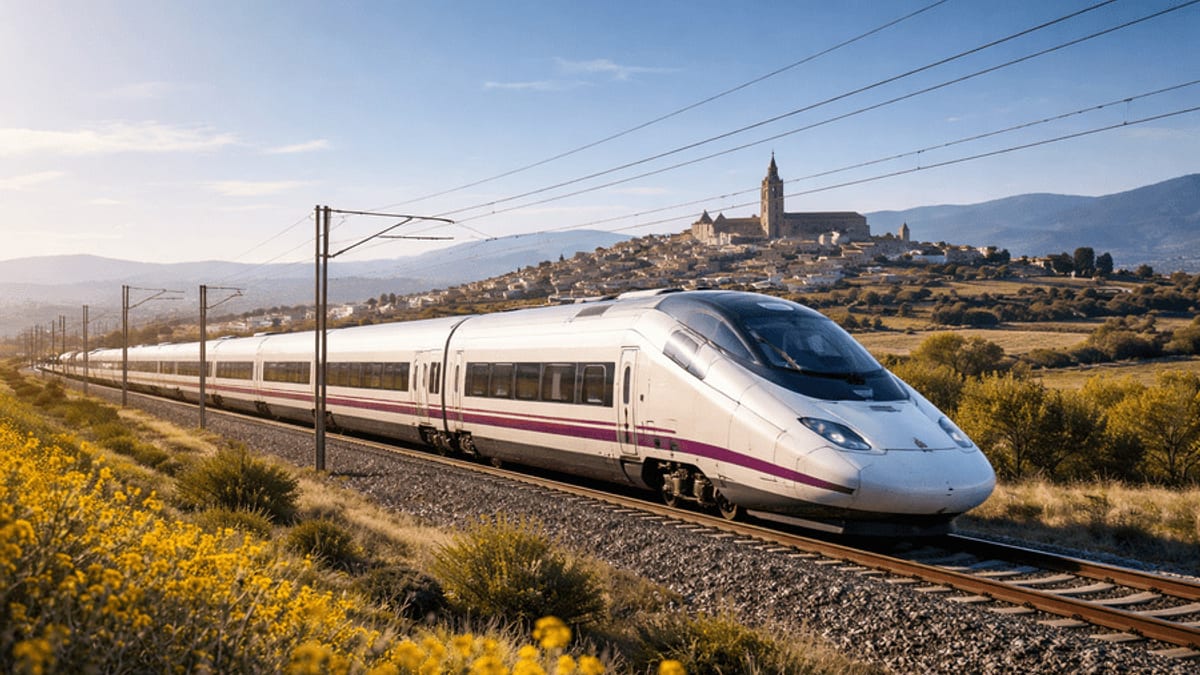
Image by Latest International Railway News, Global Rail Industry News
Record Passenger Growth Transforms Rail Travel
Publicly available information shows that Spain’s national operator Renfe has reached historic highs in ridership, transporting more than 530 million passengers in 2024 and setting further records in early 2025. Recent company data for the first half of 2025 point to more than 277 million travelers, a modest but steady increase on the previous year and a clear sign that rail is consolidating its role as a primary mode of transport within Spain.
High speed services have been central to this growth. Reports from specialist rail outlets and Spanish media indicate that demand on premium and low cost high speed brands has climbed by double digits year on year, with routes such as Madrid to Barcelona, Madrid to Valencia and Madrid to Galicia registering particularly strong gains. In some corridors, rail has surpassed air travel for domestic trips, supported by shorter journey times city center to city center.
The summer 2024 season marked a turning point, with Renfe reporting its best ever summer performance and surpassing pre pandemic peaks. Passenger growth has also been visible at key regional hubs, where stations such as Santiago de Compostela and several cities in Galicia have recorded new annual highs. These trends have encouraged both national authorities and infrastructure managers to accelerate planned upgrades and capacity enhancements.
Infrastructure Investment Targets Capacity and Connectivity
Spain’s infrastructure managers Adif and Adif Alta Velocidad are advancing a multiyear investment program aimed at both conventional and high speed networks. Railway sector coverage describes a pipeline of around 24 billion euros in rail infrastructure spending scheduled to run to 2026, focusing on new lines, modernization of existing corridors and improved digital signaling and traffic management systems.
Financing agreements with European institutions are playing a key role. A loan package agreed between the European Investment Bank and Adif AV, worth several hundred million euros, is directed at improving and updating rail infrastructure on both standard and high speed routes. Separate European Union transport funding for Spain is helping to electrify strategic freight and passenger links, including sections of the Mediterranean Corridor that connect inland logistics hubs with coastal ports.
On the ground, this capital is translating into new or upgraded sections of track, higher line speeds and expanded station capacity. Reports indicate that work on cross border and long distance axes is intended to smooth travel between Spain and neighboring countries, while domestic projects focus on easing bottlenecks around major metropolitan areas such as Madrid, Barcelona and Valencia. Network managers are also investing in planning tools and information systems to manage more trains on existing tracks.
Liberalisation and New Operators Reshape the Market
The opening of Spain’s high speed market to competition has fundamentally changed how rail services are supplied. According to information published by Spain’s competition regulator and industry observers, the entry of new high speed operators such as Ouigo and Iryo alongside Renfe’s AVE and Avlo brands has boosted passenger numbers and reduced average ticket prices.
Regulatory reports for 2024 show that passenger volumes on liberalised high speed corridors rose by more than 20 percent in a single year and by over 70 percent compared with the period before competition began. At the same time, average fares on key city pairs have fallen by around one third, and by closer to 40 percent after adjusting for inflation, making high speed rail more accessible to leisure travelers and families.
The presence of multiple operators has led to denser timetables and a wider variety of service patterns on the busiest routes. Trains now depart more frequently throughout the day between major cities, and operators have introduced differentiated products ranging from low cost services with simplified onboard offerings to premium trains focused on business passengers. This variety is contributing to the overall expansion of the market rather than merely redistributing existing demand.
Regional Links and Commuter Services See Parallel Growth
While high speed lines attract much of the attention, regional and commuter services are also experiencing strong growth. Publicly available figures from Renfe and local media in 2024 and 2025 highlight rising patronage on medium distance routes linking secondary cities with Madrid and other hubs, helped by timetable adjustments and new rolling stock.
Examples cited in regional coverage include the Vigo to Madrid corridor, where reorganised frequencies and stop patterns have led to a sharp increase in passenger numbers, as well as other Galician stations that have reported double digit growth. Similar patterns are emerging around cities such as Zaragoza, Seville and Alicante, where upgraded connections to high speed trunks and improved regional services are drawing travelers away from private cars.
Commuter rail networks around Madrid and Barcelona remain crucial for daily mobility, and ongoing investments in signaling, station accessibility and additional tracks are designed to increase reliability and capacity at peak times. Authorities have also supported demand with multi trip passes and promotional fare schemes on conventional and suburban services, encouraging more residents to adopt rail for routine journeys.
Sustainability, Safety and Future Challenges
The expansion of rail is closely linked with Spain’s climate and energy goals. Environmental organisations and transport studies point out that high speed trains can emit many times less carbon dioxide per passenger than equivalent air journeys on busy domestic routes. Rail’s growing share of long distance travel is therefore viewed as a key lever for reducing emissions from the transport sector.
At the same time, the rapid growth in traffic is testing the resilience of the system. Incidents and congestion on busy approaches to major cities, as well as the need for ongoing maintenance on heavily used high speed lines, highlight the importance of sustained investment in safety systems and infrastructure renewal. The sector is also under public scrutiny after serious accidents, reinforcing the priority given to signaling upgrades, staff training and risk management.
Looking ahead, published strategies from infrastructure managers and operators envisage continued expansion of capacity through 2026 and beyond, with further digitalisation, new cross border links and additional rolling stock orders. The challenge for Spain’s rail sector will be to maintain competitive pricing and service quality while funding the long term investments required to keep pace with growing passenger demand.