

More news on this day
A new wave of strike action at Spanish airports has widened to include Madrid-Barajas, adding the country’s busiest hub to an escalating dispute in ground-handling services that is already affecting major holiday gateways such as Barcelona-El Prat, Palma de Mallorca, Málaga-Costa del Sol, Alicante-Elche, Valencia, Ibiza, Gran Canaria, Lanzarote and other high-traffic airports at the start of a peak travel period.
Get the latest news straight to your inbox!
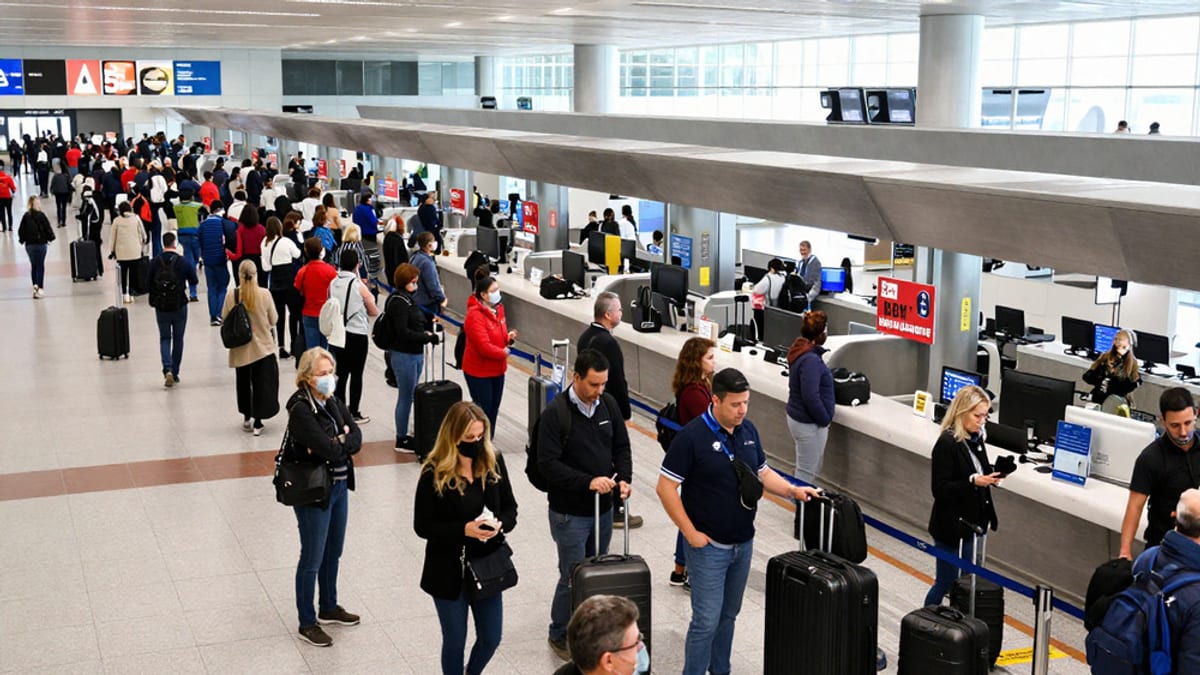
Image by Latest International / Global Travel News, Breaking World Travel News
What Is Behind the New Strike Action
The latest disruption centers on Groundforce, the ground-handling company of the Globalia group, which provides services such as baggage handling, check-in assistance and ramp operations at a dozen major airports in the Aena network. Union-backed strike calls have turned a labor dispute over pay and working conditions into a nationwide operational challenge just as Easter and spring holiday travel ramps up.
According to published coverage from Spanish media, the indefinite strike with partial stoppages was confirmed after failed attempts to resolve disagreements over the interpretation of the sector’s collective agreement and the application of salary updates linked to recent inflation. Worker representatives argue that contractual commitments have not been fully respected, and that the current interpretation effectively reduces real wages. Company representatives have not publicly detailed their internal position in the latest round of reporting.
The dispute has quickly moved from a technical argument over clauses to a visible industrial conflict, as Groundforce is a key handling provider for numerous carriers at Adolfo Suárez Madrid-Barajas and Josep Tarradellas Barcelona-El Prat, as well as at important tourist airports across the Mediterranean coast, the Balearic Islands and the Canary Islands.
Reports indicate that, in parallel, there are separate strike threats involving other handling providers at different Spanish airports, raising the possibility of overlapping actions if no compromise is reached. For now, however, the core of the current disruption is tied to Groundforce’s operations.
Which Airports and Dates Are Affected
The strike is timed to begin on Monday 30 March 2026, with an indefinite duration and repeated daily stoppages. Publicly available information shows that approximately 3,000 Groundforce employees are called to participate across 12 airports, including Adolfo Suárez Madrid-Barajas, Barcelona-El Prat, Alicante-Elche Miguel Hernández, Valencia, Málaga-Costa del Sol, Palma de Mallorca, Ibiza, Gran Canaria, Tenerife, Lanzarote, Fuerteventura and Bilbao.
The action is structured as partial walkouts in three daily windows: early morning from 05:00 to 07:00, a longer daytime period from 11:00 to 17:00, and a late-night slot from 22:00 to 00:00. These time bands overlap with many departure and arrival peaks, particularly for short-haul European leisure flights and domestic connections that concentrate movements in the morning and midday waves.
The strike coincides with one of the busiest weeks of the spring season, when Easter travel drives strong demand at Spanish airports. Aena traffic data for recent years highlight that Madrid-Barajas, Barcelona-El Prat, Palma de Mallorca, Málaga, Alicante, Gran Canaria, Valencia and Lanzarote rank among the country’s most important passenger gateways, which increases the likelihood that even limited stoppages can have a knock-on effect across the network.
Although air traffic control and airport management are not directly targeted by this particular dispute, ground-handling stoppages can still slow aircraft turnaround times, leading to delays and selected cancellations if schedules cannot be maintained. The level of disruption may vary day by day depending on participation in the strike and the contingency measures put in place by airlines and airport operators.
How Flights and Passengers Could Be Impacted
Ground-handling staff are involved in nearly every stage of a flight’s journey on the ground. When teams are reduced or working to strike timetables, airlines can face difficulties with check-in desk staffing, baggage loading and unloading, pushback operations, aircraft cleaning and special assistance services.
For travelers, this can translate into longer queues at check-in and bag drop, slower security access where handling personnel assist with flow management, delayed baggage delivery on arrival and, in more severe cases, flight delays or cancellations if aircraft cannot be serviced within the allocated turnaround slot. Connections at busy hubs such as Madrid-Barajas and Barcelona-El Prat are particularly vulnerable to cumulative delays.
Published reports on previous industrial actions in Spain suggest that labor authorities often set minimum service requirements intended to preserve a baseline level of operations, especially for essential domestic routes and strategic links to island territories. Even with such minimums, however, past experience shows that peak hours can become congested and punctuality can suffer when staff numbers are reduced or work is reorganized around strike periods.
Travelers flying through Palma de Mallorca, Málaga, Alicante, Ibiza, Gran Canaria, Lanzarote and other highly seasonal leisure airports may also experience disproportionate effects, as these facilities handle large volumes of charter and low-cost traffic concentrated in specific time bands. Aircraft that rely on rapid turnarounds to maintain tight schedules may be particularly exposed to disruption.
Advice for Travelers Heading to or from Spain
Passengers due to travel on or after 30 March 2026 through any of the affected airports are being advised by airlines and travel intermediaries to monitor their bookings closely. Many carriers are updating flight status information on a same-day basis and, in some cases, allowing date or time changes without additional fees when strikes are expected to have a material impact on operations.
It is prudent for travelers to arrive at the airport earlier than usual, particularly for morning and midday departures that fall within the strike windows. Additional time at check-in and for baggage drop can help offset potential delays in ground processing. Where possible, traveling with carry-on luggage only can reduce reliance on baggage handling services and shorten the time required both before departure and on arrival.
Travel insurance policies often include specific provisions regarding industrial action. Travelers are encouraged to review their policy wording to understand what compensation or assistance may be available if flights are delayed or canceled due to strikes, and whether any documentation from airlines is required to support claims.
Those with tight onward connections, cruise departures or important events may wish to explore rebooking to flights outside the main strike windows or routing through less-affected airports where feasible. Given that the strike is described as indefinite, flexibility and contingency planning are likely to remain important over the coming days.
What Could Happen Next
As of 30 March 2026, the dispute between Groundforce and union representatives remains unresolved, and reports indicate that the strike will continue on an open-ended basis until an agreement on pay and conditions is reached or the call is modified. The involvement of Madrid-Barajas, combined with a long list of major coastal and island airports, means the pressure to find a settlement is likely to increase if disruptions escalate.
Industrial relations in Spanish aviation have a history of tense negotiations followed by late-stage agreements that avert the most severe long-term disruptions, but recent coverage suggests that both sides are currently maintaining firm positions. The fact that the strike action coincides with a high-demand holiday period could accelerate talks, as airlines and tourism stakeholders monitor the economic impact.
Travelers planning trips to Spain in the coming weeks should stay alert to schedule changes and advisories issued by airlines and tour operators. While many flights may operate broadly as planned, the combination of partial stoppages across multiple airports and the indefinite nature of the strike means that short-notice adjustments cannot be ruled out.
Until there is a clear resolution or modification of the strike call, anyone flying into or out of Madrid-Barajas, Barcelona-El Prat, Palma de Mallorca, Málaga-Costa del Sol, Alicante-Elche, Valencia, Ibiza, Gran Canaria, Lanzarote and other affected airports should be prepared for possible delays and allow extra time for every stage of their journey.