

More news on this day
Spain’s busy Easter holiday getaway faces fresh disruption as new strikes by airport ground handling workers are poised to affect operations at major hubs just as passenger volumes peak.
Get the latest news straight to your inbox!
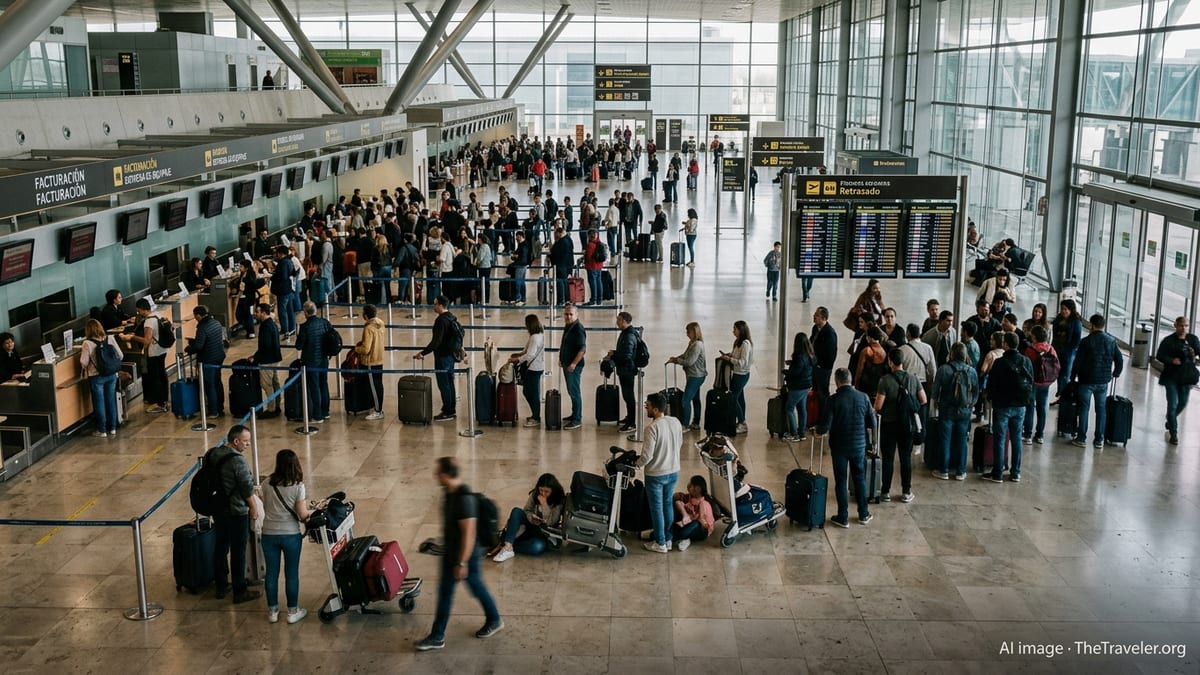
Partial and Indefinite Walkouts Timed With Holiday Peak
Industrial action by ground handling staff employed by Groundforce is set to begin in the final days of March, overlapping with the main Easter travel period in Spain. Reports indicate that unions representing workers at the company have called partial and indefinite stoppages across several airports, including Ibiza, Madrid, Barcelona and other major tourist gateways.
The work stoppages are scheduled in blocks across morning, afternoon and evening shifts, typically between early morning check in peaks and late night departures. Although flights are not formally cancelled by the strike call itself, the walkouts are expected to slow core services such as check in, ramp operations and baggage handling, creating knock on delays at already congested terminals.
The timing coincides with the Easter week surge, when Spanish airports traditionally see one of their highest passenger volumes of the year. Official winter season data from the national airport operator shows that airlines have scheduled more seats and operations this winter compared with the previous year, meaning there is limited spare capacity to absorb disruption.
Unions involved in the action have framed the dispute around wage increases and the application of agreed pay scales in the current inflationary environment. Publicly available statements point to disagreements over how inflation-linked raises are being calculated across different staff categories.
Which Airports and Travellers Are Most at Risk
Groundforce holds ground handling licences at a dozen Spanish airports, including Madrid Barajas, Barcelona El Prat, Palma de Mallorca, Alicante, Malaga, Gran Canaria, Valencia, Ibiza, Bilbao, Lanzarote and Fuerteventura, as well as a cargo operation in Zaragoza. Any airline that outsources check in and ramp services to the company at these airports could be affected if staffing levels drop during strike windows.
Low cost and leisure carriers that rely heavily on outsourced ground services are likely to feel the immediate impact in the form of slower turnaround times, boarding delays and reduced capacity to rebook passengers quickly when problems occur. Travellers with tight connections through Spanish hubs, particularly on separate tickets, face an elevated risk of missed onward flights if inbound services are delayed on strike days.
Families heading to the Balearic and Canary Islands for school holidays are also exposed, since several island airports are covered by the Groundforce network. Disruption to baggage services is a particular concern at these leisure destinations, where a high share of passengers travel with checked luggage for longer stays.
However, not all airlines will be affected in the same way. Some carriers, including Spain’s main flag airline at its primary base, use dedicated or separate ground handling providers at certain airports. Travellers are being urged by consumer groups and travel industry bodies to check which company handles their flight at departure and arrival airports, and to monitor airline alerts closely in the days leading up to travel.
Legal Minimum Service Levels May Limit Cancellations
Spain’s transport ministry regularly imposes minimum service requirements for strikes in essential transport sectors, including aviation. For the upcoming walkouts, published information indicates that high protection levels have been established for certain routes, especially domestic flights linking mainland Spain with the Balearic and Canary Islands and other services considered public obligations.
For these connections, minimum service thresholds approach or exceed four fifths of scheduled flights during the Easter period, meaning most services should still operate in some form. On other routes, such as domestic flights where alternative land transport is available in under five hours or international services where substitution is possible, minimum service levels are lower, and schedules may be thinned out or consolidated.
While these rules reduce the likelihood of mass cancellations seen in some historic disputes, they do not prevent delays or service degradation. Even when a flight is protected, reduced staffing on the ground can lengthen turnaround times, slow baggage delivery and strain customer service desks, especially at peak hours. Travellers could therefore face significant inconvenience even if their flight technically operates.
Past episodes of industrial action at Spanish airports also suggest that the impact can vary widely by airport and day, depending on local staffing, airline contingency plans and weather or air traffic conditions. Travel analysts note that Easter is already a fragile period for on time performance, and strikes add another layer of operational risk.
How Airlines and Passengers Are Preparing
Airlines operating in Spain have begun to adjust their plans ahead of the Easter rush. Publicly available schedules show some carriers thinning non essential frequencies, retiming flights outside the most heavily affected strike windows, or swapping aircraft types to consolidate passengers onto fewer services. Some leisure operators are advising customers to arrive at the airport earlier than usual and to avoid checking bags where possible.
Airport operators and handling agents have a legal obligation to comply with minimum service levels, and are expected to redeploy staff and management personnel to meet those targets. In practice, however, the strain on resources during Easter may mean that queues build rapidly at security checkpoints, check in counters and boarding gates if there are any bottlenecks in the ground operation.
Consumer organisations in Spain and across the European Union are reminding travellers that air passenger rights under EU regulations continue to apply during strikes by airline staff or contracted service providers. Depending on the specific circumstances, affected passengers may be entitled to rerouting, care such as meals and accommodation, and in some cases financial compensation for long delays or cancellations.
Travel agents and tour operators are also updating their clients on the evolving situation, particularly for package holiday trips to Spanish beach and island destinations. Some are encouraging customers to provide contact details, download airline apps and enable push notifications so they can be reached quickly if flight times change at short notice.
Practical Advice for Easter Travelers Heading to Spain
With uncertainty lingering over how the strikes will unfold across Spain’s airport network, travel experts advise building extra flexibility into Easter itineraries. Passengers are being encouraged to allow more time between connections, particularly when changing airlines or tickets in Madrid or Barcelona, and to consider routing via alternative hubs if schedules permit.
Where feasible, travellers may wish to travel with cabin baggage only to reduce exposure to baggage handling delays or misrouted luggage during walkouts. For those who must check bags, attaching distinctive tags, carrying essential items and one change of clothes in hand luggage, and keeping baggage receipts and photos can make it easier to recover or claim compensation if problems arise.
Arriving at the airport well ahead of departure, especially during early morning and late afternoon peaks, can also provide a buffer against slower processing times at check in and security. Passengers who have access to online check in or automated bag drop facilities are advised to use them, although these systems may also see higher demand during strike periods.
Ultimately, the severity of disruption during Easter will depend on whether the current labour dispute escalates or moves towards negotiation as the holiday approaches. For now, travellers heading to or through Spain over the coming days are being urged to stay informed, review airline communications carefully and prepare for a busier and potentially more unpredictable airport experience than usual.