

Spain has become one of the busiest gateways to Europe, with its airports handling record passenger numbers and expanding to keep pace with global demand. For international travelers, that surge in traffic means more flight options than ever, but also more complexity when it comes to choosing an airport, clearing formalities and connecting onward to Spanish cities, islands and resorts. This guide brings together practical, current information to help you move through Spain’s main airports smoothly, make smart choices about where to land and understand the procedures you will face on arrival and departure.
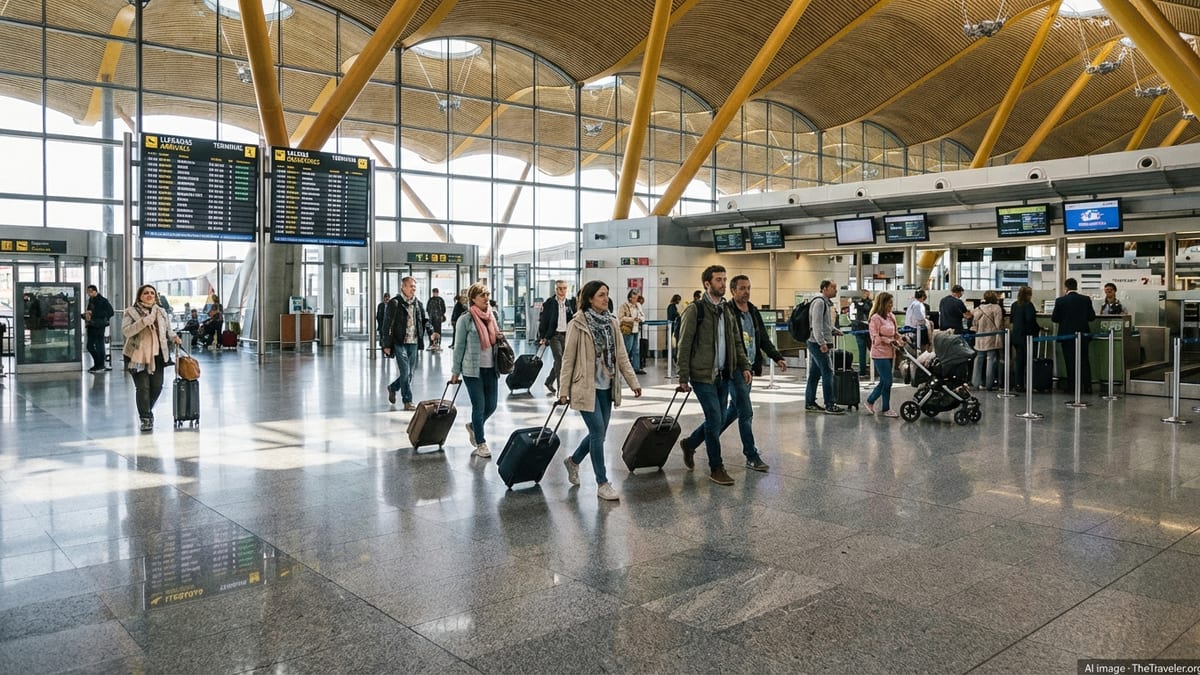
Spain’s Airport Network at a Glance
Spain’s airports are managed by Aena, one of the world’s largest airport operators, which oversees 46 airports and two heliports across the country. Recent years have brought record traffic, with more than 320 million passengers using Spanish airports in 2025, a clear sign that international tourism and business travel have rebounded strongly. The largest gateways, notably Madrid and Barcelona, regularly rank among the busiest airports in the European Union for total passenger numbers and international connections.
For visitors arriving from outside Europe, the primary entry points are Adolfo Suárez Madrid Barajas Airport and Josep Tarradellas Barcelona El Prat Airport. Both handle tens of millions of passengers each year and serve as major hubs for European and intercontinental routes. Other popular airports for international travelers include Palma de Mallorca, Málaga Costa del Sol, Alicante Elche Miguel Hernández, Gran Canaria, Tenerife Sur, Valencia, Bilbao and Seville, many of which have seen steady growth in recent traffic.
International travelers will notice that Spain’s airports range from very large, multi terminal hubs to smaller regional facilities that serve a mix of seasonal tourism and domestic flights. While the biggest airports offer extensive shopping and services along with frequent public transport into the city, mid sized and regional airports often offer the advantage of shorter walking distances and faster processing through security and passport control. Choosing the right airport for your trip often comes down to balancing convenience, flight options and where in Spain you plan to spend most of your time.
Because Spain’s airport network stretches from the Basque Country in the north to Andalusia in the south and out to the Balearic and Canary Islands, there is usually an airport relatively close to all of the country’s main destinations. When planning your itinerary, it is worth considering whether to fly directly into a regional airport such as Valencia, Bilbao or Seville, or to arrive at a major hub like Madrid or Barcelona and then connect by domestic flight or high speed train.
Major International Gateways: Madrid and Barcelona
Adolfo Suárez Madrid Barajas is Spain’s largest airport and its main intercontinental hub. Located to the northeast of the capital, it has multiple terminals, with T4 and its satellite T4S handling most long haul flights and a large share of Iberia and oneworld traffic. The airport offers extensive connections to Latin America, North America, the Middle East and parts of Asia, making it a common first point of entry for travelers coming from those regions. Within the Schengen Area, Madrid also functions as a key transfer point for flights onward to other European destinations.
Travelers connecting in Madrid should allow enough time to move between terminals, especially if their itinerary involves transfers between T1, T2, T3 and the newer T4 complex. A people mover connects T4 to the satellite terminal T4S, but walking distances and security checks can still be significant. Signage is generally clear and announcements are made in Spanish and English, with additional languages on some airlines, but it remains important to check terminal information on your boarding passes and monitors upon arrival.
Josep Tarradellas Barcelona El Prat serves as the primary air gateway to Catalonia and the wider northeast of Spain. With two main terminals and heavy traffic from European low cost and full service carriers, Barcelona has become one of the busiest airports in the EU. The airport offers a broad mix of European city links and an expanding set of long haul routes to North America, the Middle East and parts of Asia and Latin America. In the coming years, Barcelona is slated to receive substantial investment aimed at upgrading its terminals and increasing capacity, reflecting its growing role as a Mediterranean hub.
For leisure and business travelers, the choice between Madrid and Barcelona often comes down to itinerary and airline. Madrid is generally stronger for connections to Latin America and for one world alliance flights, while Barcelona is particularly convenient for travelers focusing on Catalonia, the Costa Brava and the Pyrenees and for those using low cost European carriers. Both airports offer modern facilities, multilingual information, special assistance services for passengers with reduced mobility and a wide range of shopping and dining options before and after security.
Key Tourist and Regional Airports
Beyond Madrid and Barcelona, several Spanish airports are especially important for holidaymakers heading directly to the coast or islands. Palma de Mallorca Airport serves the Balearic Islands’ most visited island and handles a very high share of seasonal European leisure traffic, particularly from Germany and the United Kingdom. Málaga Costa del Sol Airport is the primary gateway to the Costa del Sol and much of Andalusia’s Mediterranean coastline, with dense schedules of flights from northern and western Europe, especially in the warmer months.
Alicante Elche Miguel Hernández Airport is another major entry point for travelers bound for Spain’s eastern Mediterranean coast and resort areas, including the Costa Blanca. Further south, regional facilities such as the Region of Murcia International Airport also cater to a mix of international holiday routes and domestic services, connecting coastal developments and historic inland cities with northern Europe and other parts of Spain. These airports tend to have compact terminal layouts, which can make navigation easier after a long flight.
On Spain’s Atlantic and island frontiers, airports such as Gran Canaria, Tenerife Sur, Lanzarote, Fuerteventura and their smaller neighbors in the Canary Islands play a vital role for travelers seeking year round sun. These airports see a large volume of seasonal charter and low cost flights from across Europe and are well accustomed to processing package holiday arrivals. In northern Spain, Bilbao Airport has grown into the main air hub for the Basque Country and nearby regions, while airports such as Santiago de Compostela and A Coruña provide additional international and domestic links to Galicia.
City break destinations like Seville and Valencia have also seen strong growth in their airport traffic, with an increasing share of international passengers. For travelers, this means more opportunities to fly directly into culturally rich cities and avoid domestic connections. Seville’s airport sits a short drive from the historic center, while Valencia’s airport lies west of the city and is served by metro and bus, making both convenient for short stays as well as longer trips across Andalusia or the Valencian Community.
Arrivals, Immigration and Customs
For travelers arriving from outside the European Union or Schengen Area, Spain’s larger airports are usually the first point of contact with European border controls. After disembarking, passengers follow signs to passport control, where non EU citizens join the queues marked for all passports or non EU nationals. Automated gates are available at many airports for eligible travelers from certain countries, but availability can vary and staff may still direct passengers to traditional desks for manual checks. At busy times, queues can form, so it is wise to factor in extra time before onward connections.
Spain is part of the Schengen Area, which means that once travelers have cleared passport control in Spain, they can move on to other Schengen countries without additional immigration checks. Conversely, travelers arriving from another Schengen state into Spain will usually not pass through passport control again, though spot checks may occur. Customs controls typically take place after baggage claim, where passengers choose between the green channel for nothing to declare and the red channel if they are carrying goods that exceed duty free allowances or restricted items.
Customs officers in Spain conduct routine inspections and may ask travelers about the contents of their luggage, particularly if they are arriving from outside the European Union. It is important to respect restrictions on products such as certain foods, plants and large quantities of alcohol or tobacco. While Spanish airports aim to keep arrivals halls flowing smoothly, random checks are part of standard practice. Travelers should keep their travel documents, hotel information and any supporting papers easily accessible in case officials request additional details.
Once out in the public arrivals area, travelers will find information desks, currency exchange booths, ATMs and car rental counters at all major airports. Many international travelers prefer to withdraw euros from bank machines rather than exchange cash, as rates are often more favorable, though fees depend on individual banks. It can be helpful to have a small amount of cash on hand for taxis, luggage trolleys and minor purchases, but contactless payments are widely accepted in shops, cafes and transport services across Spanish airports.
Security, Liquids and Luggage Rules
Security procedures at Spanish airports broadly follow European Union standards. Passengers pass through screening checkpoints where hand luggage, coats and belts are scanned and passengers walk through metal detectors or body scanners. Travelers are typically required to remove laptops and large electronic devices from their bags and place them in separate trays, along with liquids and gels carried in cabin baggage. Security personnel may ask passengers to remove shoes or undergo additional screening if alarms are triggered or items appear unclear on scanners.
Despite trials of more advanced C3 scanners in parts of the network, the familiar 100 milliliter rule for liquids in hand luggage remains in effect as of early 2026. Passengers must place all liquids, gels and aerosols in containers of 100 milliliters or less, which must fit inside a transparent, resealable plastic bag with a capacity of around one liter. This bag should be removed from hand luggage and shown separately during screening. Security officers may request that passengers discard containers that exceed these limits or that do not fit within the bag.
Checked baggage allowances depend on the airline and ticket type, rather than the airport itself, but there are some general practices travelers will encounter consistently in Spain. Oversized or special items such as sports equipment, musical instruments and certain mobility aids are often accepted at dedicated counters or oversized baggage belts. Restrictions apply to the carriage of items such as batteries, e cigarettes and flammable materials, with many of these only allowed in cabin baggage or requiring special handling. It is always advisable to review your airline’s rules in detail before packing.
At larger Spanish airports, security lanes are often divided into standard, fast track and family or special assistance lines. Fast track access may be included with premium tickets or available for purchase, and can significantly reduce waiting times during peak periods. Families with small children and passengers with reduced mobility can access tailored lanes or receive additional support to make the process less stressful. Regardless of the lane, arriving early remains the most reliable way to reduce stress, particularly during holiday seasons when airports reach their highest traffic levels.
Connecting Flights and Transfers Within Spain
Many international travelers use Spanish airports as transfer points, either to connect to other European countries or to continue on domestic flights to smaller cities and island destinations. At hubs like Madrid and Barcelona, connecting passengers whose bags are checked through will generally follow transit signs without exiting into the public arrivals hall. Depending on the itinerary, passengers may pass through security screening again and, if arriving from outside the Schengen Area and connecting to a Schengen flight, they will also clear passport control before reaching their departure gate.
Connection times in Spain can vary widely depending on the size and layout of the airport. At Madrid Barajas, transfers between distant terminals or between Schengen and non Schengen zones can involve long walks, train rides and additional checks, so it is sensible to allow a generous minimum connection time, especially on separate tickets. Barcelona’s more compact layout usually makes transfers somewhat faster, but delays and seasonal congestion can still eat into tight margins. When booking, travelers who are unfamiliar with an airport should avoid the very shortest connection times offered by airlines, even when they appear technically feasible.
For those continuing their journeys within Spain, it is worth considering rail connections as an alternative to domestic flights, especially from Madrid and Barcelona. Both cities are major hubs for the high speed AVE and other long distance trains, which link to cities such as Seville, Valencia, Málaga, Zaragoza and many more. In some cases, a flight into Madrid followed by a train from the centrally located rail stations can be more comfortable and time efficient than a domestic connection by air, particularly if you need to travel into a city center.
Travelers on separate tickets or low cost connections should be aware that they may need to collect their baggage and recheck it with the next airline, effectively starting the arrival and departure process again. In this case, it is important to allow enough time to pass through immigration, collect bags, go through customs, check in, drop bags and clear security once more. Travel insurance that covers missed connections can provide an extra layer of security in case of delays, but careful planning is still the best defense against tight transfers.
Ground Transport, Parking and Access to the Cities
One of the main advantages of Spain’s largest airports is the variety of transport options into nearby cities. Madrid Barajas is linked to the city by metro, commuter rail and buses, in addition to licensed taxis and app based ride services where allowed. Barcelona El Prat offers a mix of metro, commuter trains, dedicated airport buses and taxis, all connecting into the city’s urban transport network. In both cases, public transport tickets are relatively affordable and services run frequently throughout most of the day, though late night frequencies may be reduced.
At major holiday airports such as Málaga, Palma de Mallorca and Alicante, travelers will find direct buses to resort areas, intercity coach connections, car hire desks and, in some cases, rail links to nearby cities. These transport networks have evolved alongside the growth of international tourism and are generally well adapted to carrying passengers with luggage, including large suitcases. However, services can be crowded during peak holiday periods, and travelers may want to prebook buses, private transfers or rental cars in advance to secure the best schedules and prices.
For travelers who intend to drive, parking facilities at Spanish airports range from short stay areas close to the terminals to long stay lots and off site private operators that provide shuttle services. Many airports allow advance booking of parking spaces, which can reduce costs and guarantee availability during busy times. Road access to major airports is usually via modern motorways or ring roads, but congestion can occur at rush hours, especially around Madrid and Barcelona, so driving passengers should plan additional time for possible traffic delays.
Passengers continuing their journey by train or long distance bus often need to transfer from the airport to central transport hubs. In Madrid, this typically means traveling from the airport to major rail stations such as Atocha or Chamartín, while in Barcelona many long distance trains depart from Sants station. Clear signage and tourist information desks at airports can help travelers identify the best route to these hubs. Buying tickets in advance is advisable on popular routes and at peak times, though flexible options are available for those who prefer to keep their schedules open.
Tips for a Smooth Experience at Spanish Airports
Preparation is the most effective way to ensure a smooth passage through Spanish airports. Travelers should check terminal information on their tickets in advance, allow extra time for peak travel periods such as summer holidays, Easter, major football events and local festivals, and confirm security and baggage rules with their airlines. Keeping key documents, including passports, boarding passes and any visa or health documentation, in a single easily accessible place can also reduce stress when moving through checkpoints and boarding gates.
Language is rarely a barrier at Spain’s major airports, where signs and announcements are typically provided in Spanish and English, with local languages such as Catalan, Basque or Galician also present where relevant. Staff at information desks often speak additional languages, and airlines serving international routes usually provide multilingual assistance. Nonetheless, carrying written addresses for your accommodation and key destinations can be useful when communicating with taxi drivers or in situations where mobile data is limited.
Travelers with reduced mobility or other special needs are entitled to dedicated assistance at Spanish airports, coordinated through Aena. This service usually needs to be requested in advance through the airline or directly via the airport operator, with a recommended lead time before departure. Upon arrival at the airport, passengers can report to designated meeting points where staff are available to help with check in, security, boarding and transfers. The number of passengers using these services has been rising, and Spain’s airports continue to invest in training and facilities to improve accessibility.
Finally, it is important to recognize that Spain’s airports, like others worldwide, can be subject to temporary disruptions related to weather, air traffic control issues, industrial actions or infrastructure works. Keeping an eye on airline notifications, airport information screens and reputable news sources can help travelers respond quickly if schedules change. Flexibility, patience and realistic expectations about queues and processing times go a long way toward turning a potentially stressful travel day into a manageable part of the journey.
FAQ
Q1. Which Spanish airport is best for first time visitors from outside Europe?
For many first time visitors, Madrid Barajas is the most practical choice because it offers the widest range of intercontinental flights and easy onward connections by air and rail throughout Spain and Europe.
Q2. How early should I arrive at a Spanish airport before an international flight?
It is generally advisable to arrive at least three hours before a long haul or non Schengen international departure, and a little earlier during peak holiday seasons or if you need to check in baggage at busy times.
Q3. Do Spanish airports still apply the 100 milliliter liquids rule at security?
Yes. As of early 2026, Spanish airports continue to apply the European standard rule that liquids in cabin baggage must be in containers of 100 milliliters or less, placed inside a transparent one liter bag.
Q4. Can I connect to another Schengen country without collecting my baggage in Spain?
If your flights are on a single ticket and your bags are checked through to the final destination, you usually do not need to collect them in Spain. You will clear Schengen immigration at your first entry point and then proceed directly to your connecting gate.
Q5. Are there good public transport links from Spanish airports into city centers?
Most major Spanish airports offer reliable public transport connections, typically including some mix of metro, commuter trains, airport buses and intercity coaches, alongside taxis and private transfers.
Q6. Is English widely spoken at Spanish airports?
English is commonly used in signage, announcements and by front line staff at major Spanish airports, especially in areas dealing with international flights, although levels of fluency can vary.
Q7. What should I know about customs when arriving in Spain from outside the EU?
Travelers from outside the EU must respect limits on items such as alcohol, tobacco and certain foods, and may be selected for random checks. Using the green channel means you are declaring that you have nothing exceeding duty free allowances.
Q8. Are Spanish airports suitable for travelers with reduced mobility?
Yes. Spanish airports offer dedicated assistance for passengers with reduced mobility, including help with check in, security and boarding, but this support should be requested in advance where possible.
Q9. Is it better to fly or take the train for domestic travel after landing?
The best option depends on distance and schedule. High speed trains from Madrid and Barcelona are competitive with flights on many domestic routes, especially when city center access and airport processing times are taken into account.
Q10. What is the takeaway for international travelers using Spanish airports?
The main takeaway is that Spain’s airports are modern and increasingly busy, offering excellent connectivity, but travelers should plan ahead, allow generous time at key stages and familiarize themselves with basic security and customs rules to ensure a smooth journey.