

More news on this day
Spain is moving to the center of a global tourism boom, with new data pointing to record visitor numbers, rapidly expanding air capacity through Madrid and growing demand from key Latin American markets including Argentina, Brazil and Mexico heading into 2026.
Get the latest news straight to your inbox!
Spain Extends Record-Breaking Tourism Run
Spain’s tourism sector is entering 2026 from an exceptionally strong position. Publicly available data from the national statistics agency indicate that the country welcomed around 97 million international visitors in 2025, marking another all-time high and reinforcing Spain’s status as one of the world’s top destinations by arrivals. Tourism now accounts for more than one in eight euros of national output when domestic and international travel are combined, underscoring its central role in the broader economy.
Recent monthly figures show that momentum has continued into 2026. International arrivals in the spring shoulder season are edging higher than a year earlier, suggesting that Spain is lengthening its effective tourism year beyond the traditional summer peak. Industry observers note that this year-round demand is particularly visible in major urban gateways such as Madrid and Barcelona, but is also filtering into secondary cities and coastal regions.
The surge comes despite concerns around overtourism and the impact of successive heatwaves. Spain registered its hottest summer on record in 2025, and several destinations saw renewed local debate over housing, infrastructure pressure and environmental strain. Even so, international demand has remained robust, with travelers drawn by Spain’s cultural cities, beaches, food and wine, and extensive low-cost and legacy air links from across Europe and the Americas.
Argentina, Brazil and Mexico Power Latin American Inflows
The latest tourism trends across the Americas point to Argentina, Brazil and Mexico as major engines of outbound and inbound travel, deepening their ties with European markets. Sector reports on Brazil highlight a sharp rise in foreign visitors, with more than 6.5 million international arrivals recorded between January and August of the most recent year, a jump of more than 40 percent compared with the same period a year earlier. Argentina remains Brazil’s single largest source market, illustrating the scale of intra-regional movements that underpin the wider boom.
Mexico is also reporting strong air arrivals and sustained spending by foreign tourists. Government figures for 2025 show international visitors by air in the tens of millions annually, with the United States, Canada and Argentina among the largest source markets. Analysts note that Mexico’s performance has been supported by a combination of relatively competitive pricing, improved connectivity and the enduring appeal of its beaches and cultural heritage sites.
Argentina, meanwhile, is emerging on both sides of the ledger, sending growing numbers of travelers to nearby countries and receiving visitors attracted by favorable exchange rates and a renewed interest in its wine regions and Patagonia. Together, Argentina, Brazil and Mexico are helping to drive a wider regional rebound that is increasingly connected to Europe through long-haul hubs such as Madrid.
Madrid Flights Surge as Iberia Bets Big on 2026
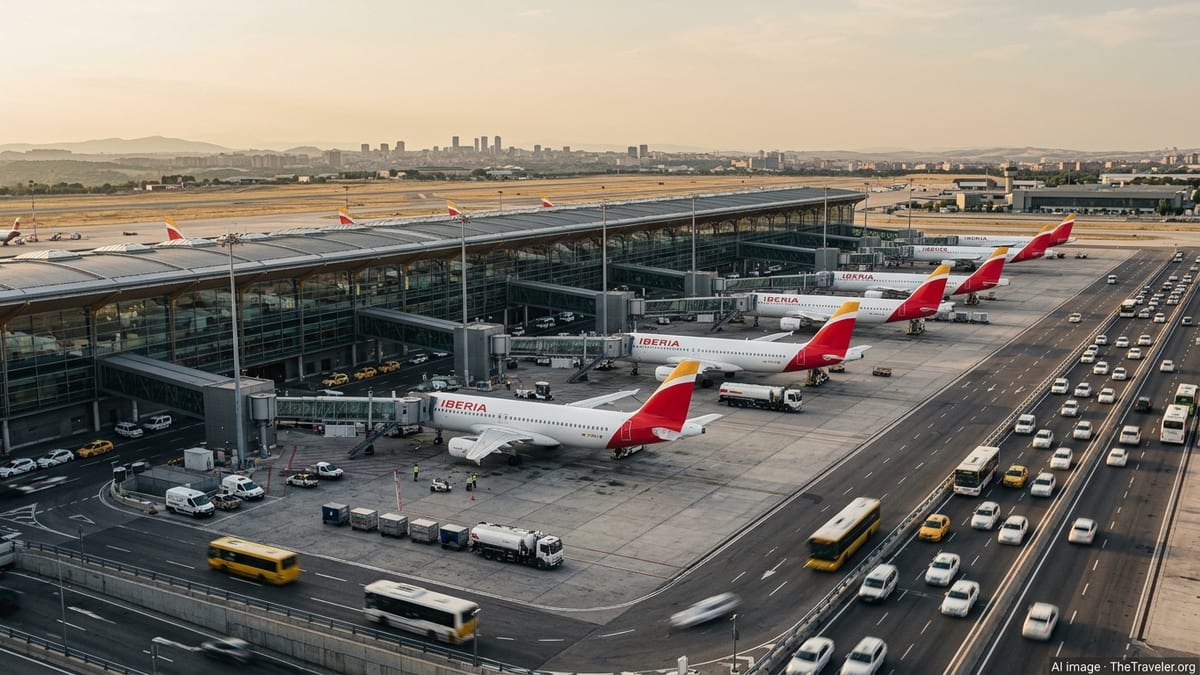
Madrid’s Adolfo Suárez Madrid Barajas Airport is at the center of this shifting map. Iberia has spent the past several seasons systematically building up its long-haul network, particularly to Latin America and North America, positioning Madrid as a primary European gateway to the Americas. Company statements for 2024 and 2025 point to successive record capacities on routes between Europe and Latin America, exceeding 5.3 million seats in 2024 and rising further in 2025 and the upcoming 2026 seasons.
The airline’s published plans for summer 2025 and summer 2026 include more than 3.3 million seats between Europe and Latin America in a single season and a rapid expansion in North American flying. Coverage in aviation media describes record transatlantic capacity in 2026, with more than 1.2 million seats to the United States and Canada, additional frequencies to major U.S. gateways and the launch of a new Madrid Toronto route that will operate several times per week during the northern summer.
Latin America remains central to this strategy. Iberia announcements detail record seat offerings on services to 18 destinations in 16 Latin American countries, and a growing reliance on next generation long haul aircraft to support frequency increases. The carrier’s hub strategy uses Madrid as a connective node, allowing travelers from Argentina, Brazil and Mexico to reach Spain and then continue onward to other European destinations on a single itinerary.
Brazilian and Mexican Capacity Jump as Iberia Deepens Ties
Within this broader expansion, Brazil and Mexico stand out as priority markets for Iberia. Corporate communications released in late 2025 set out plans to lift capacity to Brazil by around 25 percent in the first half of 2026, building on a reported 27 percent increase in 2025. The growth is being supported by the deployment of new generation Airbus long haul jets and the addition of more nonstop links between Madrid and key Brazilian cities, reinforcing Brazil’s position as one of the airline’s fastest growing long haul markets.
In Mexico, Iberia has been steadily consolidating its presence in Mexico City and other gateways. While recent announcements focus more on overall Latin American capacity than on individual figures for Mexico, industry coverage describes higher weekly frequencies and upgraded aircraft on the Madrid Mexico City trunk route, plus enhanced connectivity via Madrid to secondary European destinations. These moves align closely with Mexico’s own tourism growth, as rising long haul demand supports more direct and one stop options into Europe.
For Argentina, the focus has been on strengthening existing Madrid Buenos Aires links rather than opening new cities. Iberia has in recent periods increased frequencies to the Argentine capital, reflecting both strong point to point traffic and significant connecting flows to and from other Latin American markets. Market analysts say that as economic conditions stabilize and outbound Argentine travel recovers, these routes are likely to remain among the busiest in the airline’s South American portfolio.
Infrastructure, Hotels and Resorts Brace for Record Demand
Spain’s infrastructure planners are moving to keep pace with these trends. Recent announcements from the national airport operator outline an investment program of around 4 billion euros to expand Madrid Barajas through 2031, including major upgrades to terminals T4 and T4S and a new building to integrate terminals T1, T2 and T3. The objective is to lift overall capacity and streamline connections, supporting Madrid’s role as a high volume intercontinental hub as traffic climbs toward and beyond pre pandemic levels.
Hotel and resort operators are also adjusting for sustained demand into 2026. Spanish and international chains have signaled plans for new openings and refurbishments in Madrid, Barcelona, the Balearic and Canary Islands and segments of the Mediterranean coast. According to sector research, occupancy in many urban properties returned to or surpassed 2019 levels during 2024 and 2025, with average daily rates edging higher, particularly during peak months and major events.
Resort regions are preparing for similar pressure. Coastal destinations popular with visitors from Argentina, Brazil and Mexico, such as parts of Andalusia, the Costa Blanca and the islands, are reporting strong forward bookings for 2026 high season. Travel advisors note a growing preference among Latin American travelers for longer stays that combine cultural visits in Madrid or Barcelona with resort breaks, a pattern that further concentrates demand on Spanish accommodation stock.
Managing Growth Amid Rising Pressures
The tourism boom is not without complications. Publicly available reporting on Spanish cities documents a series of anti tourism protests since 2024, reflecting citizen concerns about housing affordability, congestion, and the environmental footprint of mass travel. Local administrations have responded by tightening regulations on short term rentals in some areas and exploring measures to better distribute visitor flows across neighborhoods and seasons.
Climate impacts are another looming challenge. With 2025 recorded as Spain’s hottest summer to date and southern Europe facing more frequent extreme heat events, travel industry analysts are watching closely to see how visitor behavior may shift. Early indications suggest some travelers are moving city visits to spring and autumn while continuing to favor beach destinations where sea breezes and resort infrastructure can mitigate high temperatures.
For now, however, the overall trajectory points upward. Spain’s combination of strong aviation links through Madrid, proactive capacity expansion by Iberia, and resilient demand from Latin American powerhouses such as Argentina, Brazil and Mexico is setting the stage for another year of record or near record arrivals in 2026. Hotels, resorts and airports across the country are betting that this surge will continue, even as pressure grows to make that growth more sustainable for residents and destinations alike.