

More news on this day
Spain has moved to close its airspace to United States military aircraft linked to the ongoing war in Iran, a sharp escalation of Madrid’s effort to distance itself from the campaign and a step that risks deepening tensions with the Trump administration.
Get the latest news straight to your inbox!
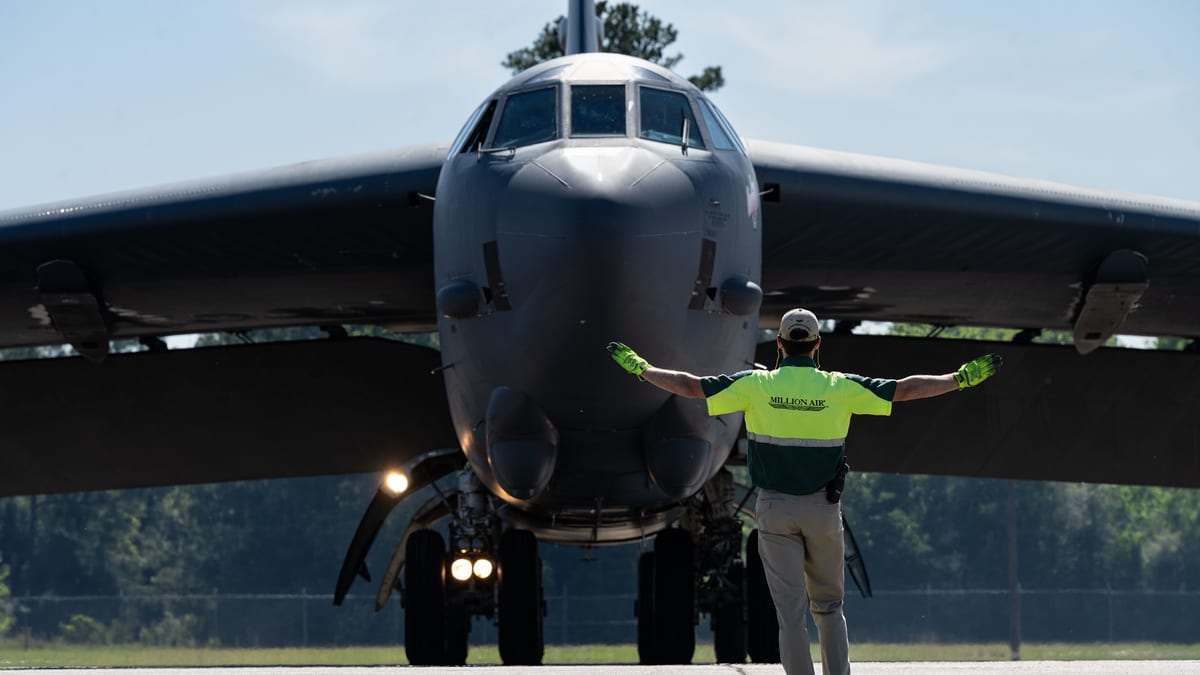
Image by AeroTime
From base restrictions to a full airspace ban
The airspace closure marks the latest phase in a steadily hardening Spanish stance toward the US led operation against Iran. Earlier in March, Madrid had already barred the use of the jointly operated Rota naval base and Morón air base in southern Spain for combat or refuelling missions tied to strikes on Iranian targets. That decision prompted US aircraft, including key tanker assets, to be redeployed to other European facilities.
Reports in Spanish outlet El País and other international coverage indicate that the new measure goes further by denying transit through Spanish skies to US warplanes and refuelling aircraft identified as supporting the campaign. Flight plans connected to the Iran operation are being rejected, with only strictly defined emergency situations exempted. Spanish authorities continue to allow movements covered by the longstanding bilateral defense agreement, such as logistics for US forces in Europe, but not missions judged to be part of the Iran war.
Publicly available information suggests the practical effect is to force US planners to reconfigure corridors traditionally used to move aircraft between North America, the Atlantic and the eastern Mediterranean. With a major NATO member now off limits for war traffic linked to Iran, flights may increasingly route through central or northern Europe, lengthening missions and complicating aerial refuelling chains.
Spain’s position stands in marked contrast to its role in earlier Middle East operations, when US forces relied heavily on Iberian bases and airspace to stage or support deployments to the Gulf. Analysts note that the current policy reflects both a legal argument over the nature of the Iran campaign and a political desire in Madrid to underline independence from Washington.
Legal framing and Spain’s neutrality narrative
Senior members of Spain’s coalition government have framed the Iran war as a unilateral and illegal action under international law, reinforcing a narrative that Madrid will not be a participant or facilitator. The government has repeatedly paired its restrictions with language invoking the United Nations Charter and the need for collective decision making on the use of force.
The airspace ban fits into a broader approach that some observers describe as “active neutrality.” Spain continues to contribute to multinational missions in Lebanon, Iraq and the eastern Mediterranean, while at the same time drawing bright red lines around any direct involvement in operations on Iranian territory. By allowing routine NATO and bilateral movements to continue but blocking those directly tied to the war, Madrid is seeking to balance alliance commitments with its own legal and political red lines.
Economic officials have also defended the decision as consistent with Spain’s long term interests. Public statements from ministers highlight concern about regional escalation, global energy volatility and potential spillover into Europe’s security environment. In this framing, limiting the use of Spanish territory and airspace for offensive actions is presented as a contribution to de escalation, even as Spain maintains its broader Western alignments.
Critics inside and outside the country, however, argue that the line between support and non participation is blurred. They point to continued US logistics flows through Rota and Morón and ongoing NATO cooperation as evidence that Spain remains deeply embedded in the Western military posture, even while it publicly distances itself from specific operations.
Trump’s angry response and a widening diplomatic rift
The move to close airspace arrives against a backdrop of already souring relations between Madrid and Washington. In the weeks leading up to the decision, President Donald Trump publicly condemned Spain’s refusal to allow its bases to be used in the campaign against Iran and raised the prospect of punitive trade measures. He has portrayed Spain as benefiting from US security guarantees while failing to shoulder what he views as its fair share of the burden.
According to international news coverage, the White House has linked Spain’s stance on Iran to longstanding complaints about European defense spending and disagreements over policy toward Israel and the wider Middle East. Trump’s rhetoric has revived memories of earlier transatlantic clashes over the 2003 Iraq war, but this time Spain is a member of the eurozone’s economic core and plays a larger role in European Union decision making, raising the diplomatic stakes.
The airspace ban is likely to be read in Washington as a direct challenge to US operational freedom in Europe. Analysts suggest it could trigger further retaliatory language from the administration, potentially including renewed threats of tariffs on Spanish exports or reduced cooperation in other policy areas. At the same time, there is little indication so far that Madrid intends to soften its position, with ministers emphasizing that the decision flows from Spain’s legal assessment of the conflict rather than from tactical bargaining with the United States.
The dispute also lands at a sensitive moment for NATO, which is contending with divergent member state views on the Iran war. While alliance structures are not directly responsible for the operation, the presence of US assets on European soil and in European airspace means intra alliance tensions are difficult to avoid when a key partner takes such a visible stand.
Flight routes, alliance politics and traveler perceptions
For now, the closure appears targeted at military traffic and does not directly affect commercial aviation between Spain and North America or the Middle East. Civilian passenger and cargo flights continue to operate on normal schedules, and air traffic control authorities are still managing a dense web of transatlantic routes over the Iberian Peninsula. Industry observers note, however, that the separation of military and civilian flows requires careful coordination, particularly if rerouted warplanes increase congestion in neighboring sectors.
The decision underscores how geopolitical rifts can quickly reconfigure Europe’s aerial map. Military planners may need to rely more heavily on corridors over France, Italy or central Europe when moving assets toward the eastern Mediterranean or Gulf region, potentially increasing fuel consumption and limiting flexibility during crises. In parallel, countries that remain open to US overflights may find their own infrastructure and political choices under greater scrutiny from domestic audiences and regional partners.
From a travel perspective, the controversy adds a new layer to Spain’s international image. In recent years the country has marketed itself as a destination that combines Atlantic and Mediterranean identities and as a bridge between Europe, North Africa and the Americas. Its stance on the Iran conflict may resonate with travelers and residents who prioritize diplomacy and legal norms, even as it risks friction with the United States and some NATO allies.
Tourism officials will be watching closely for any downstream impact on visitor flows, especially from North America, although there is no immediate sign of disruption. For most passengers, the airspace dispute remains a largely invisible backdrop to trips that continue to rely on Spain’s extensive civil aviation infrastructure and its role as one of Europe’s primary gateways.