

More news on this day
Spain’s key holiday gateways in Madrid, Barcelona and Palma de Mallorca are preparing for days of disruption over the Easter period as ground handling staff launch an indefinite strike in a dispute over pay, working conditions and the impact of inflation, adding a new flashpoint to a season already marked by transport upheavals across Europe.
Get the latest news straight to your inbox!
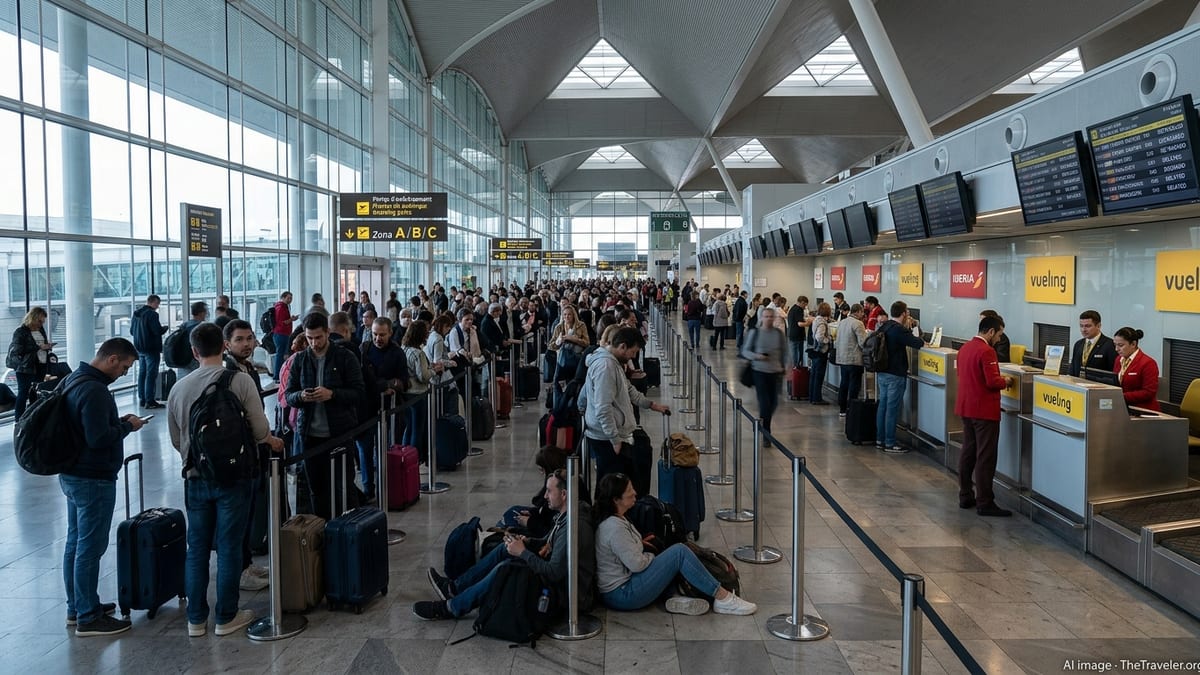
Ground Handling Walkouts Hit Spain’s Busiest Hubs
Published information from Spanish media and unions indicates that the strike centers on Groundforce, the ground handling company owned by the Globalia group, which provides check-in, ramp and baggage services at a dozen major airports in the Aena network. These include Adolfo Suárez Madrid Barajas, Barcelona El Prat and Palma de Mallorca, along with Málaga, Valencia, Alicante, Bilbao, Ibiza and several Canary Islands airports, all critical for Spain’s tourism flows.
The walkouts are described as indefinite but structured as partial stoppages across three daily windows, typically in the early morning, midday peak and late evening. Reports indicate that action is scheduled from March 30 onward, directly overlapping the Easter getaway and return dates for many European travelers. While flight operations are not formally suspended, the targeted hours coincide with the busiest departure and arrival banks at Spain’s largest hubs.
Unions representing around 3,000 Groundforce employees argue that the dispute stems from what they characterize as the erosion of wages through inflation and contested interpretations of the company’s collective agreement. Publicly available statements describe concerns over pay updates, use of part-time contracts, scheduling practices and heavy reliance on overtime. The company’s handling licenses at multiple airports mean any prolonged stoppage could have a cascading effect on airlines and passengers.
Early reports from travelers on social platforms already point to longer queues and sporadic delays at Barcelona and Madrid as staff prepare for the action, though full-scale disruption is expected to build once the strike formally begins. Passengers connecting through Palma de Mallorca, a key holiday hub for Germany, the UK and northern Europe, are watching closely as Easter departures ramp up.
Easter Peak Travel Collides With Labor Tensions
The timing of the strike coincides with one of Spain’s most important travel windows. Easter week traditionally marks the start of the country’s main tourism season, with domestic travelers heading to coastal resorts and religious processions, while visitors from Germany, the UK, France and Italy fly in for spring breaks. Palma de Mallorca Airport alone handled more than 30 million passengers last year and ranks among Europe’s busiest seasonal gateways.
Industry data and previous years’ patterns show that Easter can rival peak summer weekends in terms of daily passenger volumes at Spanish airports. Even relatively modest staffing shortfalls at check-in, baggage and on the ramp can quickly translate into longer turnaround times, missed slots and knock-on delays throughout the day. With the strike affecting multiple airports simultaneously, airlines have limited flexibility to reassign aircraft or crews to less affected bases within Spain.
Airport operator Aena is obligated under Spanish regulations to uphold minimum service levels during strikes, and such decrees typically ensure that a core share of scheduled flights can still depart. However, these legal minimums do not eliminate operational challenges in areas like baggage delivery, boarding and aircraft dispatch. Travelers often feel the impact in the form of queues, slower processing and irregular operations, even when a large proportion of flights technically operate.
Tourism bodies have repeatedly highlighted the importance of Easter revenue for hotels, restaurants and transport providers after a period of volatility linked to energy prices, geopolitical tensions and changing demand patterns. Any sustained airport disruption that discourages last-minute bookings or pushes visitors toward alternative destinations in the Mediterranean could weigh on local economies already facing intense debates over overtourism and housing pressures.
Europe-Wide Disruption: Spain Joins a Wider Pattern
Spain’s emerging Easter bottlenecks come as several other major European destinations confront their own transport challenges, creating a broader picture of holiday uncertainty. In Germany, recent winters and springs have repeatedly seen industrial action affecting rail and air travel, with walkouts by train drivers and airport security staff leading to cancellations and crowding at major hubs such as Frankfurt, Munich and Berlin. Travelers heading to or from Spain via German feeder routes may already be accustomed to rebookings and missed connections.
Italy has been grappling with rail and aviation stoppages as unions respond to staffing levels, pay and infrastructure concerns. A high-profile series of rail disruptions earlier in 2026 underscored the vulnerability of long-distance networks that feed international airports in Rome and Milan. When rail services falter, airports experience surges in private car use and local congestion, compounding the frustration of airline delays or cancellations.
France, another key Easter corridor for UK and Northern European travelers, has also contended with episodes of transport disruption, including air traffic management issues and sector-specific strikes. These events can ripple outward when aircraft and crews operated by French or pan-European carriers fall out of rotation, affecting schedules in Spain and neighboring countries even when local airport staffing is stable.
In the UK, strike calendars show a steady drumbeat of industrial disputes across rail, bus and other transport services. While aviation is less consistently affected, ground transport to and from airports such as Heathrow, Gatwick and Manchester can be constrained on key dates, narrowing travelers’ options at the very start and end of their journeys. Combined with Spain’s ground handling action, this patchwork of disruptions raises the risk of multi-leg itineraries unravelling across borders.
Impact on Airlines, Tour Operators and Passengers
For airlines, ground handling strikes at multiple Spanish airports translate into immediate operational headaches. Carriers reliant on outsourced services from Groundforce face slower aircraft turns, the possibility of last-minute schedule thinning and the need to prioritize certain routes or markets. Larger network airlines with their own handling units at primary hubs may be partially insulated, but regional and low-cost carriers that depend heavily on third-party ground staff are likely to feel the sharpest impact.
Tour operators, particularly those in Germany, the UK and Nordic markets funneling holidaymakers to the Balearic and Canary Islands, are monitoring developments as they plan charter rotations and package tour start days. Many have contractual obligations to provide accommodation even if flights are disrupted, which can result in complex logistics such as extending hotel stays for stranded guests or arranging alternative departures from less affected airports.
Passengers are being urged by airlines and consumer bodies, through public advisories and online updates, to check flight status repeatedly in the 24 hours before travel, arrive early at airports and minimize checked luggage where possible. Travelers with tight connections at Madrid, Barcelona or Palma de Mallorca face heightened risk of missed onward flights, especially during the strike windows.
Publicly available guidance on passenger rights in the European Union notes that strikes involving airline or airport staff can in some circumstances qualify as extraordinary events, limiting compensation for delays or cancellations, although assistance such as refreshments and rebooking typically still applies. The specific handling of claims often depends on the nature of the strike, the role of the company involved and how much control the airline is deemed to have over the disruption.
What Easter Travelers to Spain Should Watch Now
With Easter departures imminent, the situation remains fluid. Mediation efforts between unions and company representatives have so far failed to produce a breakthrough, according to coverage in Spanish economic and general news outlets, but further talks are expected as the strike’s start date nears. Until a compromise is reached, airlines will continue to adjust schedules, consolidate services and impose booking freezes on certain high-risk rotations.
Travelers planning to fly into or through Spain in the coming days are being advised by consumer organizations and travel forums to build in extra time, avoid itineraries that require short connections, and monitor not just their departure airport but also the situation at any Spanish hub on their route. Those connecting from strike-affected countries such as Germany, France, Italy or the UK face the added complexity of potential delays before even reaching Spanish airspace.
Hotel and tourism businesses in Madrid, Barcelona and the Balearic Islands are closely tracking booking curves for the Easter period, aware that a perception of chaos at airports can be enough to nudge undecided travelers toward other Mediterranean destinations. At the same time, ongoing debates in Spain over sustainable tourism and local quality of life complicate the public response, with some communities balancing the immediate economic cost of disruption against longer-term concerns about visitor volumes.
For now, Spain’s strikes place it firmly alongside Germany, Italy, France, the UK and other European nations where transport reliability has become a central question for holidaymakers. As Easter approaches, the ability of unions, employers and regulators to defuse tensions at the country’s busiest airports will play a decisive role in whether the holiday period is remembered for celebration or for queues, delays and missed flights.