

More news on this day
Tourists heading to Spain for Easter 2026 are being urged to prepare for potential disruption at some of the country’s busiest airports, as ground handling workers announce strike action coinciding with one of the peak travel periods of the year.
Get the latest news straight to your inbox!
Where and when the Easter 2026 airport strikes are planned
Holy Week in 2026 runs from Palm Sunday on 29 March to Easter Sunday on 5 April, with many Spanish regions adding a public holiday on Easter Monday, 6 April. This calendar concentrates millions of domestic and international journeys into an eight to ten day window, putting intense pressure on airports from the Costa del Sol to the Balearic and Canary Islands.
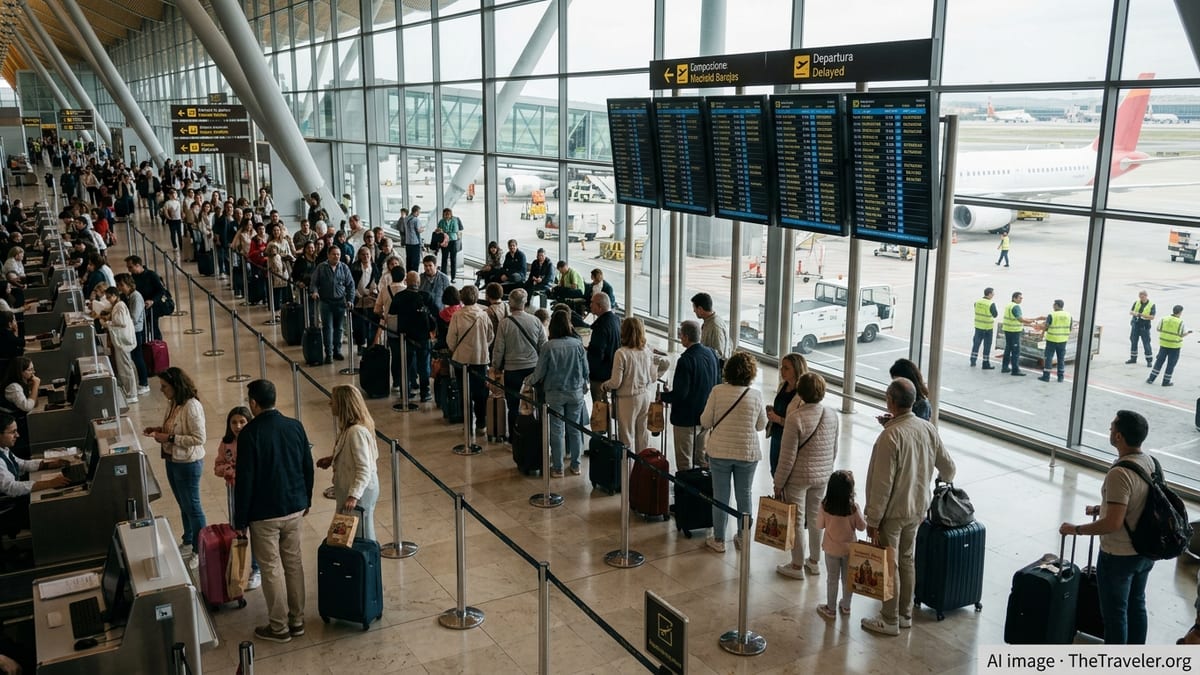
Published union announcements indicate that the core of the current dispute involves ground handling company Groundforce, part of the Globalia group, which serves multiple airlines in Spain. Reports describe an indefinite strike with partial stoppages across key time bands each day, affecting major hubs including Madrid Barajas and Barcelona El Prat as well as holiday gateways such as Málaga, Palma de Mallorca, Ibiza and several Canary Island airports.
The timing is particularly sensitive because Spanish airports are preparing for heavy Easter operations. Data from Málaga Costa del Sol, for example, show almost 6,000 flights programmed over the wider Semana Santa period, with the majority serving international routes. Any sustained interruption to check-in, baggage and ramp services at such volumes risks knock-on delays even on days when stoppages are relatively short.
Travel advisories note that the Groundforce action could overlap with a separate dispute at handling operator Menzies, which also works for a range of carriers at Spanish airports. While not all terminals or airlines will be equally exposed, the combination raises the risk of localised disruption on key Easter getaway and return days, especially the first weekend of Holy Week and the final Sunday and Monday.
How the strikes could affect Easter holiday flights
Ground handling staff manage essential services on the ground, from check-in desks and boarding gates to aircraft loading, baggage transfer and pushback. When they walk out, airlines can sometimes rely on minimum service requirements or alternative providers, but during peak periods the system has limited spare capacity. Previous industrial disputes at Madrid Barajas and other hubs have produced long queues, delayed departures and missed connections even when flights were not formally cancelled.
For Easter 2026, the risk is not so much a shutdown of Spanish airspace as a series of rolling operational slowdowns. Passengers may face slower check-in and bag drop, longer waits at boarding gates while aircraft are prepared, and delays retrieving luggage on arrival. With Holy Week timetables tightly packed, even modest slowdowns early in the day can cascade into late-night arrivals and missed last trains or buses from the airport.
Travel risk briefings point out that Spain’s airport network is also adjusting to broader pressures, including upcoming changes at the European Union’s external border and strong post-pandemic tourism demand. Unions have framed the current disputes around staffing levels, pay and working conditions, arguing that chronic strain on ground teams has created an unsustainable situation that now coincides with Easter traffic.
For visitors, the practical implication is that published departure and arrival times may prove optimistic on certain strike days, particularly at airports heavily reliant on affected handling firms. Travellers connecting onward by rail or domestic air should build in additional buffers, as same-day connections that are comfortable in low season can become risky when delays accumulate.
Smart booking strategies to reduce disruption risk
While travellers cannot control industrial relations, they can shape their Easter 2026 plans to reduce exposure. One key step is to identify which airport and airline combinations are most closely tied to the handling companies involved in the strikes. Larger flag carriers sometimes use their own ground staff, while some low-cost or leisure airlines outsource heavily; the difference can influence how vulnerable a route is to stoppages.
Booking flights earlier in the day can also help. Morning departures are generally less affected by the knock-on delays that build up over several rotations, and they offer more room to recover if an aircraft or crew runs late. On days when partial strikes cover broad time bands, a first-wave departure may still move more smoothly than services scheduled at the heart of stoppage windows, when backlogs typically peak.
Flexible tickets and longer connection times are another safeguard. Travellers booking intercontinental trips via Madrid or Barcelona during Holy Week may wish to select itineraries with generous layovers rather than tight transfers, even if that means a slightly longer journey. Those continuing by high-speed rail from cities such as Madrid, Málaga or Valencia should consider trains that depart well after the scheduled arrival of their inbound flight, rather than the first available service.
Accommodation choices can also play a role. Staying near the airport the night before an early departure, especially at hubs like Madrid Barajas or Barcelona El Prat, reduces reliance on congested urban transport during peak hours and allows passengers to comply with airlines’ advice to arrive much earlier than usual on strike days.
Day-of-travel tactics for getting through Spanish airports
Once Easter travellers are on the move, careful preparation can make a significant difference. Airlines and airports routinely advise arriving at least two to three hours before departure for short-haul flights and even earlier for long-haul services during periods of disruption. Given the prospect of ground handling stoppages this Holy Week, many visitors may wish to treat those timings as a minimum rather than a guideline.
Checking in online as soon as it opens and travelling with carry-on luggage only, where possible, can limit exposure to overloaded check-in counters and baggage systems. When bags must be checked, having tags and documents ready before reaching the desk can help staff process queues more quickly. Families and groups should keep boarding passes and passports easily accessible to avoid time-consuming searches at security and gates.
Monitoring airline apps, airport departure boards and local news before leaving for the airport is essential. Spanish airports and carriers increasingly use push notifications to inform passengers of gate changes, delays or revised departure times, but updates can also appear on terminal screens before they reach email inboxes. Travellers should verify their flight status several times on the day, including just before heading to the airport and again on arrival at the terminal.
Inside the airport, choosing security checkpoints and queues strategically can trim waiting times. At large hubs like Madrid and Barcelona, multiple security areas may feed the same concourses; staff on site can usually indicate which lines are moving fastest. Passengers with access to fast-track security or priority boarding, whether through tickets, frequent flyer status or paid add-ons, are likely to see tangible benefits during industrial action.
Contingency planning if flights are delayed or cancelled
Despite the best preparation, some Easter 2026 passengers in Spain are likely to experience significant delays or even cancellations while strikes continue. Travellers should familiarise themselves with their airline’s rebooking and refund policies before departure, paying particular attention to whether changes can be made via app or website rather than standing in long queues at airport service desks.
Keeping essential items such as medications, a change of clothes and key documents in carry-on bags can make unexpected overnight stays more bearable. During previous disruptions at Spanish airports, many passengers found that hotel rooms near hubs sold out quickly once delays mounted, so securing accommodation as soon as a serious delay becomes apparent is often wise.
For those with prepaid elements such as car rentals, tours or non-refundable hotel nights in coastal resorts or city centres, it may help to review booking terms now and note which providers allow date changes in the event of transport disruption. Some travel insurance policies include specific cover for strikes; checking the small print before Easter travel begins can clarify what documentation would be needed later to support a claim.
Above all, travellers should build extra time and flexibility into their Holy Week itineraries in Spain this year. With millions of passengers expected and ground handling strikes intersecting with one of Europe’s busiest holiday periods, those who plan ahead, travel early in the day and stay closely informed about their flights stand the best chance of starting and ending their Easter breaks on schedule.