

More news on this day
Spain’s prized Semana Santa getaway period is facing a fresh wave of travel uncertainty in 2026, as ongoing airport labor tensions and new ground handling strike notices raise the risk of major disruption for Easter holiday flights.
Get the latest news straight to your inbox!
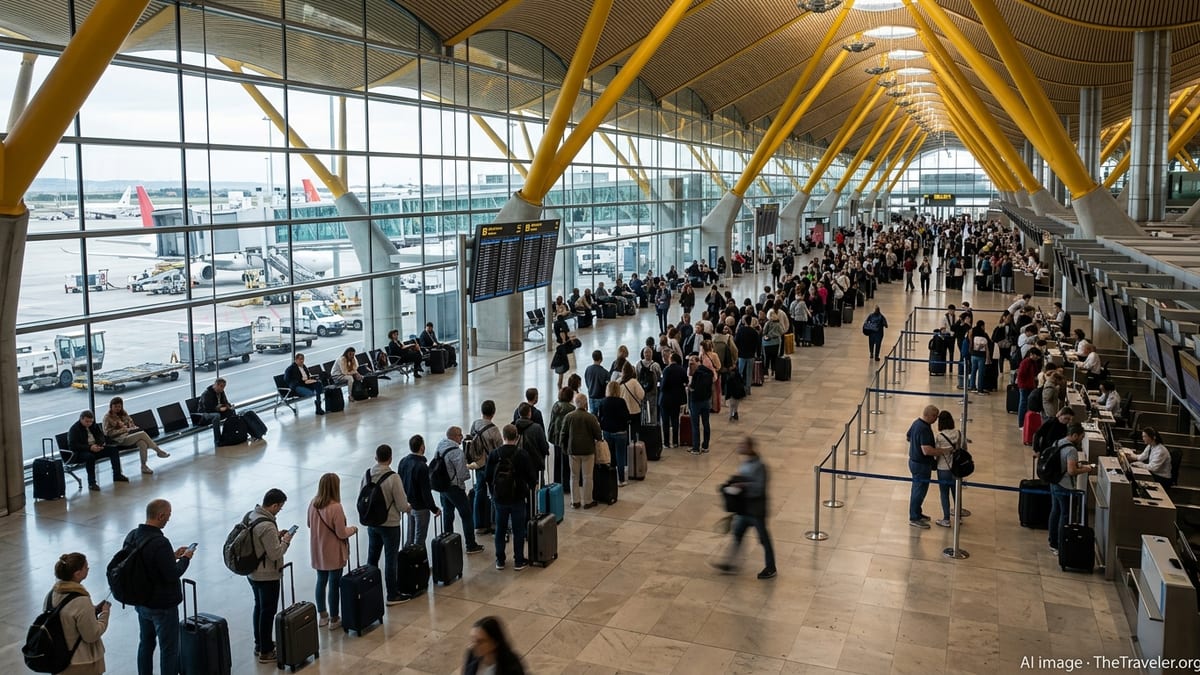
Rising Airport Labor Tensions Ahead of Holy Week
Semana Santa, which in 2026 falls from late March into Easter Sunday on March 29, is traditionally one of Spain’s heaviest travel weeks, with millions of residents and international visitors moving through major hubs such as Madrid Barajas and Barcelona El Prat. Publicly available aviation and labor calendars for early 2026 already show a dense backdrop of industrial action across Spain’s transport and public sectors, including recent stoppages by rail workers and medical staff, underlining a wider climate of labor unrest.
Industry monitoring platforms that track strike activity in Spain highlight that airport ground handling has been a particular flashpoint since mid 2025, when prolonged walkouts by Azul Handling staff affected Ryanair and other carriers at more than two dozen airports. Those actions, which ran on selected days and time bands through the end of 2025, caused recurrent delays, baggage pileups and schedule changes during peak leisure periods and set the stage for renewed disputes in 2026 as new contracts and wage agreements come up for negotiation.
Advisories from travel risk and security firms published in recent months note that both Aena’s directly employed staff and private ground service contractors face key bargaining rounds in the first half of 2026. Analysts warn that if talks stall or if workers reject proposed deals, strike calls could be timed to coincide with high-demand windows such as Easter, summer holidays and major events, when disruption would be most visible and costly for airlines.
For travelers planning Easter breaks to Spain’s cities, islands and coastal resorts, this emerging labor landscape means heightened uncertainty even before any formal strike dates are set for Semana Santa itself. Flight schedules may look normal in booking systems, but the risk of last-minute work stoppages affecting ground operations remains elevated compared with previous years.
Ground Handling at the Center of Potential Disruption
Ground handling encompasses a wide range of tasks that occur before and after each flight, including check-in and boarding assistance, ramp operations, aircraft loading and unloading, and baggage processing. In Spain, these services are often provided by a patchwork of companies operating under concessions awarded by Aena, alongside in-house units serving national carriers and selected partner airlines. When ground staff stop work, flights can technically still be scheduled, but the practical ability to turn aircraft around rapidly is severely constrained.
Coverage of recent disputes illustrates how concentrated walkouts in this sector can ripple across an entire airport. Targeted strikes in late 2025 and early 2026 involving South Europe Ground Services at Madrid Barajas, which handles IAG group airlines such as Iberia, British Airways, Vueling and Aer Lingus, showed that even partial stoppages limited to specific shifts or days could produce long queues, delayed departures and isolated cancellations during busy holiday periods.
Earlier industrial action by Azul Handling, which provides ground operations for Ryanair and several charter carriers at more than 20 Spanish airports, had a similarly outsized effect. Reports from that period describe partial strikes scheduled on multiple days per week, focused on peak morning, midday and late evening windows when leisure flights are most concentrated. While airlines attempted to keep skeleton operations moving, passengers frequently faced extended waiting times for baggage, late aircraft rotations and missed connections.
With unions and employers signaling that unresolved issues over pay, overtime, and job stability remain on the table in 2026, observers now see a clear risk that ground handling companies could again be the focal point of industrial action. If new strike calls fall during Easter week, even limited stoppages in baggage and ramp services are likely to have an immediate impact on travelers headed to Spain’s Holy Week processions and spring beaches.
What Easter Travelers to Spain Should Expect
Easter in Spain combines intense domestic demand with a surge of inbound visitors drawn by religious processions in Andalusian cities such as Seville and Málaga, as well as early season sun in the Balearic and Canary Islands. Airlines typically add capacity on key routes from across Europe and beyond, compressing already busy schedules at Madrid, Barcelona, Málaga, Palma de Mallorca, Tenerife South and other tourist gateways. In this environment, any degradation of ground handling capacity quickly translates into longer turnaround times and tighter margins for on-time performance.
If ground handling strikes are formally declared for the Semana Santa period, passengers can expect particular stress points at check-in desks, security transfer points where staff assist with flows, boarding gates and baggage belts. Even where legal minimum service levels apply, which usually require a base level of staffing for essential operations, previous Spanish airport labor disputes have demonstrated that queues can grow rapidly and that some flights may still be delayed or proactively canceled to reduce operational complexity.
Travel risk advisories note that disruption may not be limited to airlines whose contracted handlers are directly involved in a strike. Shared infrastructure at terminals, knock-on effects from delayed inbound aircraft, and congested aprons can affect unrelated carriers, especially at slot-constrained hubs. For Easter 2026, this means that travelers flying on a non-struck airline could still experience irregular operations if their flight relies on shared ground resources or if their incoming aircraft has previously been handled at an affected airport.
Crucially, the impact of any Holy Week strike would not be confined to the main Spanish gateways. Regional and island airports, which play a central role in connecting smaller cities and resort areas, often have fewer alternative handling providers and less spare capacity. Industrial action at these locations during Easter’s concentrated travel windows could lead to extended delays and limited rebooking options, especially on niche or seasonal routes.
Planning Strategies for Semana Santa 2026 Trips
Given the combination of high demand and a volatile labor environment, analysts advise that travelers treat Easter 2026 trips to Spain as a period of elevated operational risk and plan accordingly. Publicly available guidance from travel risk consultancies and passenger rights organizations highlights several practical steps that can help mitigate the impact of potential ground handling strikes, even if specific dates are not yet confirmed.
First, travelers are encouraged to factor additional time into their journeys. Arriving at the airport well ahead of the recommended check-in window can provide a buffer against unexpectedly long queues at bag drop or security, particularly at large hubs like Madrid and Barcelona. Those with tight onward connections, whether within Spain or onward to other destinations, may wish to reconsider itineraries that rely on short transfer times during the Easter period.
Second, minimizing reliance on checked baggage can significantly reduce exposure to disruption in the event of industrial action. Past episodes at Spanish and other European airports have shown that baggage systems are among the first areas to experience backlogs when ground staff numbers fall. Where possible, traveling with carry-on only or placing essential items such as medication, valuables and a change of clothes in hand luggage can help passengers cope better with delays or temporary baggage misrouting.
Finally, keeping travel plans flexible and staying informed will be particularly important around Semana Santa 2026. Airlines, airport operators and ground handling firms typically publish updates on operational changes and any announced strikes through their official communication channels. Monitoring these notices closely in the weeks and days leading up to departure will give travelers the best chance of adjusting flights, rebooking to different times of day, or rerouting via less affected airports if significant ground handling walkouts are confirmed for Easter week.
Wider European Strike Context May Compound Disruption
The risk of ground handling strikes in Spain during Easter 2026 does not exist in isolation. Recent months have seen a broader pattern of aviation-related labor disputes across Europe, spanning air traffic control, cabin crew, pilots and ground operations. Published summaries of upcoming industrial action highlight, for example, planned aviation worker strikes in neighboring countries in early March 2026, underlining that airlines, airports and passengers are operating in a continent-wide environment of frequent labor stoppages.
In 2025, data compiled by travel and business news outlets indicated that tens of thousands of flights across Europe were disrupted by strikes involving air traffic controllers, baggage handlers and other key staff, with Spain among the countries most frequently affected. Extended ground handling disputes at major Spanish airports in the second half of that year were cited as a notable contributor to delays and cancellations, particularly for low-cost carriers and leisure routes serving holiday destinations.
For Easter 2026, this broader context matters because many travelers reach Spain via connecting flights routed through other European hubs that may face their own labor issues. A ground handling strike at a Spanish airport could coincide with or follow disruptions involving different worker groups elsewhere on the continent, compounding schedule instability. Airline networks, already stretched by strong demand and capacity constraints, have limited spare aircraft and crew to absorb cascading delays.
As a result, analysts expect that any confirmed Semana Santa ground handling strikes in Spain would resonate beyond national borders, potentially affecting passengers starting their journeys in North America, the United Kingdom and other parts of Europe. For those determined to experience Spain’s Easter traditions in 2026, close monitoring of labor developments and a willingness to adapt plans will be key to navigating what could be one of the most challenging holiday travel periods in recent years.